Introduction
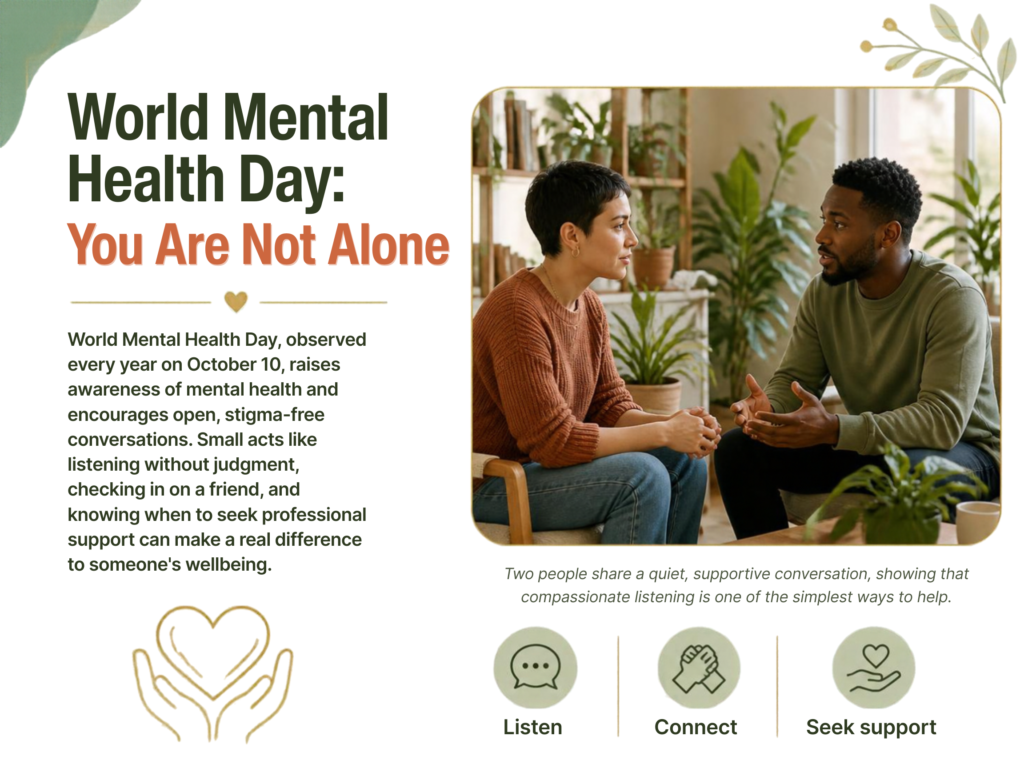
World Mental Health Day is observed every year on October 10 to raise awareness about mental health, encourage open conversations, and promote better access to mental health support. It reminds people around the world that mental well-being is just as important as physical health and that everyone deserves understanding, care, and respect.
In today’s busy world, many people experience stress, anxiety, loneliness, emotional exhaustion, or pressure from work, education, relationships, and financial responsibilities. However, mental health concerns are not always discussed openly. Fear of judgment and misunderstanding can prevent people from seeking the support they need.
World Mental Health Day creates an opportunity to change this situation. It encourages individuals, families, schools, workplaces, communities, and governments to work together to build a world where mental health is understood and supported.
Whether you want to learn about the date, discover the 2026 theme, or find meaningful ways to participate, this guide explains everything you need to know about this important global observance.
What Is World Mental Health Day?
World Mental Health Day is an international awareness day dedicated to promoting mental health education, reducing stigma, and encouraging action to improve mental well-being.
Observed on October 10, the day brings attention to mental health challenges that affect people of different ages, backgrounds, and circumstances. It also highlights the importance of making appropriate mental health services available to those who need them.
The World Health Organization (WHO) recognizes the observance as an opportunity to increase awareness of mental health issues and mobilize efforts in support of mental well-being. Each year, campaigns and activities encourage people to discuss mental health and consider what more can be done to improve care and support.
Mental health includes our emotional, psychological, and social well-being. It influences how we manage stress, make decisions, maintain relationships, and respond to life’s challenges.
Good mental health does not mean feeling happy all the time. Everyone experiences difficult emotions, and having a mental health condition does not mean someone is weak or incapable. The goal is to help people access the resources, relationships, and professional care they need to live fulfilling lives.
When Is World Mental Health Day Celebrated?
World Mental Health Day is celebrated annually on October 10.
The date remains the same every year, although the campaign theme and activities may change.
Here are the key details:
- Date: October 10
- Frequency: Annual
- First observed: October 10, 1992
- Associated organization: World Federation for Mental Health
- Global health organization involved in campaigns: World Health Organization
- Main purpose: Mental health awareness, education, advocacy, and improved support
The first observance was organized in 1992 as an initiative of the World Federation for Mental Health. Since then, the day has become an important opportunity for people and organizations to bring mental health issues into public discussion.
For more information about the observance, readers can visit the World Health Organization’s official World Mental Health Day page.
What Is the Theme of World Mental Health Day 2026?
The official theme for World Mental Health Day 2026 is “Lived Experiences Heard: Real Voices, Real Change.” The World Health Organization highlights the importance of listening to people who have experienced mental health conditions and ensuring their perspectives help shape the decisions that affect their lives.
According to the WHO’s 2026 campaign information, the campaign emphasizes meaningful participation rather than simply asking people to share their stories.
People with lived experience can offer valuable insight into the challenges of accessing care, receiving treatment, navigating healthcare systems, and rebuilding their lives. Their experiences can help professionals and policymakers understand what works, what needs improvement, and where additional support is required.
The theme encourages action in several important areas:
- Listening with respect: Giving people space to explain their experiences without judgment.
- Improving mental health services: Using real experiences to identify barriers and improve care.
- Encouraging participation: Involving people with lived experience in decisions about mental health policies and services.
- Reducing stigma: Challenging harmful assumptions about mental health conditions.
- Strengthening community support: Making it easier for people to receive care while remaining connected to their families and communities.
The message is clear: people should not simply be the subjects of mental health discussions. Their knowledge, needs, and preferences should help guide the solutions.
Why Is World Mental Health Day Important?
Mental health affects almost every aspect of everyday life, including relationships, education, employment, physical health, and personal confidence.
Despite its importance, mental well-being can be overlooked. Some people feel pressure to hide their struggles, while others may not know where to find reliable information or professional assistance.
World Mental Health Day helps address these challenges in several ways.
1. It Raises Awareness
Mental health awareness helps people recognize that emotional difficulties and mental health conditions deserve attention and care.
Public campaigns can help explain common concerns such as anxiety, depression, prolonged stress, and emotional exhaustion. Better understanding may also help people recognize when they or someone they know could benefit from professional support.
2. It Reduces Stigma
Stigma can make people feel ashamed of seeking help. Some may worry that friends, relatives, classmates, or colleagues will judge them.
World Mental Health Day encourages respectful conversations and challenges the misconception that mental health conditions reflect personal weakness.
A supportive environment makes it easier for people to speak honestly about their experiences without fearing discrimination.
3. It Encourages People to Seek Help
Early support can make a meaningful difference when someone is experiencing persistent emotional difficulties.
The observance reminds people that speaking with a qualified mental health professional is a reasonable and positive step. Support may include counseling, psychotherapy, medication when appropriate, or other services recommended by a healthcare provider.
4. It Promotes Equal Access to Care
Mental health support should not depend solely on a person’s financial circumstances, location, or social background.
The day encourages governments, healthcare providers, and community organizations to improve access to appropriate services and address barriers that prevent people from receiving care.
5. It Strengthens Families and Communities
Families, friends, teachers, and colleagues can play an important role in creating supportive environments.
Learning to listen, respond compassionately, and recognize when someone needs additional help can make communities more understanding and inclusive.
How to Celebrate World Mental Health Day
You do not need to organize a large event to participate. Small, thoughtful actions can help spread awareness and encourage healthier conversations.
Here are several practical ways to observe the day.
Share Reliable Mental Health Information
Share educational resources from trusted organizations, such as the World Health Organization or national mental health services.
You can publish a short awareness message on social media, create an informative blog post, or share information about available support services.
Avoid sharing unverified medical claims or suggesting that one approach works for everyone.
Start a Supportive Conversation
Ask a friend, family member, or colleague how they are doing and give them time to respond.
Instead of immediately offering advice, try listening carefully and acknowledging their feelings. A simple statement such as “I’m here if you want to talk” can help someone feel less alone.
Remember that people should be allowed to share at their own pace.
Organize an Awareness Activity
Schools, workplaces, and community groups can arrange activities such as:
- Mental health awareness workshops.
- Group discussions about stress management.
- Talks by qualified mental health professionals.
- Information sessions about counseling services.
- Well-being activities that encourage connection and relaxation.
- Campaigns that challenge stereotypes about mental illness.
Activities should be inclusive and respectful. Nobody should be pressured to reveal personal experiences.
Promote Mental Health at Work
Workplaces can use the occasion to discuss manageable workloads, respectful communication, employee assistance resources, and healthy boundaries.
Managers can encourage employees to raise concerns without fear of unfair treatment. Organizations can also review whether staff know how to access available support.
Learn About Mental Health Services
Take time to identify reliable local services, counseling options, or community organizations.
Knowing where to seek assistance before a crisis occurs can make it easier to find help when it becomes necessary.
Simple Ways to Improve Mental Well-Being Every Day
World Mental Health Day is an annual observance, but caring for mental health is an ongoing process.
Every person’s needs are different, and no single habit can prevent or resolve every mental health concern. However, certain everyday practices may support emotional well-being.
1. Maintain a Consistent Sleep Routine
Adequate sleep supports mood, concentration, and everyday functioning.
Try to maintain a regular sleeping schedule and create a relaxing bedtime routine. Reducing stimulating activities before bed may also help you prepare for rest.
If sleep difficulties persist or interfere with daily life, consider discussing them with a healthcare professional.
2. Stay Physically Active
Movement can support both physical and mental well-being. You do not necessarily need an intensive workout.
Walking, stretching, dancing, cycling, or participating in a favorite sport may help you feel more energized and create a useful break from daily pressures.
Choose activities that suit your abilities, preferences, and circumstances.
3. Make Time for Meaningful Relationships
Social connection can provide comfort during stressful periods.
Spend time with people you trust, check in with friends, or participate in activities that help you feel connected to others. If someone is struggling, offer support without assuming that you know exactly how they feel.
4. Set Realistic Boundaries
Trying to meet every demand can leave you exhausted.
Where possible, set reasonable limits on work, study, social commitments, and screen time. Break demanding tasks into manageable steps and allow yourself time to rest.
Taking a break is not a failure. It can be part of maintaining a sustainable routine.
5. Practice Mindfulness and Relaxation
Some people find it helpful to practice slow breathing, meditation, journaling, prayer, or quiet reflection.
These activities may provide a moment to pause and notice how you are feeling. Experiment with different approaches to discover what feels comfortable and useful for you.
6. Seek Professional Support When Needed
Self-care is helpful, but it is not a replacement for professional treatment when treatment is needed.
If sadness, anxiety, sleep difficulties, or other emotional concerns persist, become overwhelming, or interfere with everyday activities, consider speaking with a qualified healthcare professional.
You deserve support even if you cannot identify a clear reason for how you feel.
Mental Health Awareness in Schools and Workplaces
Schools and workplaces are important settings for mental health awareness because people spend a significant part of their lives in these environments.
Supporting Students
Students may experience academic pressure, examinations, bullying, social difficulties, family expectations, or uncertainty about the future.
Schools can promote mental well-being by encouraging respectful relationships, providing access to appropriate counseling, addressing bullying, and helping students understand where to seek support.
Teachers should take concerns seriously while respecting students’ privacy and following appropriate safeguarding procedures.
Creating Healthier Workplaces
Work-related stress can arise from excessive workloads, unclear expectations, poor communication, discrimination, or limited control over responsibilities.
Employers can support mental health by encouraging reasonable workloads, providing clear guidance, respecting time away from work, and making support resources accessible.
Mental health awareness should lead to practical improvements rather than stopping at a single annual event.
How to Support Someone Experiencing Mental Health Difficulties
Supporting someone who is struggling does not require you to have all the answers. Often, the most helpful starting point is a calm, respectful conversation.
Consider these approaches:
- Listen without judgment. Allow the person to explain what they are experiencing without interrupting or criticizing.
- Acknowledge their feelings. Avoid dismissive comments such as “Just be positive” or “Other people have bigger problems.”
- Ask what would help. Some people want someone to listen, while others may appreciate practical assistance.
- Encourage professional support. If their difficulties are persistent or severe, help them explore suitable services if they are comfortable with that.
- Respect their privacy. Do not share personal information without permission, except when necessary to address an immediate safety concern.
- Keep checking in. A thoughtful message or conversation later can show that your concern is genuine.
You do not need to solve every problem to make a difference. Being present, patient, and compassionate can help someone feel supported.
If someone appears to be in immediate danger or may harm themselves, seek urgent assistance through local emergency services or an appropriate crisis service.
The Role of Social Media in Mental Health Awareness
Social media can help spread information about mental well-being and connect people with support communities. During World Mental Health Day, individuals and organizations can use digital platforms to share educational resources, campaign messages, and details of awareness activities.
However, online information should be approached thoughtfully.
Not every mental health post is accurate, and social media content cannot replace an individual assessment by a qualified professional. Oversimplified advice may also make people feel that they are failing if a suggested technique does not work for them.
To use social media responsibly:
- Share information from credible health organizations.
- Avoid diagnosing people based on short videos or online quizzes.
- Respect the privacy of people who share personal experiences.
- Do not pressure others to discuss their mental health publicly.
- Encourage professional support when appropriate.
- Take breaks from online content if it increases stress or negatively affects your mood.
The goal is to make online spaces more informative, compassionate, and supportive.
Frequently Asked Questions
1. When is World Mental Health Day celebrated?
World Mental Health Day is celebrated every year on October 10. It promotes mental health awareness, encourages open conversations, and highlights the importance of accessible mental health support.
2. What is the theme of World Mental Health Day 2026?
The official 2026 theme is “Lived Experiences Heard: Real Voices, Real Change.” It emphasizes listening to people who have experienced mental health conditions and involving them meaningfully in decisions about services, policies, and support.
3. Who started World Mental Health Day?
World Mental Health Day was first observed in 1992 through an initiative of the World Federation for Mental Health. The observance has since become an international opportunity to promote mental health awareness and advocacy.
4. Why do we celebrate World Mental Health Day?
We observe the day to improve understanding of mental health, reduce stigma, encourage people to seek appropriate support, and promote better access to mental health services. It also reminds communities that emotional well-being deserves attention throughout the year.
5. How can I participate in World Mental Health Day?
You can participate by sharing reliable mental health information, starting supportive conversations, attending awareness events, organizing educational activities, or learning about local mental health services. Listening without judgment and treating people with respect are also meaningful ways to contribute.
Conclusion
World Mental Health Day, observed every October 10, is an important reminder that mental well-being deserves understanding, attention, and practical support. Its 2026 theme, “Lived Experiences Heard: Real Voices, Real Change,” emphasizes the importance of listening to people with direct experience of mental health challenges and allowing their perspectives to influence meaningful improvements.
Everyone can contribute to this goal. Individuals can practice healthy routines and seek support when needed. Families and friends can offer understanding. Schools and workplaces can create safer environments, while communities and governments can work to make mental health services more accessible.
Most importantly, mental health awareness should not be limited to one day of the year. Small acts of kindness, respectful conversations, informed decisions, and access to appropriate care can help build a more supportive world.
This World Mental Health Day, take a moment to check in with yourself, reach out to someone you care about, and remember that asking for help is a positive step toward well-being. Every voice deserves to be heard, and every person deserves to be treated with dignity and compassion.
Here are the FAQs for your World Mental Health Day blog, ready to copy into WordPress.
Frequently Asked Questions About World Mental Health Day
Frequently Asked Questions About World Mental Health Day
1. When is World Mental Health Day celebrated?
World Mental Health Day is celebrated every year on October 10 to promote mental health awareness and encourage access to mental health support.
2. What is the theme of World Mental Health Day 2026?
The 2026 theme is “Lived Experiences Heard: Real Voices, Real Change,” focusing on listening to people with lived experience of mental health conditions.
3. Why is World Mental Health Day important?
World Mental Health Day raises awareness, reduces stigma, encourages people to seek help, and promotes better mental health services worldwide.
4. Who started World Mental Health Day?
World Mental Health Day was first observed in 1992 through an initiative of the World Federation for Mental Health.
5. How can we celebrate World Mental Health Day?
You can celebrate by sharing reliable mental health information, organizing awareness activities, supporting friends and family, and encouraging open conversations.
6. What is the main purpose of World Mental Health Day?
Its main purpose is to improve understanding of mental health, challenge discrimination, and encourage individuals and communities to support mental well-being.
7. How can I support someone struggling with mental health?
Listen without judgment, show compassion, respect their privacy, and encourage professional support when appropriate.
8. What are some activities for World Mental Health Day?
Activities include mental health workshops, awareness campaigns, educational sessions, group discussions, and community events promoting emotional well-being.
9. Why is mental health awareness important?
Mental health awareness helps people recognize emotional difficulties, understand available support, reduce stigma, and make informed decisions about seeking care.
10. Is World Mental Health Day celebrated worldwide?
Yes. People, organizations, schools, healthcare providers, and communities in many countries observe World Mental Health Day through educational campaigns and awareness activities.
