Introduction
Clean hands are one of the simplest ways to protect our health, yet proper handwashing is a habit that many people overlook in their daily lives. From preparing meals and eating food to caring for children and using public facilities, our hands come into contact with countless surfaces that may carry harmful germs. Washing them correctly with soap and clean water can help reduce the spread of infections and protect the people around us.
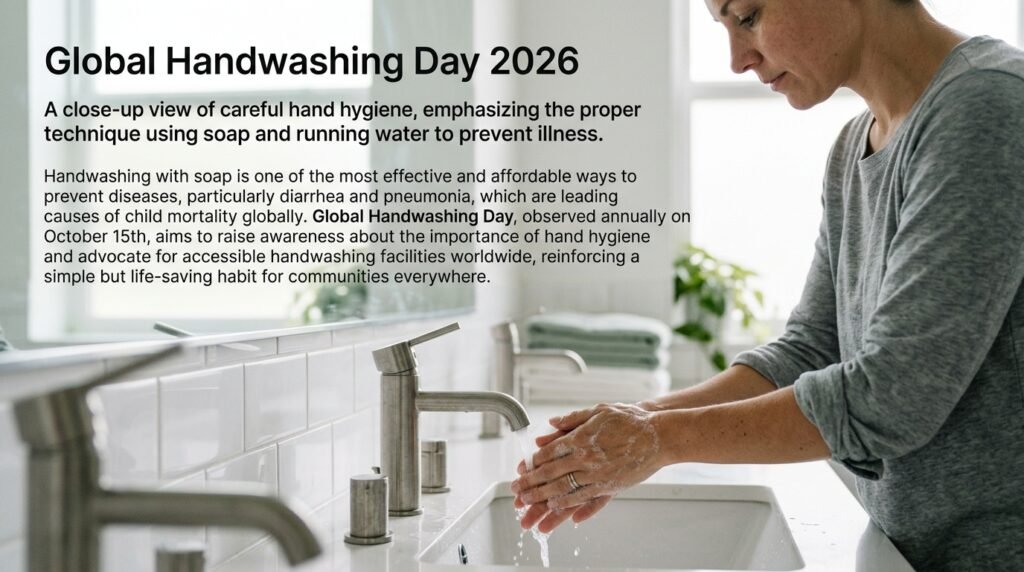
Global Handwashing Day is observed every year on October 15 to raise awareness about the importance of handwashing with soap. It encourages individuals, schools, healthcare facilities, governments, and communities to make hand hygiene an essential part of everyday life.
In 2026, Global Handwashing Day provides another opportunity to promote healthy habits, improve access to handwashing facilities, and remind people that small actions can make a meaningful difference.
Whether you are a student, parent, teacher, healthcare worker, or community leader, understanding the importance of handwashing can help you contribute to a healthier environment for everyone.
What Is Global Handwashing Day?
Global Handwashing Day is an international awareness day dedicated to promoting handwashing with soap as a simple, effective, and affordable way to help prevent disease.
The observance highlights the importance of making handwashing accessible to everyone, regardless of where they live or their financial circumstances. It also encourages people to develop consistent hygiene habits rather than treating handwashing as something they do only when their hands look dirty.
The Global Handwashing Partnership established the observance, which was first celebrated in 2008. During its inaugural year, more than 120 million children in over 70 countries participated in handwashing activities.
Since then, schools, public health organizations, community groups, and other institutions have used the day to organize educational campaigns, demonstrations, and activities that promote better hygiene.
Global Handwashing Day is not simply about washing hands for one day. Its broader purpose is to encourage lasting behavior changes that continue throughout the year.
When Is Global Handwashing Day 2026?
Global Handwashing Day is celebrated annually on October 15.
In 2026, the observance falls on Thursday, October 15.
The date provides an opportunity for communities worldwide to highlight the connection between hand hygiene, disease prevention, and public health.
Schools may organize demonstrations for children, healthcare professionals may share hygiene guidance, and community organizations may distribute educational materials or improve access to handwashing supplies.
The Global Handwashing Partnership publishes campaign resources and information about the observance. Readers planning an event can consult its official website for the latest campaign guidance and any announced annual theme.
Although October 15 is the designated day, the message is relevant every day of the year. Consistent handwashing habits are most effective when they become a normal part of daily routines.
Why Is Global Handwashing Day Important?
Handwashing may seem like a small activity, but it plays an important role in reducing the spread of germs.
Our hands frequently touch objects such as phones, door handles, desks, money, shopping baskets, and public transport surfaces. We may then touch our eyes, nose, mouth, food, or other people without realizing that germs can be transferred.
Proper handwashing helps remove dirt, microorganisms, and other unwanted substances from the skin.
1. It Helps Prevent the Spread of Infections
Many respiratory and gastrointestinal infections can spread through contaminated hands. Washing hands at appropriate times helps reduce opportunities for germs to move between people and surfaces.
It cannot prevent every illness, but it is an important part of everyday infection prevention.
2. It Protects Children and Vulnerable People
Young children are still developing their hygiene habits and frequently touch objects while playing. Older adults and people with weakened immune systems may also face greater risks from certain infections.
Teaching children to wash their hands and encouraging consistent hygiene in shared spaces can help protect the wider community.
3. It Encourages Healthy Daily Habits
Global Handwashing Day reminds people that good hygiene does not always require expensive equipment or complicated routines.
With access to soap, clean water, and suitable handwashing facilities, people can practice a useful preventive habit at home, school, work, and other everyday locations.
4. It Raises Awareness About Hygiene Inequality
Not everyone has reliable access to clean water, soap, or a functioning handwashing station.
The observance draws attention to the need for better hygiene facilities in schools, healthcare centers, workplaces, and communities. Awareness is important, but lasting improvements also require practical resources and infrastructure.
What Are the Benefits of Washing Hands With Soap?
Handwashing with soap offers several benefits for personal and community health.
Reduces the Spread of Harmful Germs
Soap, friction, and rinsing work together to remove germs and dirt from the skin. Washing thoroughly is especially important after using the toilet, before eating, and after coughing or sneezing into your hands.
Supports Food Safety
Hands can transfer contaminants to food during preparation. Washing before preparing meals and before eating helps reduce the risk of contaminating food with harmful microorganisms.
It is also important to wash hands after handling raw meat, poultry, seafood, or eggs and before touching ready-to-eat foods.
Promotes Better Hygiene in Schools
Classrooms bring many children together in shared spaces. Regular handwashing helps establish healthier routines and may reduce opportunities for infections to spread among students and staff.
Helps Maintain a Cleaner Home Environment
Household activities such as cleaning, handling rubbish, caring for pets, and changing diapers can expose hands to dirt and germs.
Washing hands after these activities helps prevent contaminants from being transferred to food, kitchen surfaces, and other frequently touched objects.
Protects the Wider Community
When people practice proper hand hygiene, they help reduce the opportunities for germs to spread. This benefits not only individuals but also their families, colleagues, classmates, and neighbors.
For additional public health guidance, readers can consult the Centers for Disease Control and Prevention’s information about handwashing.
How to Wash Your Hands Properly
Knowing when and how to wash your hands is essential. A quick rinse with water alone may not remove dirt, grease, and germs as effectively as washing thoroughly with soap.
Follow these five basic steps.
Step 1: Wet Your Hands
Place your hands under clean, running water. Warm or cold water is suitable for ordinary handwashing.
Turn off the tap while applying soap if doing so helps conserve water.
Step 2: Apply Soap and Create a Lather
Rub your hands together until the soap forms a good lather.
Make sure the soap covers your palms, the backs of your hands, and the areas around your fingers.
Step 3: Scrub for at Least 20 Seconds
Spend at least 20 seconds scrubbing your hands. Pay particular attention to areas that are often missed.
Remember to clean:
- The palms of your hands.
- The backs of both hands.
- Between your fingers.
- Around your thumbs.
- Under and around your fingernails.
- Your fingertips and wrists.
A simple way to remember the time is to hum the traditional Happy Birthday song twice.
Step 4: Rinse Thoroughly
Rinse your hands under clean, running water until the soap has been removed.
Avoid rinsing in a basin of standing water that may already be contaminated.
Step 5: Dry Your Hands
Dry your hands using a clean towel or an appropriate hand dryer.
Drying is an important final step because wet hands can transfer microorganisms more easily than properly dried hands in some circumstances.
Following these steps helps make handwashing more effective and ensures that commonly missed areas receive attention.
When Should You Wash Your Hands?
Handwashing is most useful when practiced at the right moments. You do not need to wait until your hands look dirty to clean them.
Important times to wash your hands include:
- Before, during, and after preparing food.
- Before eating or handling food.
- After using the toilet.
- After changing a baby’s diaper or helping a child use the toilet.
- After coughing, sneezing, or blowing your nose.
- Before and after caring for someone who is sick.
- Before and after treating a cut or wound.
- After touching animals, pet food, or animal waste.
- After handling rubbish.
- After returning home from crowded public places when your hands may have become contaminated.
- After handling raw meat or other potentially contaminated food.
- Whenever your hands are visibly dirty or greasy.
These moments are especially important because hands can carry germs from one activity to another.
Making handwashing part of your routine can help you remember it without needing constant reminders.
Global Handwashing Day Activities for Schools and Communities
Global Handwashing Day offers an excellent opportunity to teach practical hygiene habits in an engaging way.
Schools, workplaces, community organizations, and families can organize activities that turn awareness into action.
1. Organize a Handwashing Demonstration
Teachers or community health workers can demonstrate the correct five-step handwashing method.
Participants can practice the steps themselves and learn why cleaning between fingers and around fingernails matters.
2. Create Educational Posters
Students can design posters featuring simple hygiene messages, illustrations, and reminders about important handwashing times.
Posters can be displayed near sinks, cafeterias, toilets, and other shared facilities.
3. Hold a School Hygiene Quiz
A short quiz can help children understand when to wash their hands and how long they should scrub.
Questions can cover everyday situations, such as washing before lunch or after playing outdoors.
4. Conduct a Handwashing Awareness Campaign
Community groups can share educational messages through school assemblies, local meetings, newsletters, and social media.
Simple, clear messages can help reach people who may not have access to formal health education.
5. Improve Handwashing Facilities
Organizations can check whether sinks are working and whether soap, clean water, and drying facilities are available.
Where conventional plumbing is unavailable, communities can explore suitable, locally appropriate handwashing stations that support safe water use.
6. Encourage Family Participation
Parents can help children build lasting hygiene habits by washing their hands together before meals and after using the toilet.
Adults can also set a positive example by following the same practices consistently.
These activities are most valuable when they lead to practical improvements that continue beyond October 15.
The Role of Handwashing in Children’s Health
Children benefit from learning proper hand hygiene early in life.
At school, they share learning materials, toys, sports equipment, desks, and other objects. During play, they may touch their faces or eat snacks without washing their hands first.
Teaching children the correct technique helps them understand how personal hygiene supports their health.
Parents and teachers can encourage good habits by:
- Providing easy access to soap and clean water.
- Using age-appropriate explanations about germs.
- Demonstrating each step rather than relying only on instructions.
- Establishing handwashing routines before meals and after toilet use.
- Making sinks accessible to children of different ages and abilities.
- Offering gentle reminders without embarrassing children.
Children are more likely to develop consistent habits when handwashing is convenient and adults practice it themselves.
Schools also need functional facilities and sufficient supplies. Education alone cannot solve hygiene problems if children have no reliable place to wash their hands.
Handwashing and Public Health
Hand hygiene is an important part of public health because infections can spread through homes, schools, workplaces, and healthcare facilities.
In healthcare settings, proper hand hygiene is especially important for protecting patients, medical staff, and visitors. Healthcare workers follow setting-specific infection prevention procedures because different clinical situations carry different risks.
In everyday community settings, washing with soap and water is generally the preferred method when available.
If soap and water are not readily available, an alcohol-based hand sanitizer containing at least 60% alcohol can be a useful alternative in many situations.
However, sanitizer is not a complete replacement for handwashing. Soap and water are particularly important when hands are visibly dirty or greasy and in certain situations involving germs that sanitizer may not adequately address.
Good hand hygiene should also be combined with other appropriate health measures, such as safe food handling, cleaning frequently touched surfaces when necessary, and following medical guidance during outbreaks.
Common Handwashing Mistakes to Avoid
Even people who wash their hands regularly can make mistakes that reduce the effectiveness of the process.
Washing Too Quickly
Briefly rubbing your hands together may leave some areas insufficiently cleaned. Scrub with soap for at least 20 seconds and cover every surface.
Forgetting the Thumbs and Fingertips
People often focus on their palms while missing the backs of their hands, thumbs, and areas around their nails.
Pay attention to these areas during every wash.
Using Water Without Soap
Water alone does not remove dirt, grease, and germs as effectively as proper washing with soap and water.
Skipping Handwashing Before Food Preparation
Hands can contaminate food during cooking. Wash them before preparing meals and whenever you switch from handling raw ingredients to ready-to-eat foods.
Drying Hands on a Dirty Towel
A contaminated towel can transfer unwanted substances back onto clean hands. Use a clean towel or an appropriate hand dryer.
Assuming Hand Sanitizer Always Works
Hand sanitizer is convenient, but it may be less effective when hands are visibly dirty or greasy. Choose the appropriate cleaning method for the situation.
Avoiding these mistakes can make an ordinary hygiene routine more effective.
How to Make Handwashing a Daily Habit
Global Handwashing Day is a useful reminder, but the real goal is to make hand hygiene a consistent part of everyday life.
You can start with a few practical changes.
Keep soap accessible. Place soap near the sinks people use most frequently at home or work.
Create reminders. Put simple signs near bathroom sinks or kitchen areas to encourage regular handwashing.
Build routines around familiar activities. Wash your hands before meals, after toilet use, and after handling rubbish.
Teach by example. Children and other family members are more likely to follow good habits when they see them practiced consistently.
Keep facilities usable. Check that water is available, taps work properly, and soap is replenished when needed.
Encourage, rather than criticize. Friendly reminders and practical demonstrations are often more effective than blaming people for forgetting.
If resources are limited, prioritize access to soap, the cleanest available water, and a safe place to wash and dry hands. Communities can work together to identify practical solutions that fit local conditions.
Conclusion
Global Handwashing Day, observed every year on October 15, reminds us that an ordinary daily habit can make a meaningful contribution to public health.
Washing hands properly with soap and clean water helps reduce the spread of many infections, supports food safety, protects children, and promotes healthier homes, schools, and workplaces.
The message of the observance extends beyond a single date. Everyone can contribute by learning the correct handwashing technique, making facilities accessible, teaching children good hygiene habits, and encouraging others to follow practical prevention measures.
This Global Handwashing Day 2026, take a moment to review your own habits and share what you know with your family, friends, and community. A few seconds spent washing your hands properly can help protect both you and the people around you.
Clean hands are a simple daily responsibility—and an important step toward healthier communities.
Frequently Asked Questions
1. When is Global Handwashing Day celebrated?
Global Handwashing Day is celebrated every year on October 15. In 2026, it falls on Thursday, October 15. The day promotes handwashing with soap as an effective and affordable way to help prevent disease.
2. Why do we celebrate Global Handwashing Day?
The observance raises awareness about the importance of hand hygiene, encourages people to wash their hands at critical times, and highlights the need for accessible soap, clean water, and suitable handwashing facilities.
3. What is the main purpose of Global Handwashing Day?
Its main purpose is to encourage consistent handwashing with soap and promote lasting improvements in hygiene practices. It also draws attention to the barriers that prevent some communities from accessing essential handwashing facilities.
4. How long should you wash your hands?
For routine handwashing, scrub all surfaces of your hands with soap for at least 20 seconds. Then rinse thoroughly under clean, running water and dry your hands with a clean towel or an appropriate hand dryer.
5. What are the benefits of washing hands with soap?
Washing hands with soap helps remove dirt, germs, and other contaminants. It can reduce the spread of respiratory and gastrointestinal infections, support safer food preparation, and improve hygiene at home, school, and work.
6. What is the theme of Global Handwashing Day 2026?
For the latest official theme, check the Global Handwashing Partnership’s Global Handwashing Day website. Campaign themes and messaging can change, so it is best to confirm the announcement before including a specific theme in educational materials.
7. How can schools celebrate Global Handwashing Day?
Schools can organize handwashing demonstrations, student poster competitions, hygiene quizzes, classroom discussions, and practical activities that teach children when and how to wash their hands properly.
8. Can hand sanitizer replace soap and water?
An alcohol-based hand sanitizer containing at least 60% alcohol can be useful when soap and water are unavailable. However, soap and water are preferred when hands are visibly dirty or greasy and in certain other situations.
9. Who can participate in Global Handwashing Day?
Anyone can participate, including students, parents, teachers, healthcare professionals, community leaders, businesses, and public health organizations. Simple actions such as sharing reliable information and improving access to soap can support the observance.
10. How can I promote handwashing after Global Handwashing Day?
Continue practicing proper hand hygiene,
