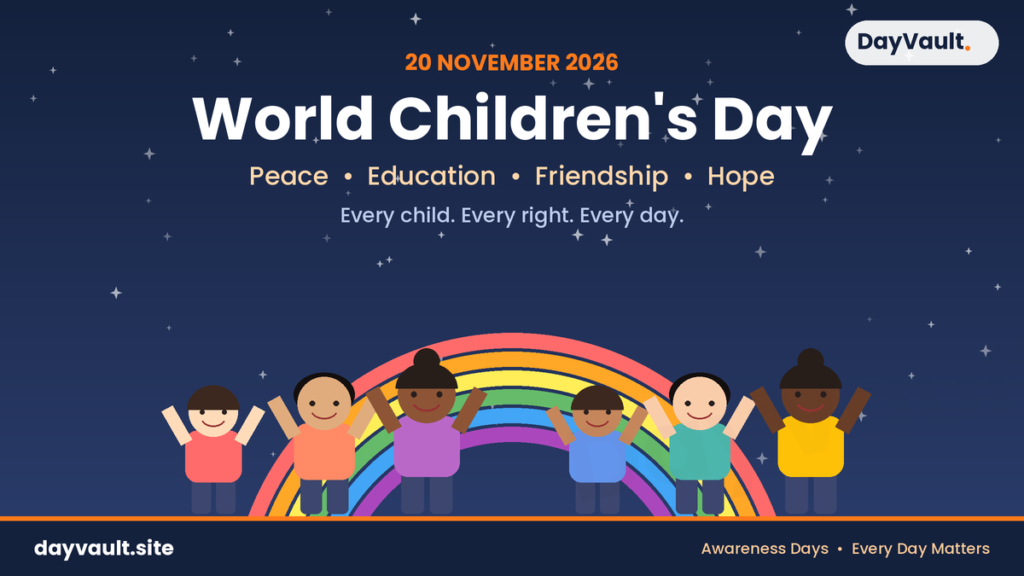
Every child deserves a safe childhood, quality education, good health, and the freedom to dream about the future. However, millions of children around the world continue to face challenges that prevent them from enjoying these basic rights. World Childrens Day is an important opportunity to recognize their needs, celebrate their potential, and encourage communities to build a better world for every child.
Celebrated annually on November 20, World Children’s Day brings attention to children’s rights, well-being, education, protection, and participation in decisions that affect their lives. It encourages parents, teachers, governments, organizations, and communities to work together to create a future where every child can grow up with dignity and opportunity.
In 2026, World Children’s Day will be observed on Friday, November 20. The occasion is more than a celebration for children. It is a reminder that protecting childhood and supporting young people are shared responsibilities that require action throughout the year.
What Is World Childrens Day?
World Childrens Day is an international observance dedicated to promoting children’s rights and improving their lives. It is supported by UNICEF, the United Nations Children’s Fund, and is recognized through educational activities, awareness campaigns, community events, and initiatives that encourage people to listen to children.
The day highlights an essential principle: every child deserves respect, protection, education, and opportunities to develop their abilities, regardless of their background or circumstances.
Children are often affected by decisions made by adults, including decisions about schools, healthcare, the environment, public safety, and family support. World Children’s Day encourages adults and decision-makers to consider children’s needs when making these choices.
The observance also provides a platform for young people to express their opinions, share their experiences, and discuss the changes they want to see in their communities.
According to the United Nations, November 20 marks two important milestones in the development of children’s rights: the adoption of the Declaration of the Rights of the Child in 1959 and the Convention on the Rights of the Child in 1989.
When Is World Childrens Day 2026?
World Childrens Day is celebrated every year on November 20.
In 2026, the observance will take place on Friday, November 20. The date remains the same annually, although the day of the week changes.
Here are the essential details:
- Event: World Children’s Day
- Date: November 20, 2026
- Day: Friday
- Purpose: To promote children’s rights, safety, education, health, equality, and participation.
- Global focus: Building a world where every child can enjoy their rights and reach their potential.
Schools, families, nonprofit organizations, community groups, and public institutions can use this occasion to organize activities that educate people about childhood development and children’s rights.
For the latest official campaign information, readers can visit the United Nations World Children’s Day page.
History of World Childrens Day
The history of World Children’s Day is closely connected to the international effort to recognize children as individuals with their own rights.
The Beginning in 1954
In 1954, the United Nations General Assembly recommended that countries establish a Universal Children’s Day. The aim was to encourage international friendship, understanding among children, and greater attention to children’s welfare.
The United Nations allowed countries to choose an appropriate date and method of observance. November 20 later became particularly significant because of two major developments in international children’s rights.
The Declaration of the Rights of the Child in 1959
On November 20, 1959, the United Nations General Assembly adopted the Declaration of the Rights of the Child.
This declaration helped establish important principles for children’s welfare, development, and protection. It encouraged governments and societies to recognize that children need special care and support as they grow.
The declaration represented an important step toward the international recognition of children’s needs and dignity.

The Convention on the Rights of the Child in 1989
Another major milestone occurred on November 20, 1989, when the United Nations General Assembly adopted the Convention on the Rights of the Child.
The convention is an international human rights agreement that sets out civil, political, economic, social, and cultural rights for children. It addresses issues such as education, healthcare, family life, protection from violence, and the right to express opinions.
It entered into force on September 2, 1990, after the required ratifications were received.
Today, World Children’s Day serves as an annual reminder of these commitments and the work that remains to ensure every child can enjoy their rights.
Why Is World Childrens Day Important?
Children shape the future of every society. Their health, education, safety, and emotional development influence not only their individual lives but also the well-being of future generations.
World Children’s Day is important because it draws attention to the issues that affect childhood and encourages practical steps toward improvement.
1. It Promotes Children’s Rights
Every child deserves to be treated with dignity and fairness. Children’s rights include access to education, healthcare, protection from abuse, and opportunities to develop their abilities.
The day helps families, teachers, and communities understand that these rights should not depend on a child’s financial situation, gender, nationality, disability, or family background.
2. It Encourages Access to Education
Education gives children the knowledge and skills they need to participate in society and pursue future opportunities.
However, some children experience barriers such as poverty, conflict, discrimination, disability-related obstacles, or a lack of nearby schools.
World Children’s Day encourages communities and decision-makers to support inclusive education and help children learn in safe, welcoming environments.
3. It Raises Awareness About Child Protection
Children need protection from violence, neglect, exploitation, and other forms of harm.
Parents, schools, governments, and communities all have roles in creating safe environments. Awareness campaigns can help people recognize risks, understand safeguarding responsibilities, and learn how to seek appropriate support.
4. It Supports Equality and Inclusion
Every child should have the opportunity to learn, play, make friends, and participate in community life.
Children who experience discrimination or barriers related to disability, gender, poverty, or social background may need additional support to enjoy equal opportunities.
World Children’s Day encourages people to challenge unfair treatment and create environments where every child feels valued.
5. It Gives Children a Voice
Children have ideas, opinions, concerns, and hopes for the future. Listening to them helps adults understand their experiences and make better decisions.
The observance encourages children to participate in discussions about matters that affect them, including education, safety, climate change, health, and community development.
Listening does not mean expecting children to solve adult problems. It means respecting their perspectives and considering their views in age-appropriate ways.
What Are the Main Rights of Children?
The Convention on the Rights of the Child provides an internationally recognized framework for protecting children’s rights. It treats children as individuals whose needs, dignity, and development deserve attention.
Some important rights include the following.
The Right to Education
Every child should have meaningful opportunities to learn. Education supports literacy, creativity, problem-solving, independence, and social development.
Schools should aim to provide safe and inclusive environments where children can develop their abilities without discrimination.
The Right to Health and Well-Being
Children need appropriate healthcare, nutritious food, clean water, sanitation, and opportunities for physical activity.
Their emotional well-being also matters. A supportive environment can help children manage difficulties, build confidence, and develop healthy relationships.
The Right to Protection
Children should be protected from violence, abuse, neglect, exploitation, and harmful treatment.
Families, institutions, and governments should work to prevent harm and provide suitable support when a child is at risk.
The Right to Play and Rest
Play is an important part of childhood. It helps children develop social skills, imagination, coordination, and emotional understanding.
Children also need adequate rest and time for activities beyond schoolwork. A healthy childhood should include opportunities to explore, relax, and enjoy friendships.
The Right to Express Opinions
Children should have opportunities to express their views on matters that affect them. Adults should listen respectfully and consider those views according to the child’s age and maturity.
These rights are interconnected. For example, a child who feels unsafe may struggle to learn, while a child who lacks healthcare may find it difficult to participate fully in school and community activities.
Readers can learn more through UNICEF’s official Convention on the Rights of the Child.
How Is World Childrens Day Celebrated Around the World?
World Children’s Day is observed in different ways depending on local traditions, resources, and community priorities. Some celebrations focus on fun and creativity, while others emphasize education, advocacy, and public awareness.
The main goal is to make children’s rights more visible and encourage meaningful action.
School Programs and Educational Activities
Schools often provide opportunities to discuss children’s rights and responsibilities through classroom lessons, presentations, quizzes, and group projects.
Teachers can encourage students to explore questions such as:
- Why should every child have access to education?
- How can students help create a respectful classroom?
- Why is it important to protect children from bullying?
- How can young people contribute to their communities?
These discussions help students connect international principles with their daily experiences.
Creative Competitions
Art, writing, poetry, storytelling, and poster-making activities can help children communicate their hopes and concerns.
For example, a school could invite students to create drawings about a safe community or write short essays describing what every child should have.
Creative activities make the topic accessible to different age groups and allow children to express themselves in their own ways.
Community Awareness Campaigns
Community organizations can arrange workshops, discussions, information sessions, or outreach activities for parents and caregivers.
These programs may focus on child safety, school attendance, healthy development, inclusion, and the importance of listening to children.
Public Awareness and Landmark Activities
UNICEF and its partners have encouraged buildings and landmarks in different parts of the world to turn blue on November 20 as a symbol of support for children’s rights. Events may also include child-led discussions and opportunities for young people to share their perspectives.
The exact activities differ by location, but the message remains consistent: children deserve attention, protection, and meaningful opportunities.
Meaningful Ways to Celebrate World Childrens Day 2026
Celebrating World Children’s Day does not require an expensive event. Small, thoughtful activities can help children feel respected and teach communities about their responsibilities.
Here are some practical ideas for 2026.
1. Organize a Children’s Rights Workshop
Teachers, parents, and community volunteers can arrange a short workshop explaining children’s rights in simple language.
Use everyday examples to discuss fairness, safety, education, and respect. Give children opportunities to ask questions and share their ideas.
2. Create a School Awareness Board
Students can prepare a display featuring messages about friendship, inclusion, education, and child protection.
Each student could contribute a drawing, short message, or practical suggestion for making school a safer and more welcoming place.
3. Read Stories Together
Books and stories can help children understand empathy, courage, kindness, and fairness.
Parents and teachers can choose age-appropriate stories and discuss how the characters treat one another, solve problems, and respond to difficult situations.
4. Encourage Children to Share Their Ideas
Arrange a supervised discussion in which children can suggest improvements for their school or community.
Their ideas might include reducing bullying, improving playgrounds, supporting classmates with disabilities, or creating more opportunities for reading and sports.
Adults should take their suggestions seriously and explain what actions may be possible.
5. Support a Local Children’s Organization
People who have the resources may support a reputable organization that works in education, healthcare, nutrition, disability inclusion, or child protection.
Before donating money or supplies, check the organization’s credibility and confirm what it actually needs.
6. Promote Positive Messages Online
Social media can help spread awareness about World Children’s Day. Individuals, schools, and community groups can share educational messages about children’s rights, safe learning environments, and the importance of listening to young people.
Make sure any photographs or personal information shared online respect children’s privacy and follow appropriate consent and safeguarding practices.
7. Spend Meaningful Time With Children
Families can celebrate through games, reading, outdoor activities, creative projects, or a conversation about children’s interests and goals.
Sometimes the most valuable action is simply giving children time, attention, and reassurance that their feelings matter.
World Childrens Day in Pakistan
World Children’s Day is relevant to families, schools, and communities throughout Pakistan. The observance provides an opportunity to discuss education, child protection, equal opportunities, and the conditions children need to grow and develop.
Schools can organize awareness sessions, student presentations, art competitions, and discussions about respectful behavior. Parents can encourage children to talk about their experiences and help them understand their rights and responsibilities.
Community organizations can use the occasion to support access to education, promote child safety, and share information about available services.
UNICEF Pakistan has previously marked World Children’s Day through activities highlighting children’s rights, including turning prominent landmarks blue and giving children opportunities to speak about their hopes and concerns.
UNICEF Global
The day can also encourage conversations about the importance of keeping children in school, preventing child labor and abuse, supporting children with disabilities, and helping vulnerable families access essential services.
Progress requires cooperation among families, educators, public institutions, civil society organizations, and communities. A single awareness day cannot resolve every challenge, but it can help strengthen public understanding and encourage continued action.
The Role of Parents, Teachers, and Communities
World Children’s Day is most meaningful when its message continues beyond November 20.
Parents can help by providing a supportive home environment, listening without dismissing children’s concerns, and seeking appropriate help when children face difficulties.
Teachers can promote inclusive classrooms, address bullying, encourage participation, and make learning accessible to students with different needs.
Communities can support safe public spaces, educational opportunities, and reliable services for children and families.
Governments and institutions have important responsibilities as well. These include developing and implementing effective child protection policies, improving access to essential services, and ensuring that children’s rights are respected.
Businesses and organizations can also contribute by maintaining safe practices, supporting family-friendly environments, and avoiding activities that exploit children.
The most effective approach combines awareness with practical action. A poster or school event may introduce an important message, but lasting progress depends on consistent decisions and responsible behavior.
How Can Children Participate in World Childrens Day?
Children should not be viewed only as recipients of care. They can also participate in activities that improve their schools and communities.
Their participation should be voluntary, age-appropriate, safe, and respectful of their individual needs.
Children can take part by:
- Sharing ideas for improving their school.
- Creating artwork or writing about fairness and friendship.
- Learning about their rights and the rights of others.
- Helping classmates feel included.
- Participating in supervised community projects.
- Asking questions about issues that matter to them.
- Suggesting ways to reduce bullying and discrimination.
Adults should provide appropriate guidance while allowing children to contribute meaningfully.
When children are encouraged to participate, they can develop confidence, communication skills, empathy, and a stronger understanding of their communities.
Most importantly, participation should not place the burden of protecting children’s rights on children themselves. Adults and institutions remain responsible for creating safe environments and fulfilling their obligations.
World Childrens Day and the Future of Every Child
The future of children depends on the choices societies make today. Access to quality education, healthcare, protection, and supportive relationships can help children develop their abilities and pursue their goals.
At the same time, challenges such as poverty, conflict, discrimination, unsafe environments, and unequal access to services can limit opportunities for many young people.
World Children’s Day encourages individuals and institutions to look beyond temporary celebrations and consider the changes needed to address these challenges.
A better future begins with practical commitments: making schools safer, listening to children, supporting families, protecting vulnerable young people, and ensuring that essential services are accessible.
It also requires recognizing that children have different experiences and needs. A child living in a rural community may face different barriers from a child living in a large city. A child with a disability may need specific support to access education or participate in public life.
Effective solutions should take these differences into account rather than assuming that one approach will work for everyone.
By placing children’s well-being at the center of everyday decisions, communities can help create conditions in which more children have the opportunity to learn, grow, and contribute to society.
Frequently Asked Questions
1. When Is World Childrens Day in 2026?
World Childrens Day will be celebrated on Friday, November 20, 2026. The observance takes place every year on November 20 to promote children’s rights, protection, education, and well-being.
2. Why Is World Childrens Day Celebrated?
World Childrens Day is celebrated to raise awareness about children’s rights and encourage governments, families, schools, and communities to improve children’s lives. It also highlights the importance of listening to children and protecting their opportunities to learn, grow, and participate in society.
3. Who Started World Childrens Day?
In 1954, the United Nations General Assembly recommended establishing a Universal Children’s Day. November 20 became especially significant because the United Nations adopted the Declaration of the Rights of the Child on that date in 1959 and the Convention on the Rights of the Child on the same date in 1989.
4. What Is the Theme of World Childrens Day 2026?
UNICEF’s 2026 campaign emphasizes children’s rights, their voices, and the future they deserve, with the message “My day. My rights. My future.” Campaign details and activities can be checked on the official UNICEF World Children’s Day page.
5. How Can Schools Celebrate World Childrens Day?
Schools can celebrate through educational workshops, art competitions, storytelling, classroom discussions, student presentations, and activities that promote inclusion and child protection. They can also give students opportunities to share ideas about improving their learning environment.
6. Is World Childrens Day the Same as Universal Children’s Day?
The terms are closely related and are often used for the November 20 observance. The United Nations originally recommended a Universal Children’s Day in 1954, while UNICEF uses World Children’s Day for its global campaign focused on children’s rights and participation.
7. How Can Parents Celebrate World Childrens Day at Home?
Parents can celebrate by spending quality time with their children, reading together, playing games, discussing children’s rights, encouraging creative activities, and listening to their children’s hopes and concerns. These activities help children feel supported and respected.
Conclusion
World Childrens Day 2026, observed on November 20, is an opportunity to celebrate childhood while recognizing the responsibilities involved in protecting every child’s rights. It highlights the importance of education, healthcare, safety, equality, play, and meaningful participation.
The history of this observance reflects a growing international commitment to ensuring that children are treated with dignity and given opportunities to develop their potential. However, these commitments matter only when they lead to practical improvements in children’s everyday lives.
Families can support children by listening to them. Teachers can create safer and more inclusive classrooms. Communities can promote education and protection, while institutions can work to ensure that children’s rights are respected.
World Children’s Day should not be limited to one date on the calendar. Its message deserves attention throughout the year.
Every child deserves the chance to grow up safe, learn with confidence, express their ideas, and build a hopeful future. By working together and making children’s well-being a priority, we can help create a world where every child has the opportunity to thrive.
FAQs About World Childrens Day 2026
1. When is World Childrens Day 2026? World Childrens Day 2026 will be celebrated on Friday, November 20, 2026.
2. Why do we celebrate World Childrens Day? World Childrens Day is celebrated to promote children’s rights, education, health, safety, equality, and well-being around the world.
3. Who established World Childrens Day? The United Nations General Assembly recommended establishing a Universal Children’s Day in 1954 to promote children’s welfare and international understanding.
4. What is the theme of World Childrens Day 2026? For the latest official campaign theme and activities, check the UNICEF World Children’s Day campaign page, as campaign messaging can change.
5. What is the importance of World Childrens Day? The day raises awareness about children’s rights and encourages governments, families, schools, and communities to create safer and more supportive environments for children.
6. How can schools celebrate World Childrens Day? Schools can organize art competitions, storytelling sessions, educational workshops, speeches, quizzes, and activities that teach students about children’s rights.
7. What are the main rights of children? Children have rights to education, healthcare, protection, identity, family care, rest, play, and having their opinions heard.
8. Is World Childrens Day celebrated worldwide? Yes. The observance is recognized internationally through educational programs, awareness campaigns, community events, and activities promoting children’s rights.
9. How can parents celebrate World Childrens Day at home? Parents can spend quality time with their children, read books together, play games, encourage creativity, and listen to their children’s ideas and feelings.
10. What is the difference between World Childrens Day and Children’s Day? The names and dates used for Children’s Day vary by country. World Children’s Day is associated with the United Nations observance on November 20.
11. How can people support children’s rights on World Childrens Day? People can support children’s rights by promoting education, preventing bullying, helping vulnerable families, supporting reputable child-focused organizations, and raising awareness about child protection.
12. Why is November 20 important for children’s rights? November 20 marks the adoption of the Declaration of the Rights of the Child in 1959 and the Convention on the Rights of the Child in 1989 by the United Nations General Assembly.
