Introduction
Energy is an essential part of everyday life. From switching on lights and charging mobile phones to operating hospitals, schools, factories, and transportation systems, almost everything we do depends on energy. However, the way we produce and consume energy has a significant impact on our environment, climate, and public health.
For many years, the world has depended heavily on fossil fuels such as coal, oil, and natural gas. Although these resources have supported economic growth, their use also contributes to air pollution, greenhouse gas emissions, and climate change. This makes the transition towards cleaner and more sustainable energy sources increasingly important.
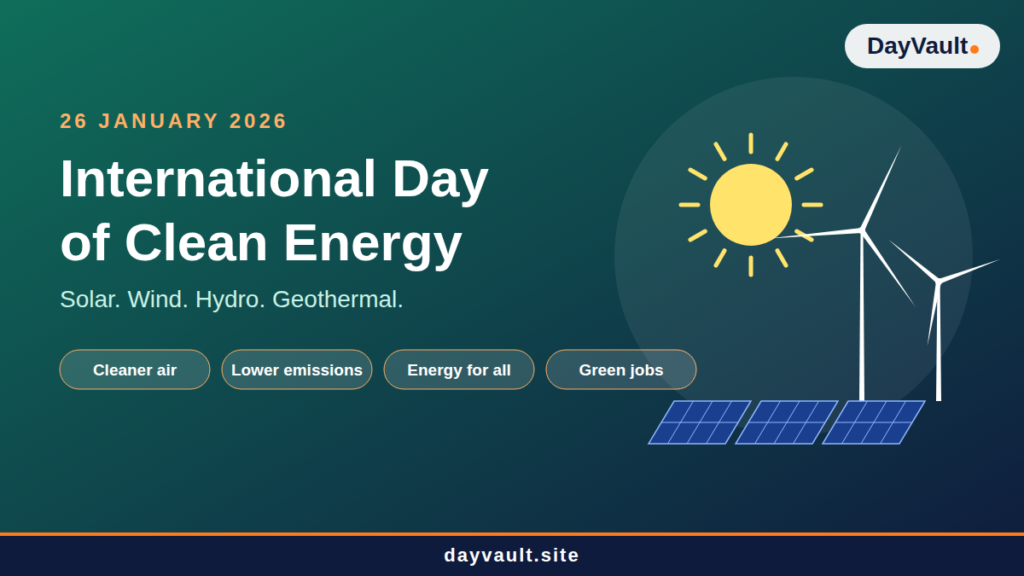
The International Day of Clean Energy is observed every year on January 26 to raise awareness about the importance of clean energy and encourage global action towards a sustainable energy future.
Established by the United Nations General Assembly in 2023, this international observance highlights the need for affordable, reliable, sustainable, and modern energy for everyone. It also encourages governments, businesses, communities, and individuals to support a fair transition towards cleaner energy systems.
But why does clean energy matter, and how can everyone contribute to this important global movement? Let’s explore its history, significance, benefits, and practical ways to make a difference.
What Is the International Day of Clean Energy?
The International Day of Clean Energy is a United Nations observance dedicated to promoting clean energy and encouraging people worldwide to support sustainable energy solutions.
It provides an opportunity to understand how energy production affects the planet and why renewable energy sources are essential for a healthier future.
The day focuses on several important objectives:
- Raising awareness about the importance of clean energy.
- Encouraging the use of renewable energy sources.
- Reducing dependence on fossil fuels.
- Supporting affordable and reliable electricity for everyone.
- Promoting energy efficiency and sustainable development.
- Encouraging international cooperation on clean energy technologies.
- Ensuring that the transition benefits all communities, including vulnerable populations.
Clean energy is not simply about protecting the environment. It is also about improving living conditions, supporting economic development, creating employment opportunities, and making essential services more accessible.
The United Nations emphasizes that the transition must be just and inclusive so that no community is left behind.
When Is the International Day of Clean Energy Celebrated?
The International Day of Clean Energy is celebrated annually on January 26.
The United Nations General Assembly officially proclaimed January 26 as the International Day of Clean Energy through Resolution A/RES/77/327, adopted on August 25, 2023.
The first observance took place on January 26, 2024.
This date is also significant because January 26 marks the founding anniversary of the International Renewable Energy Agency (IRENA), which was established in 2009.
IRENA supports countries in developing renewable energy systems, sharing knowledge, encouraging international cooperation, and accelerating the global transition towards sustainable energy.
The annual observance brings attention to the importance of making clean energy accessible, affordable, and reliable for people around the world. United Nations+2
Why Is Clean Energy Important?
Clean energy is important because the world’s energy choices directly influence environmental conditions, public health, economic development, and future generations.
Traditional energy sources, particularly fossil fuels, release greenhouse gases when burned. These emissions contribute to global warming and increase the risks associated with climate change.
Moving towards cleaner energy alternatives can help address these challenges.
Here are some of the most important reasons why clean energy matters.
1. Helps Reduce Climate Change
Climate change is one of the most serious environmental challenges facing the world.
Burning coal, oil, and natural gas releases carbon dioxide and other greenhouse gases into the atmosphere. These gases trap heat and contribute to rising global temperatures.
Solar, wind, hydropower, and geothermal energy can produce electricity with little or no direct greenhouse gas emissions during operation.
Expanding these energy sources can help reduce emissions and support global climate goals.
2. Improves Air Quality
Air pollution can affect people’s health, particularly in densely populated cities and industrial areas.
Power generation using fossil fuels can release harmful pollutants into the atmosphere. These pollutants contribute to respiratory problems and other health risks.
Clean energy technologies can reduce pollution associated with electricity production.
Cleaner air creates healthier communities and improves the quality of life for people of all ages.
3. Protects Natural Resources
Traditional energy production can involve mining, drilling, and other activities that disturb natural environments.
These activities may damage ecosystems, affect wildlife habitats, and place pressure on water and land resources.
Renewable energy sources use naturally replenished resources such as sunlight, wind, and flowing water.
Responsible development and planning are still necessary, but renewable energy can help reduce dependence on finite fossil fuel resources.
4. Supports Economic Development
Clean energy is also an important economic opportunity.
The development, installation, maintenance, and operation of renewable energy systems can create employment opportunities.
For example, solar energy projects require engineers, technicians, electricians, installers, and maintenance professionals.
As clean energy industries expand, they can support new businesses, encourage innovation, and strengthen local economies.
5. Makes Energy More Accessible
Millions of people around the world still lack reliable access to electricity and clean cooking solutions.
In remote communities, extending traditional electricity networks can be expensive and challenging.
Small solar systems, mini-grids, and other decentralized renewable energy solutions can help provide electricity to communities that are not connected to national power networks.
This can improve access to education, healthcare, communication, and economic opportunities.
Different Types of Clean Energy
Clean energy comes from different sources and technologies that help produce electricity, heat, and power with lower environmental impacts.
Understanding these energy sources helps people recognize the opportunities available for building a sustainable future.
1. Solar Energy
Solaris | Fazendas Solares
solarisenergias.com.br
Solar energy is produced by capturing sunlight and converting it into usable electricity or heat.
Solar panels, also known as photovoltaic panels, use sunlight to generate electricity.
Solar energy is one of the most widely recognized renewable energy sources because sunlight is naturally available and can be used in different locations.
Common applications include:
- Residential rooftop solar panels.
- Solar-powered streetlights.
- Solar water heaters.
- Solar farms.
- Solar-powered irrigation systems.
Solar energy can help households and businesses reduce their dependence on conventional electricity sources.
2. Wind Energy
Sika Group
sika.com
Wind energy uses the movement of air to generate electricity.
Wind turbines contain large blades that rotate when the wind blows. This movement powers a generator that produces electricity.
Wind farms can be established on land or offshore, depending on geographical conditions and project requirements.
Wind energy offers several benefits:
- It uses a naturally replenished resource.
- It produces electricity without directly burning fossil fuels.
- It can support large-scale electricity generation.
- It creates employment in engineering and maintenance.
Wind power is an important part of the global renewable energy transition.
3. Hydropower
Hydropower generates electricity using the movement of water.
In many hydroelectric facilities, flowing or falling water turns turbines connected to generators.
Hydropower has been used for electricity production for many years and remains an important renewable energy source in several countries.
However, large hydropower projects must be carefully planned because dams can affect rivers, aquatic ecosystems, wildlife, and nearby communities.
4. Geothermal Energy
Geothermal energy uses heat from beneath the Earth’s surface.
This natural heat can be used to generate electricity or provide heating for buildings and other facilities.
Geothermal energy is particularly useful in regions with suitable underground heat resources.
Unlike solar and wind power, geothermal energy can provide relatively consistent energy production because it does not depend directly on daily sunlight or changing wind conditions.
5. Biomass Energy
Biomass energy comes from organic materials such as agricultural waste, wood residues, and certain types of biodegradable waste.
These materials can be processed to produce heat, electricity, or biofuels.
When responsibly sourced and managed, biomass can help make productive use of waste materials.
However, it is important to consider emissions, land use, and resource management to ensure that biomass production remains sustainable.
How Does Clean Energy Help Fight Climate Change?
Climate change is closely connected to the way societies produce and consume energy.
Electricity generation, transportation, industrial activities, and heating systems often depend on fossil fuels.
When these fuels are burned, they release greenhouse gases that contribute to global warming.
Clean energy helps address this problem by offering alternatives that produce fewer emissions.
For example:
- Solar panels generate electricity without burning coal or gas.
- Wind turbines produce electricity using moving air.
- Hydropower uses flowing water to generate power.
- Geothermal systems use underground heat.
- Energy-efficient appliances reduce unnecessary electricity consumption.
However, switching energy sources is only one part of the solution.
Countries also need better electricity networks, energy storage systems, efficient buildings, cleaner transportation, and supportive environmental policies.
The goal is to develop energy systems that meet people’s needs while reducing environmental damage.
What Is the Connection Between Clean Energy and Sustainable Development?
Clean energy is closely connected to sustainable development because reliable electricity supports almost every area of modern life.
The United Nations includes affordable and clean energy in its Sustainable Development Goals as Goal 7 (SDG 7).
This goal aims to ensure access to affordable, reliable, sustainable, and modern energy for all by 2030.
Clean energy supports sustainable development in several ways.
Education
Electricity allows schools to use computers, lighting, internet services, and modern educational equipment.
Students in areas with reliable electricity can benefit from improved learning opportunities.
Healthcare
Hospitals and healthcare facilities need electricity to operate medical equipment, preserve vaccines, provide lighting, and maintain essential services.
Reliable clean energy can improve healthcare access, particularly in remote locations.
Agriculture
Farmers can use solar-powered irrigation systems, water pumps, and other technologies to support agricultural activities.
These solutions can be particularly valuable in areas with limited access to electricity.
Employment
Renewable energy industries create opportunities in manufacturing, construction, installation, research, engineering, and maintenance.
These jobs can support local communities and contribute to economic growth.
Gender Equality
Access to reliable electricity and clean cooking technologies can reduce the time and effort required for household activities.
It can also support education, entrepreneurship, and economic participation, particularly for women and girls.
Clean energy is therefore not only an environmental priority but also an important part of social and economic development. United Nations+1
Global Challenges in the Transition to Clean Energy
Although clean energy technologies are developing rapidly, the transition from fossil fuels to sustainable energy systems still faces several challenges.
Understanding these difficulties is important because clean energy solutions must be practical, affordable, and accessible.
1. High Initial Investment
Installing solar panels, wind turbines, batteries, and other renewable energy infrastructure can require significant initial investment.
Although operating costs can be lower over time, the upfront expense may be difficult for low-income households and developing countries.
Financial support, affordable financing, and government incentives can help address this challenge.
2. Limited Infrastructure
Some regions lack the electricity networks and storage systems required to support large amounts of renewable energy.
Modernizing existing infrastructure is essential for a successful transition.
3. Energy Storage
Solar and wind energy depend on weather conditions.
Solar panels produce less electricity at night, while wind turbines require suitable wind conditions.
Battery storage and other energy storage technologies can help balance electricity supply and demand.
4. Public Awareness
Many people are still unfamiliar with renewable energy technologies and their long-term benefits.
Educational campaigns, community programs, and public awareness initiatives can help people understand why clean energy matters.
5. Unequal Access
Some communities have greater financial and technological resources than others.
A successful clean energy transition must ensure that developing countries, rural populations, and low-income households can also benefit from modern energy systems.
How Can Individuals Celebrate the International Day of Clean Energy?
The International Day of Clean Energy is an opportunity for everyone to take practical steps towards a more sustainable lifestyle.
You do not need to own a solar farm or work in the energy industry to contribute. Small everyday actions can encourage responsible energy consumption.
Here are some meaningful ways to observe this day.
1. Learn About Renewable Energy
Spend time understanding different clean energy technologies, including solar, wind, hydropower, and geothermal energy.
Learning about these resources helps people make better decisions about their energy consumption.
2. Save Electricity at Home
Simple habits can reduce unnecessary electricity use.
You can:
- Switch off lights when leaving a room.
- Unplug chargers and unused electronics.
- Use energy-efficient LED bulbs.
- Choose energy-efficient appliances.
- Make better use of natural daylight.
- Avoid running electrical appliances unnecessarily.
These habits can help reduce electricity consumption and household energy expenses.
3. Explore Solar Energy Options
If suitable for your home or business, research rooftop solar panels and solar-powered appliances.
Before installing a system, compare costs, check equipment quality, understand maintenance requirements, and consult qualified professionals.
Even small solar-powered devices can introduce households to renewable energy.
4. Share Clean Energy Awareness
Use social media platforms to share useful information about renewable energy and environmental protection.
You can publish educational posts, short videos, infographics, or personal tips.
Encourage friends, family members, students, and colleagues to learn about sustainable energy practices.
5. Organize Educational Activities
Schools, colleges, universities, and community organizations can organize activities such as:
- Renewable energy awareness sessions.
- Solar energy demonstrations.
- Environmental poster competitions.
- Classroom discussions.
- Energy-saving challenges.
- Clean energy workshops.
These activities can make the topic more interesting and encourage young people to become part of the solution.
6. Support Sustainable Businesses
Choose businesses that make responsible efforts to reduce energy consumption and environmental impacts.
Supporting organizations that invest in renewable energy and energy efficiency can encourage more sustainable business practices.
7. Encourage Community Participation
Communities can work together to promote energy-saving habits, support local renewable energy projects, and raise awareness about electricity access.
Collective action can create positive changes that go beyond individual households.
The Role of Governments and Businesses in Promoting Clean Energy
Individuals have an important role in supporting clean energy, but larger changes also require cooperation from governments, businesses, and international organizations.
Governments can support the transition by developing policies that encourage renewable energy investments, improving electricity infrastructure, and expanding access to affordable power.
Some important actions include:
- Providing incentives for renewable energy projects.
- Supporting research and technological innovation.
- Improving electricity transmission and distribution systems.
- Encouraging energy-efficient buildings.
- Expanding clean cooking solutions.
- Supporting renewable energy education and training.
- Promoting fair access to modern energy technologies.
Businesses can also make a meaningful contribution.
Companies can install solar systems, improve building efficiency, use energy-saving equipment, and invest in cleaner production methods.
International cooperation is equally important because energy challenges do not stop at national borders.
Countries can share knowledge, technologies, investment opportunities, and practical experience to accelerate the global transition.
The Future of Clean Energy
The future of clean energy will depend on innovation, investment, responsible planning, and international cooperation.
Technologies such as advanced batteries, smart electricity grids, improved solar panels, offshore wind farms, and green hydrogen are creating new opportunities for cleaner energy systems.
Artificial intelligence and digital technologies can also help electricity networks manage energy demand, predict equipment problems, and improve system efficiency.
At the same time, renewable energy projects must be developed responsibly.
For example, solar and wind installations require suitable locations, and battery production involves materials that must be sourced and managed carefully.
Recycling, responsible manufacturing, environmental assessments, and sustainable resource management will become increasingly important.
The future should not focus only on producing more renewable electricity. It should also focus on ensuring that energy is affordable, dependable, and available to everyone.
The International Day of Clean Energy reminds us that this transition requires long-term commitment rather than a single day of awareness.
Why Should Young People Participate in Clean Energy Awareness?
Young people have an important role in shaping the future of energy and environmental sustainability.
They are future scientists, engineers, entrepreneurs, teachers, policymakers, and community leaders.
By learning about renewable energy at an early age, students can develop an understanding of environmental challenges and possible solutions.
Young people can participate by:
- Studying renewable energy technologies.
- Joining environmental awareness campaigns.
- Participating in science exhibitions.
- Creating educational content about sustainability.
- Supporting electricity-saving initiatives.
- Exploring careers in renewable energy.
- Developing innovative solutions to local energy challenges.
Schools and educational institutions can also introduce practical activities that explain how solar panels, wind turbines, and other renewable technologies work.
Encouraging young people to become informed and responsible energy users can help build a more sustainable future.
International Day of Clean Energy: A Reminder for a Better Future
The International Day of Clean Energy is more than an annual environmental observance. It represents a global commitment to improving the way energy is produced, distributed, and consumed.
Every country has different energy needs, resources, and challenges. However, the common goal remains the same: creating a cleaner, more reliable, and more inclusive energy future.
From installing solar panels to supporting renewable energy policies, every positive step can contribute to meaningful progress.
The transition will not happen overnight. It requires cooperation, investment, education, and consistent action from individuals, businesses, governments, and communities.
By celebrating this day, we can encourage more people to understand the importance of clean energy and recognize their role in protecting the planet.
Frequently Asked Questions (FAQs)
1. When is the International Day of Clean Energy celebrated?
The International Day of Clean Energy is celebrated every year on January 26. The United Nations established this observance in 2023, and the first celebration took place in 2024.
2. Why do we celebrate the International Day of Clean Energy?
We celebrate this day to raise awareness about renewable energy, encourage sustainable energy practices, reduce dependence on fossil fuels, and promote affordable and reliable energy access for everyone.
3. Who established the International Day of Clean Energy?
The United Nations General Assembly established the International Day of Clean Energy through Resolution A/RES/77/327, adopted on August 25, 2023.
4. What are the main sources of clean energy?
The main renewable energy sources include solar, wind, hydropower, geothermal, and biomass energy. These sources use naturally replenished resources to produce electricity, heat, or fuel.
5. How can students celebrate the International Day of Clean Energy?
Students can celebrate by participating in renewable energy workshops, creating educational posters, organizing awareness campaigns, learning about solar and wind power, and practicing electricity-saving habits at school and home.
6. What is the difference between clean energy and renewable energy?
Renewable energy comes from naturally replenished resources such as sunlight, wind, and water. Clean energy is a broader term for energy sources and technologies that produce little or no pollution during operation. The terms overlap, but they are not always identical.
7. How does clean energy help the environment?
Clean energy can reduce greenhouse gas emissions and air pollution associated with fossil fuel use. It also helps reduce dependence on finite energy resources and supports efforts to address climate change.
8. What is Sustainable Development Goal 7?
Sustainable Development Goal 7 is a United Nations goal focused on ensuring access to affordable, reliable, sustainable, and modern energy for all by 2030.
Conclusion
The International Day of Clean Energy reminds us that a sustainable future begins with responsible energy choices. Celebrated every year on January 26, this important observance encourages people around the world to support renewable energy, improve energy efficiency, and promote equal access to modern electricity.
Clean energy offers many opportunities, including reducing pollution, addressing climate change, supporting economic development, and improving living conditions. However, achieving these benefits requires cooperation and long-term commitment.
Everyone has a role to play, whether by saving electricity at home, learning about renewable technologies, supporting sustainable businesses, or spreading environmental awareness.
A cleaner future is possible when individuals and communities take action together. By making better energy choices today, we can help create a healthier and more sustainable planet for future generations.
Article references: United Nations, International Day of Clean Energy; United Nations General Assembly Resolution A/RES/77/327; United Nations Sustainable Development Goal 7; International Renewable Energy Agency.
FAQs – International Day of Clean Energy
Q1. When is the International Day of Clean Energy celebrated?
The International Day of Clean Energy is celebrated every year on January 26 to promote renewable energy and sustainable energy solutions.
Q2. Why is the International Day of Clean Energy important?
This day raises awareness about clean energy, encourages renewable energy adoption, reduces pollution, and supports a sustainable future.
Q3. Who established the International Day of Clean Energy?
The United Nations General Assembly established this observance in 2023 through Resolution A/RES/77/327.
Q4. What are the main types of clean energy?
The main types include solar energy, wind energy, hydropower, geothermal energy, and biomass energy.
Q5. How can we celebrate the International Day of Clean Energy?
People can celebrate by saving electricity, learning about renewable energy, installing solar panels, organizing awareness campaigns, and sharing clean energy information.
Q6. How does clean energy help reduce climate change?
Clean energy reduces dependence on fossil fuels and helps lower greenhouse gas emissions, which contribute to global warming.
Q7. What is the main purpose of clean energy?
The main purpose is to provide affordable, reliable, and sustainable energy while reducing environmental pollution and protecting natural resources.
Q8. What is the theme of the International Day of Clean Energy?
The observance promotes a global transition towards clean, affordable, reliable, and sustainable energy. There is no need to assume a different official annual theme unless it is announced by the United Nations.
Q9. Why is renewable energy important for future generations?
Renewable energy helps conserve natural resources, reduce pollution, address climate change, and create a healthier environment for future generations.
Q10. What is Sustainable Development Goal 7?
SDG 7 is a United Nations goal that aims to ensure access to affordable, reliable, sustainable, and modern energy for everyone by 2030.
