The internet has become an essential part of everyday life. People use it to communicate, study, work, shop, share information and stay connected with the world. However, alongside its many benefits, the digital world also presents risks such as cyberbullying, online scams, identity theft, privacy violations and harmful content. These challenges make internet safety more important than ever.
Safer Internet Day is celebrated to encourage people to use digital technology safely, responsibly and respectfully. It raises awareness about online risks and promotes a positive digital environment, particularly for children and young people.
Observed in countries around the world, this annual awareness campaign brings together students, parents, teachers, technology companies, governments and communities. Its message is simple: everyone has a role in making the internet a safer place.
Understanding why Safer Internet Day is celebrated, how it started and what it represents can help individuals make better decisions online.
When Is Safer Internet Day Celebrated?
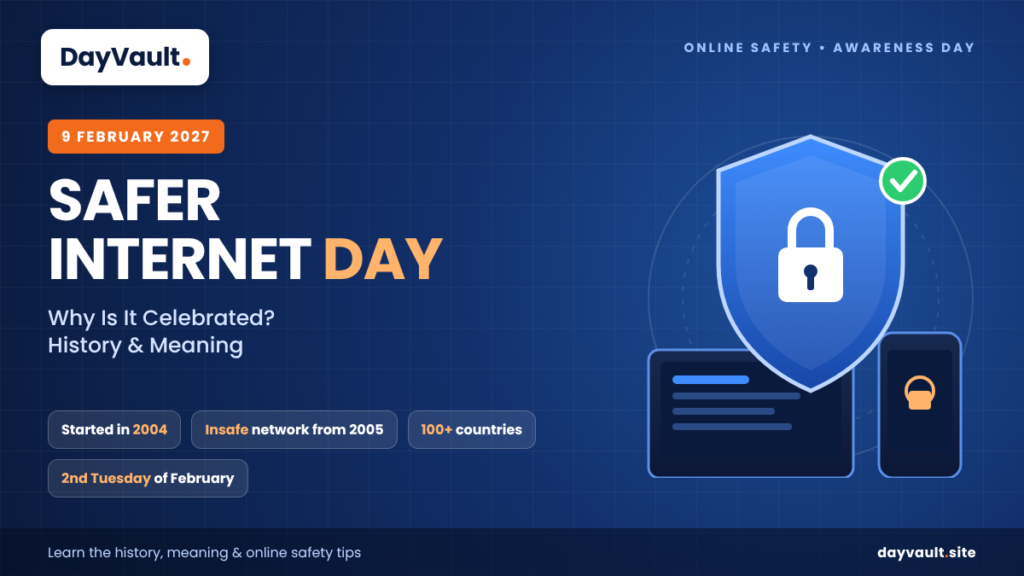
Safer Internet Day is celebrated annually on the second Tuesday of February.
The date changes each year because it follows a particular day of the week rather than a fixed calendar date.
Here are some important dates:
- Safer Internet Day 2025: February 11
- Safer Internet Day 2026: February 10
- Safer Internet Day 2027: February 9
The observance is marked through educational activities, awareness campaigns, community events and online discussions.
Although the main celebration takes place on one day, many organisations now organise online safety activities throughout February.
What Is Safer Internet Day?
Safer Internet Day is an international awareness campaign that promotes the safe, positive and responsible use of the internet and digital technology.
It encourages people to understand online risks, protect their personal information and treat others respectfully in digital spaces.
The campaign particularly focuses on children and young people because they are growing up in an increasingly connected world. However, its message applies to everyone who uses the internet.
Safer Internet Day addresses several important subjects, including:
- Cyberbullying and online harassment.
- Online privacy and personal information protection.
- Digital identity and online reputation.
- Internet scams and fraudulent websites.
- Social media safety.
- Harmful and inappropriate online content.
- Responsible use of artificial intelligence.
- Digital citizenship and respectful communication.
The campaign also highlights the positive opportunities technology provides. The internet can support education, creativity, communication and innovation when people understand how to use it responsibly.
Its widely recognised slogan, “Together for a better internet,” reflects the idea that online safety is a shared responsibility.
History and Origin of Safer Internet Day
Safer Internet Day began in Europe in 2004 as an initiative of the European Union funded Safe Borders project.
At that time, internet access was expanding, and more people were beginning to use online services for communication, entertainment and information. However, concerns about children’s online experiences, inappropriate content and digital safety were also increasing.
The SafeBorders project helped introduce the idea of creating a dedicated awareness day to encourage safer internet use.
The first Safer Internet Day took place on February 6, 2004, with participation from 14 countries.
In 2005, the Insafe network of Safer Internet Centres adopted the initiative as one of its early activities. This helped the campaign develop beyond its original European reach.
As internet technology continued to evolve, the campaign expanded its focus to include new digital challenges.
Its discussions increasingly addressed topics such as:
- Online bullying and harassment.
- Social networking and digital communication.
- Personal privacy and identity protection.
- Responsible technology use.
- Digital rights and responsibilities.
- Emerging online threats.
In 2009, the introduction of Safer Internet Day committees helped strengthen participation in countries outside the existing European network.
Over time, schools, governments, technology organisations, charities and communities across different continents joined the campaign.
Today, Safer Internet Day is a recognised global awareness initiative, coordinated through the Insafe and INHOPE networks with support from the European Commission.
Its growth demonstrates how online safety has developed from a concern affecting a particular group of internet users into an important issue for society as a whole.
Why Is Safer Internet Day Celebrated?
Safer Internet Day is celebrated because the internet should be a place where people can learn, communicate, explore and express themselves without unnecessary risks.
Although technology creates many opportunities, users can also encounter dangerous situations if they do not understand how to protect themselves.
The celebration focuses on several important reasons.
To Raise Awareness About Online Safety
Many internet users do not fully understand the risks associated with sharing information, clicking unfamiliar links or communicating with strangers online.
Safer Internet Day encourages people to recognise these risks and learn practical ways to protect themselves.
Awareness is especially important for young internet users who may not always recognise suspicious online behaviour.
To Prevent Cyberbullying
Cyberbullying is one of the major challenges affecting digital communities.
It can involve threatening messages, spreading rumours, sharing embarrassing pictures, sending abusive comments or repeatedly targeting someone through social media and messaging platforms.
Unlike some forms of traditional bullying, online harassment can follow a person beyond school or other physical environments.
Safer Internet Day encourages kindness, empathy and responsible communication. It also reminds victims that they should seek help from trusted adults, teachers or appropriate reporting services.
To Protect Personal Information and Privacy
Personal information is valuable, and sharing too much of it online can create serious problems.
Information such as home addresses, phone numbers, passwords, financial details and private photographs should be protected.
Safer Internet Day promotes better privacy habits, including using strong passwords, reviewing account settings and thinking carefully before posting personal information.
It reminds users that information shared online may be copied, stored or circulated beyond their original audience.
To Protect Children and Young People
Children and teenagers use the internet for education, entertainment, gaming and communication.
However, they may encounter inappropriate content, online manipulation, scams or people who attempt to exploit their trust.
Safer Internet Day encourages parents, teachers and caregivers to help young people develop digital awareness.
It also promotes open conversations so children feel comfortable asking for help when something uncomfortable or frightening happens online.
To Encourage Responsible Social Media Use
Social media platforms allow people to connect, exchange ideas and share experiences.
However, careless behaviour on these platforms can contribute to misinformation, harassment, privacy problems and online conflicts.
The campaign encourages users to verify information before sharing it, respect different opinions and consider the consequences of their online actions.
To Promote Digital Literacy
Digital literacy means having the knowledge and skills needed to use technology effectively and responsibly.
It includes recognising unreliable information, understanding privacy settings, identifying suspicious websites and communicating appropriately online.
Safer Internet Day supports digital education so that people can become more confident and informed internet users.
What Is the Meaning and Significance of Safer Internet Day?
The meaning of Safer Internet Day goes beyond avoiding online danger. It represents a shared commitment to creating a digital environment where people can benefit from technology while respecting the rights and safety of others.
The campaign highlights three important principles.
Safety: Internet users should understand potential dangers and know how to protect their information, accounts and digital identities.
Responsibility: Everyone should think carefully about their online behaviour, including the content they publish and the way they communicate with others.
Respect: Digital spaces should encourage kindness, inclusion and respectful interactions rather than bullying, discrimination or harassment.
These principles are important because online experiences can affect people’s education, relationships, confidence and everyday lives.
The day also reminds technology companies, policymakers and educational institutions that they have responsibilities in developing safer digital environments.
Ultimately, a better internet requires more than security software or privacy settings. It also requires informed users, responsible organisations and supportive communities.
How Is Safer Internet Day Celebrated Around the World?
Safer Internet Day is celebrated in many countries through educational programmes, public awareness campaigns and community activities.
Although activities differ between countries, the overall objective remains the same: promoting safe and positive internet use.
In Schools and Educational Institutions
Schools often organise special lessons, classroom discussions, presentations and activities about internet safety.
Students may learn how to identify online scams, create strong passwords, report cyberbullying and protect their personal information.
Teachers can also use quizzes, posters and group discussions to make digital safety education more engaging.
Through Online Awareness Campaigns
Organisations and individuals use websites and social media platforms to share internet safety tips, educational videos and awareness messages.
Hashtags and campaign materials help spread the message to wider audiences.
Through Community Events
Libraries, youth organisations and community groups may arrange workshops, seminars and public discussions.
These activities help parents, educators and young people understand changing online risks and discover practical ways to respond.
Through Technology Organisations
Technology companies and online safety organisations can use the occasion to highlight privacy tools, safety features, reporting systems and educational resources.
Their participation helps promote safer digital experiences for users.
Through Family Discussions
Families can also observe the day by discussing online habits, screen time, privacy and responsible social media use.
Parents can encourage children to share their online experiences and explain what they should do if they encounter suspicious or uncomfortable situations.
How Can You Celebrate Safer Internet Day?
You do not need to organise a large event to participate in Safer Internet Day. Small actions can help create safer online communities.
Here are some practical ways to take part.
Create Strong Passwords
Use unique and difficult to guess passwords for important accounts. Avoid using the same password across multiple websites.
Consider using a trusted password manager to organise your login information.
Enable Two Factor Authentication
Two factor authentication adds another layer of protection to your online accounts.
Whenever possible, enable this feature to make it more difficult for unauthorised people to access your accounts.
Think Before You Share
Before posting photographs, personal information or opinions online, consider who might see them and how they could be used.
Avoid sharing private information publicly.
Learn to Recognise Online Scams
Be careful with unexpected messages, suspicious links, fake offers and requests for passwords or financial information.
When something seems unusual, verify it through an official website or trusted communication channel.
Stand Against Cyberbullying
Do not participate in online harassment or share content intended to embarrass another person.
If you witness cyberbullying, support the affected individual and use the platform’s reporting tools when appropriate.
Educate Children About Internet Safety
Parents and teachers can discuss safe browsing, privacy, online friendships and responsible gaming with children.
Encourage young people to ask questions and report uncomfortable experiences without fear of punishment.
Share Useful Safety Information
Post educational messages, organise a short discussion or share reliable online safety resources with friends and family.
Even one helpful conversation can encourage someone to improve their digital habits.
Safer Internet Day and the Role of Artificial Intelligence
Artificial intelligence is changing the way people use the internet.
AI powered tools can support learning, creativity, communication and research. However, they also introduce new challenges that users should understand.
For example, artificial intelligence can be used to generate misleading images, create convincing fake messages, imitate voices and produce false information.
People should therefore learn to evaluate digital content carefully rather than automatically believing everything they see online.
Safer Internet Day provides an opportunity to discuss responsible AI use, digital privacy and the importance of checking information before sharing it.
Young people should also understand that AI tools can make mistakes and that personal or confidential information should not be entered into online services without considering their privacy policies.
A safer digital future depends on combining technological progress with awareness, critical thinking and responsible behaviour.
Who Organises Safer Internet Day?
Safer Internet Day developed from a European Union funded initiative and has grown into a worldwide awareness campaign.
Its global coordination involves the Insafe and INHOPE networks, with support from the European Commission.
Insafe is a network of Safer Internet Centres that promotes online safety education and awareness.
INHOPE is an international network of hotlines that helps address online child sexual abuse material through appropriate reporting and response mechanisms.
National organisations, schools, governments, technology companies and community groups also contribute to activities in their respective countries.
This collaborative approach is important because online safety cannot be achieved by one organisation or country alone.
Is Safer Internet Day an Official International Day?
Safer Internet Day is a global awareness campaign, but it should not be confused with an official United Nations international day.
It originated through the European Union’s SafeBorders project in 2004 and later expanded internationally through the Insafe network and its partners.
Today, it is observed through activities in countries and territories across the world.
Its international participation makes it an important occasion in the online safety calendar, even though its origins and organisational structure are different from those of UN designated international observances.
Interesting Facts About Safer Internet Day
Here are some useful facts about this global online safety campaign:
- Safer Internet Day began in 2004.
- The first celebration took place on February 6, 2004.
- The initiative originated through the EU funded SafeBorders project.
- The Insafe network adopted the campaign in 2005.
- The day is observed annually on the second Tuesday of February.
- Its well known slogan is “Together for a better internet.”
- The campaign addresses issues ranging from cyberbullying to digital identity.
- Its activities involve children, young people, parents, educators and technology organisations.
- The campaign has expanded beyond Europe to reach communities worldwide.
Why Does Safer Internet Day Matter More Than Ever?
The internet continues to evolve, and new technologies are changing how people communicate, study, work and access information.
Social media, online gaming, artificial intelligence and digital financial services have created new opportunities. At the same time, users must learn to recognise changing risks.
Online scams can become more convincing, personal information can spread quickly, and harmful content can reach vulnerable users.
These challenges show why internet safety education should not be limited to one annual celebration.
Children need guidance, adults need updated digital skills, and organisations need to develop safer online services.
Safer Internet Day provides an opportunity to bring these conversations together and encourage practical improvements.
Its message remains relevant throughout the year: technology should empower people, not expose them to unnecessary harm.
FAQs About Safer Internet Day
Why is Safer Internet Day celebrated?
Safer Internet Day is celebrated to raise awareness about online safety and encourage responsible internet use. It promotes privacy protection, digital literacy, respectful communication and safer online experiences, especially for children and young people.
When is Safer Internet Day celebrated?
Safer Internet Day takes place every year on the second Tuesday of February. In 2027, it will be celebrated on February 9.
When did Safer Internet Day start?
Safer Internet Day began in 2004 as an initiative of the European Union funded Safe Borders project. The Insafe network adopted it in 2005.
What is the main message of Safer Internet Day?
Its widely recognised message is “Together for a better internet.” It encourages everyone to contribute to a safer, more respectful and positive digital environment.
Who celebrates Safer Internet Day?
Schools, students, parents, teachers, governments, technology companies, charities and community organisations participate in Safer Internet Day activities around the world.
Is Safer Internet Day celebrated worldwide?
Yes. It has expanded from its European beginnings into a global campaign involving countries and territories across different continents.
How can students participate in Safer Internet Day?
Students can participate by learning about online privacy, creating strong passwords, identifying scams, preventing cyberbullying, discussing digital responsibility and sharing internet safety messages.
Conclusion
Safer Internet Day is more than an annual awareness event. It is a reminder that everyone has a responsibility to make the digital world safer, kinder and more trustworthy.
From its beginning as a European initiative in 2004 to its development into a global campaign, the occasion has continued to address the changing challenges of internet use.
Whether you are a student, parent, teacher, business owner or everyday internet user, you can contribute by protecting personal information, respecting others online and sharing accurate digital safety information.
A better internet does not happen automatically. It starts with informed choices, responsible behaviour and collective action.
This Safer Internet Day, take one practical step towards making the internet safer for everyone.
Q1. Why is Safer Internet Day celebrated?
Safer Internet Day is celebrated to promote online safety, protect personal information, prevent cyberbullying and encourage responsible internet use.
Q2. When is Safer Internet Day celebrated?
It is celebrated annually on the second Tuesday of February. In 2027, it falls on February 9.
Q3. What is the history of Safer Internet Day?
Safer Internet Day started in 2004 through the European Union-funded SafeBorders project and later expanded into a worldwide awareness campaign.
Q4. What is the theme of Safer Internet Day?
Its widely recognised slogan is “Together for a better internet.” Campaign themes can change from year to year.
Q5. Who started Safer Internet Day?
It was initiated through the EU-funded SafeBorders project and subsequently adopted by the Insafe network in 2005.
Q6. Is Safer Internet Day celebrated worldwide?
Yes. Schools, organisations, governments and communities in countries around the world participate in online safety awareness activities.
Q7. How can we celebrate Safer Internet Day?
You can celebrate by learning cybersecurity tips, using strong passwords, protecting personal information, preventing cyberbullying and educating others about online safety.
