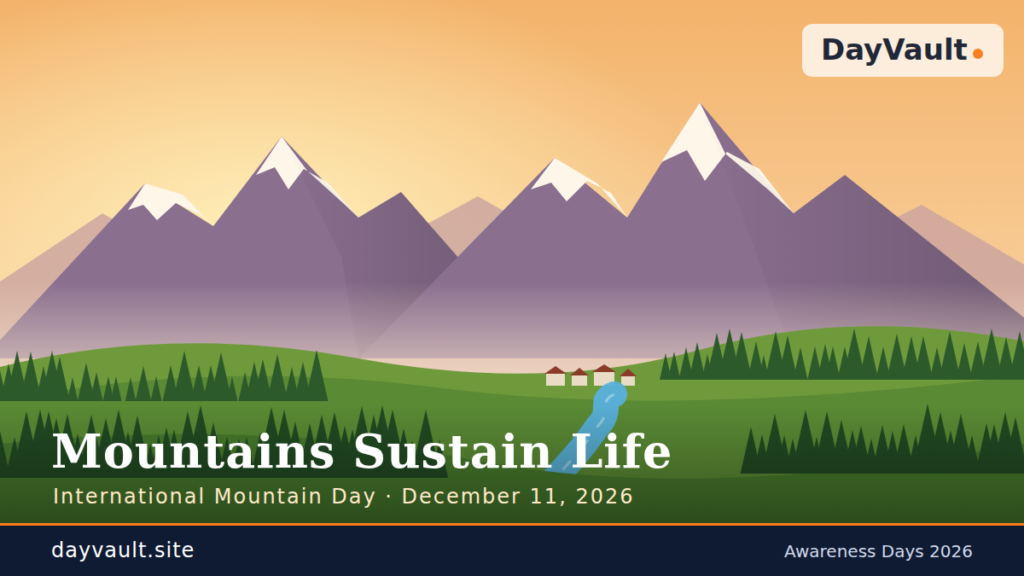
Mountains are among the most remarkable features of our planet. They provide freshwater, support unique wildlife, sustain local communities, and offer landscapes that inspire people around the world. Yet these important ecosystems face growing challenges, including climate change, deforestation, soil erosion, and unsustainable land use.
International Mountain Day is observed every year on December 11 to raise awareness about the importance of mountains and encourage their protection. The day also highlights the lives, cultures, and livelihoods of people who call mountainous regions home.
From the towering peaks of the Himalayas to the green valleys of the Alps, mountains connect people and nature in countless ways. Understanding their value is the first step toward protecting them for future generations.
In this article, discover when International Mountain Day is celebrated, why it was established, what the 2026 theme means, and how individuals, schools, and communities can take part.
When Is International Mountain Day Celebrated?
International Mountain Day is celebrated annually on December 11. The United Nations General Assembly designated the date in 2002, and the first official observance took place in 2003. The Food and Agriculture Organization of the United Nations (FAO) coordinates the global celebration.

Food and Agriculture Organization
+1
The observance encourages governments, organizations, educational institutions, and individuals to recognize the environmental, economic, and cultural importance of mountain regions.
Here are the key details:
- Date: December 11 every year
- First observed: 2003
- Established by: United Nations General Assembly
- Coordinating organization: Food and Agriculture Organization of the United Nations
- Main purpose: To promote awareness of mountain ecosystems, sustainable development, and the well-being of mountain communities
International Mountain Day is an awareness observance rather than a universal public holiday. Its activities vary from country to country, but its central message remains the same: mountains matter, and protecting them is a shared responsibility.
What Is the Theme of International Mountain Day 2026?
The official theme for International Mountain Day 2026 is “Mountain pastoralists: Sustaining rangelands, knowledge and livelihoods.” The theme recognizes the people who raise livestock in mountain regions and help manage the grasslands and other natural landscapes on which their livelihoods depend.
Mountain pastoralists often rely on generations of local and Indigenous knowledge to understand seasonal changes, find grazing areas, care for livestock, and manage natural resources.
Their work is closely connected to food production, biodiversity conservation, soil health, and the long-term sustainability of mountain landscapes.
Why Does the 2026 Theme Matter?
Mountain grasslands and rangelands provide grazing areas for livestock and support a wide range of plants and animals. When managed responsibly, these landscapes can help maintain healthy soils, support water cycles, preserve habitats, and strengthen local economies.
However, climate change, land degradation, restricted grazing routes, and competition for land can make traditional pastoral livelihoods increasingly difficult.
The 2026 theme draws attention to several important priorities:
- Protecting rangelands: Maintaining healthy grasslands and preventing land degradation.
- Preserving traditional knowledge: Recognizing the experience of mountain communities in managing local ecosystems.
- Supporting livelihoods: Helping pastoralist families maintain sustainable sources of income and food.
- Promoting climate resilience: Encouraging practices that help communities adapt to changing environmental conditions.
- Empowering women and young people: Expanding opportunities for education, innovation, and participation in mountain economies.
By focusing on pastoralists, International Mountain Day 2026 highlights the connection between healthy landscapes and the people who care for them.
What Is the History of International Mountain Day?
The history of International Mountain Day is closely connected to growing international recognition of the need to protect mountain environments.
Mountains were once often viewed primarily as barriers to travel or places rich in natural resources. Over time, scientists, governments, and environmental organizations increasingly recognized their importance to water supplies, biodiversity, agriculture, and human settlements.
A major milestone came in 2002, when the United Nations marked the International Year of Mountains. This initiative helped bring global attention to sustainable mountain development and the challenges faced by mountain communities.
At the end of that year, the UN General Assembly designated December 11 as International Mountain Day, beginning in 2003. The FAO was given a leading role in coordinating the annual observance.
Since then, the day has addressed different aspects of mountain life and conservation through annual themes. These themes have highlighted subjects such as biodiversity, climate adaptation, sustainable development, and the importance of glaciers.
The observance has also created opportunities for schools, researchers, community groups, and environmental organizations to share knowledge and promote practical solutions.
Today, International Mountain Day serves as a reminder that protecting mountains requires international cooperation as well as action at the local level.
Why Are Mountains Important to Our Planet?
Mountains are much more than beautiful landscapes. They perform essential ecological functions and support millions of livelihoods. Their influence extends far beyond the highlands, affecting people and ecosystems in surrounding lowlands and distant regions.
1. Mountains Provide Essential Freshwater
Many major rivers receive water from mountain rainfall, snowmelt, and glaciers. These water sources support drinking supplies, agriculture, sanitation, and electricity generation.
Mountain forests and soils can also influence how water is absorbed, stored, and released into rivers. Healthy watersheds help regulate water flows and support communities downstream.
When glaciers retreat or mountain landscapes become degraded, water availability and seasonal river patterns can change. This can create challenges for farmers, households, and industries that depend on reliable supplies.
Protecting mountain ecosystems is therefore an important part of wider water conservation efforts.
2. Mountains Support Biodiversity
Mountains contain a remarkable variety of habitats. Differences in elevation, temperature, rainfall, and soil conditions allow different plant and animal species to thrive within relatively small geographical areas.
Depending on the region, mountain habitats may support snow leopards, ibex, mountain goats, eagles, rare medicinal plants, and many other species.
Some mountain species are specially adapted to cold temperatures, steep terrain, or limited food supplies. These adaptations make mountain biodiversity valuable but can also leave certain species vulnerable when their habitats change.
Protecting forests, grasslands, wetlands, and alpine environments helps preserve this natural diversity.
3. Mountains Help Regulate the Climate
Mountain forests and grasslands store carbon in vegetation and soils. Healthy ecosystems can also influence local temperatures, water retention, and the movement of moisture through the landscape.
At the same time, mountain regions are particularly sensitive to climate change. Rising temperatures can contribute to glacier loss, changing snowfall patterns, shifting habitats, and increased risks from certain natural hazards.
Protecting mountain vegetation and restoring degraded land can support climate resilience, although these measures cannot replace the need to reduce greenhouse gas emissions.
4. Mountains Support Food and Livelihoods
Mountain communities depend on their surrounding environments in many ways. Farming, livestock rearing, forestry, tourism, and traditional crafts provide livelihoods in different regions.
Products such as wool, honey, fruits, herbs, dairy products, and locally made handicrafts can support household incomes and preserve regional traditions.
Mountain environments also present challenges. Steep slopes, limited transport infrastructure, extreme weather, and short growing seasons can make farming and business activities difficult.
Supporting sustainable livelihoods helps communities protect their natural surroundings while maintaining economic opportunities.
5. Mountains Preserve Cultural Heritage
Mountains are home to communities with distinct languages, traditions, architectural styles, food cultures, and forms of local knowledge.
In many places, festivals, music, farming practices, and seasonal celebrations reflect the close relationship between people and their environments.
Indigenous Peoples and local communities often possess detailed knowledge of native plants, weather patterns, water sources, and land management.
Preserving this cultural heritage is an important part of sustainable mountain development. Conservation efforts are more effective when local communities are respected and involved in decisions affecting their homes and resources.
What Are the Biggest Threats Facing Mountains?
Despite their importance, mountain ecosystems face several interconnected threats. Understanding these challenges helps explain why International Mountain Day remains relevant.
Climate Change and Melting Glaciers
Rising global temperatures are affecting glaciers, snow cover, and mountain habitats. Glaciers that once stored water over long periods are shrinking in many parts of the world.
Changes in snow and ice can affect river flows, water security, ecosystems, and communities. In some locations, glacier-related hazards also create risks for people living downstream.
Reducing emissions and improving climate adaptation are essential to addressing these challenges.
Deforestation and Habitat Loss
Clearing forests for agriculture, settlements, roads, or other development can fragment habitats and expose mountain soils to erosion.
When vegetation is removed from steep slopes, heavy rainfall can carry soil into rivers and streams. This may damage habitats, reduce soil fertility, and increase sedimentation.
Responsible land management and the restoration of native vegetation can help reduce these impacts.
Soil Erosion and Land Degradation
Mountain soils may develop slowly, making them difficult to replace once lost. Unsustainable farming, overgrazing, poorly planned construction, and vegetation removal can accelerate erosion.
Sustainable grazing practices, appropriate farming methods, and careful management of slopes can help maintain soil quality.
Unsustainable Tourism
Tourism provides income and employment in many mountain destinations. However, poorly managed tourism can contribute to litter, water pollution, habitat disturbance, and pressure on local infrastructure.
Visitors can help by respecting marked trails, avoiding damage to vegetation, supporting local businesses, and following conservation rules.
Economic and Social Challenges
Mountain communities may face limited access to healthcare, education, transport, markets, and reliable digital services.
Young people sometimes leave rural mountain areas in search of better opportunities elsewhere. When local livelihoods become less viable, communities can lose both population and valuable traditional knowledge.
Sustainable development should therefore protect the environment while improving access to services, fair economic opportunities, and community participation.
How Can We Celebrate International Mountain Day?
You do not need to live near a mountain to participate in International Mountain Day. Anyone can use December 11 as an opportunity to learn about mountain environments and take practical steps toward protecting them.
Here are some meaningful ways to celebrate.
1. Learn About Mountain Ecosystems
Explore the mountains of your country or another part of the world. Learn about their wildlife, rivers, forests, communities, and environmental challenges.
You can read educational articles, watch documentaries, or explore resources from the United Nations and FAO.
2. Organize an Educational Activity
Schools, colleges, and community organizations can arrange activities that make mountain conservation easier to understand.
Ideas include:
- Creating posters about mountain protection.
- Organizing a classroom presentation on glaciers and freshwater.
- Holding a photography or drawing competition.
- Hosting a discussion about climate change and mountain communities.
- Preparing a display about famous mountain ranges and their wildlife.
These activities encourage students to connect environmental knowledge with everyday choices.
3. Share Awareness on Social Media
Share a photograph of a mountain landscape, an educational fact, or a message about protecting mountain ecosystems.
Explain why mountains matter rather than posting an image without context. You can also use the campaign hashtag #MountainsMatter to join the broader conversation promoted by FAO.
If you manage a website or blog, publishing an informative article can help more people discover the observance.
4. Support Responsible Tourism
If you visit a mountain destination, treat it as a living ecosystem rather than simply a sightseeing location.
Practical steps include:
- Carrying reusable water bottles and containers.
- Taking all rubbish back with you.
- Staying on designated trails.
- Avoiding disturbance to wildlife.
- Respecting local customs and community rules.
- Choosing responsible local guides and businesses.
Responsible travel can help protect natural areas while supporting local livelihoods.
5. Reduce Waste and Conserve Resources
Everyday environmental choices can contribute to wider conservation efforts. Reducing unnecessary waste, avoiding single-use products where practical, conserving water, and supporting responsible production all help reduce pressure on natural resources.
Individual actions alone cannot solve every mountain conservation challenge, but they can reinforce broader efforts by communities, governments, and organizations.
6. Support Mountain Communities
Buy locally produced goods when possible, respect Indigenous knowledge, and learn about the challenges faced by mountain residents.
You can also support credible conservation organizations or community initiatives that work on sustainable livelihoods, habitat restoration, and access to essential services.
The most meaningful celebrations combine awareness with action.
Famous Mountain Ranges Around the World
Mountains occur across every inhabited continent and include a remarkable range of landscapes and cultures.
Here are some well-known mountain ranges and why they matter.
The Himalayas: Stretching across parts of South Asia, the Himalayas include Mount Everest, the world’s highest mountain above sea level. The region is important for biodiversity, freshwater systems, cultural heritage, and the livelihoods of millions of people.
The Andes: Running along the western edge of South America, the Andes support diverse ecosystems, agriculture, traditional communities, and important water sources.
The Alps: Located in Europe, the Alps are known for their distinctive landscapes, tourism, mountain forests, and role in regional water systems.
The Rocky Mountains: Extending through western North America, the Rockies contain forests, alpine habitats, rivers, and important wildlife areas.
The Karakoram: Located in parts of Pakistan, India, and China, the Karakoram is renowned for its dramatic peaks and glaciers. Pakistan’s Gilgit-Baltistan region includes spectacular mountain landscapes and communities whose lives are closely connected to this environment.
These ranges differ in climate, wildlife, geography, and culture. However, they share a common need for responsible management and long-term conservation.
The Role of Governments and Organizations in Mountain Conservation
Individual choices are important, but protecting mountains on a meaningful scale also requires coordinated action.
Governments can establish and manage protected areas, improve environmental laws, invest in disaster preparedness, and support sustainable agriculture. They can also improve access to education, healthcare, transport, and digital services in remote mountain communities.
Scientific institutions help monitor glaciers, wildlife populations, water systems, and changes in mountain climates. Their research can inform conservation planning and help communities prepare for environmental risks.
International organizations support cooperation across borders, particularly where rivers, mountain ranges, and ecosystems extend across several countries.
Local communities must also have a meaningful role in decisions affecting their land and livelihoods. Conservation policies are more likely to succeed when they respect local knowledge, recognize community rights, and provide realistic economic alternatives.
International Mountain Day brings these responsibilities into focus by encouraging collaboration between policymakers, researchers, businesses, communities, and the public.
Frequently Asked Questions
1. When is International Mountain Day celebrated?
International Mountain Day is celebrated every year on December 11. The United Nations designated the date in 2002, and the first observance took place in 2003.
2. What is the theme of International Mountain Day 2026?
The official 2026 theme is “Mountain pastoralists: Sustaining rangelands, knowledge and livelihoods.” It highlights the role of livestock-raising communities in maintaining mountain rangelands, supporting food security, preserving traditional knowledge, and sustaining local economies.
3. Why do we celebrate International Mountain Day?
The day raises awareness about the importance of mountains for freshwater, biodiversity, climate resilience, food production, cultural heritage, and human livelihoods. It also encourages sustainable development and stronger protection for mountain ecosystems.
4. Who established International Mountain Day?
The United Nations General Assembly designated December 11 as International Mountain Day in 2002. The Food and Agriculture Organization of the United Nations coordinates the global observance.
5. How can students celebrate International Mountain Day?
Students can celebrate by preparing presentations, creating posters, researching mountain wildlife, organizing photography competitions, discussing climate change, or sharing educational messages. They can also learn about responsible tourism and practical ways to reduce waste.
Conclusion
International Mountain Day is a reminder that mountains are essential to the health of our planet and the well-being of people around the world. They provide freshwater, sustain biodiversity, support livelihoods, preserve cultural traditions, and contribute to the resilience of natural ecosystems.
Celebrated every year on December 11, this international observance encourages people to understand the challenges facing mountain regions and take action to protect them.
The 2026 theme, “Mountain pastoralists: Sustaining rangelands, knowledge and livelihoods,” brings particular attention to the communities whose knowledge and daily work help maintain mountain landscapes.
Protecting mountains requires more than appreciating their beauty. It means supporting sustainable land management, reducing pollution, addressing climate change, respecting local communities, and making responsible choices as citizens and travelers.
Whether you are a student, teacher, traveler, blogger, or environmental advocate, you can help spread awareness about the importance of mountains.
This International Mountain Day, take a moment to appreciate these remarkable landscapes and consider what you can do to help preserve them for future generations.
Is this conversation helpful so far?
1. When is International Mountain Day celebrated?
International Mountain Day is celebrated every year on December 11 to raise awareness about the importance of mountains and the need to protect mountain ecosystems.
2. What is the theme of International Mountain Day 2026?
The 2026 theme is “Mountain pastoralists: Sustaining rangelands, knowledge and livelihoods.” It highlights the importance of pastoral communities and sustainable mountain land management.
3. Why is International Mountain Day important?
International Mountain Day highlights the role of mountains in providing freshwater, supporting biodiversity, sustaining livelihoods, and preserving cultural heritage.
4. Who established International Mountain Day?
The United Nations General Assembly established International Mountain Day in 2002, and the first celebration took place in 2003.
5. How can we celebrate International Mountain Day?
You can celebrate by learning about mountain ecosystems, organizing educational activities, planting appropriate native vegetation, reducing waste, supporting mountain communities, and promoting environmental awareness.
6. What are the main threats to mountain ecosystems?
Major threats include climate change, melting glaciers, deforestation, soil erosion, habitat loss, pollution, and unsustainable tourism.
7. Why are mountains important for freshwater?
Mountains collect and store water through rainfall, snow, and glaciers. This water feeds rivers and supports drinking supplies, agriculture, and communities downstream.
8. How can students participate in International Mountain Day?
Students can create posters, prepare presentations, organize quizzes, research mountain wildlife, and share messages about mountain conservation at school or online.
