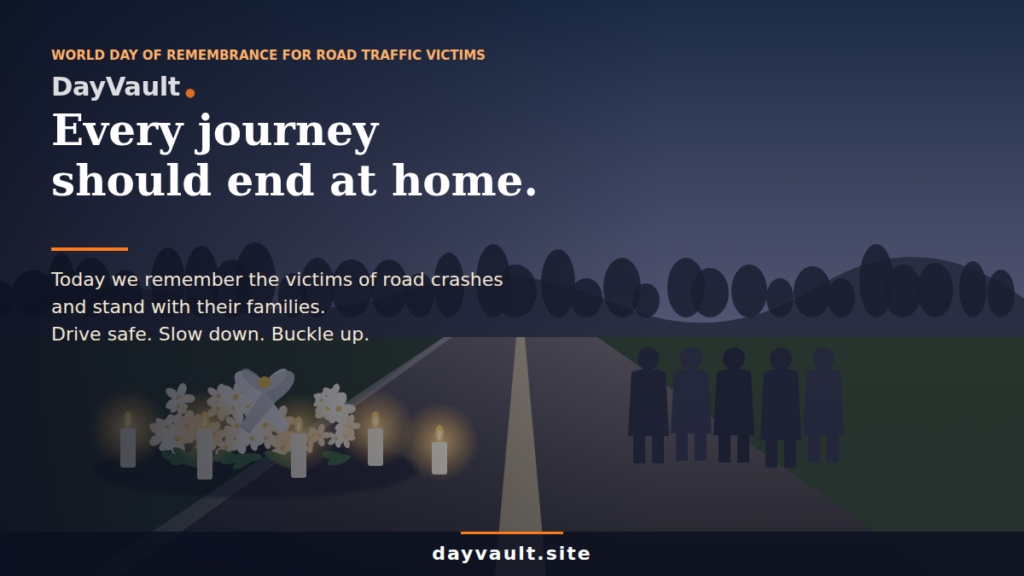
Every year, millions of people are affected by road traffic crashes, whether through the loss of a loved one, serious injuries, or the emotional and financial challenges that follow. Behind every road traffic incident is a human story, a family, and a community that may never be the same again. The World Day of Remembrance for Road Traffic Victims provides an opportunity to remember those who have lost their lives, support survivors and grieving families, and encourage everyone to make roads safer.
Observed internationally, this important day reminds us that road crashes are not simply statistics. They represent real people whose lives, dreams, and futures matter. It also highlights the responsibility shared by governments, road authorities, drivers, passengers, and pedestrians to prevent avoidable tragedies.
In this article, you will learn when the observance takes place in 2026, why it matters, how it began, and what individuals and communities can do to promote road safety.
What Is the World Day of Remembrance for Road Traffic Victims?
The World Day of Remembrance for Road Traffic Victims is an annual international observance dedicated to remembering people killed or seriously injured in road traffic crashes. It also recognizes the families, friends, emergency responders, and communities affected by these incidents.
The day focuses on three important goals:
- Remembering those who have lost their lives on the roads.
- Supporting survivors and families dealing with the consequences of road crashes.
- Raising awareness about road safety and encouraging action to prevent future tragedies.
Road traffic injuries can have lasting consequences. Survivors may experience physical disabilities, emotional trauma, or difficulties returning to work and everyday activities. Families can face unexpected expenses, changes in responsibilities, and the painful process of grieving.
This observance gives these experiences greater visibility. It encourages people to listen to victims’ families, acknowledge their needs, and recognize that road crashes are preventable public health and safety concerns.
It also serves as a reminder that improving road safety requires more than individual caution. Safe roads, responsible driving, appropriate vehicle standards, effective emergency services, and strong public policies all play important roles.
When Is the World Day of Remembrance for Road Traffic Victims 2026?
The World Day of Remembrance for Road Traffic Victims is observed every year on the third Sunday of November.
In 2026, it will be observed on Sunday, November 15, 2026.
The date provides an opportunity for people around the world to take part in remembrance activities, attend memorial services, share awareness messages, and discuss practical ways to prevent road crashes.
Although the observance takes place on one designated day, its message remains relevant throughout the year. Road safety should be part of everyday decisions, from wearing a seat belt to respecting speed limits and ensuring that pedestrians can travel safely.
Communities may organize candlelight vigils, moments of silence, educational programs, public discussions, or memorial events. The specific activities differ by country and community, but the purpose remains the same: to remember victims, support those affected, and encourage safer roads.
History of the World Day of Remembrance for Road Traffic Victims
The observance has its roots in the efforts of road crash victims and their families to ensure that the consequences of road traffic incidents receive greater public attention.
In 1993, the British road victim charity RoadPeace began organizing a day of remembrance for people killed in road crashes. The initiative provided a dedicated opportunity to honor victims and recognize the experiences of bereaved families.
Over time, similar activities developed in other countries. Victims’ organizations, road safety advocates, and community groups helped expand the observance internationally.
A major milestone came in 2005, when the United Nations General Assembly formally recognized the third Sunday of November as the World Day of Remembrance for Road Traffic Victims through Resolution 60/5.
This recognition helped establish the observance as an important part of international road safety awareness.
Since then, the day has continued to highlight the need for better road safety measures, stronger support for victims, and greater cooperation among governments, organizations, and communities.
Its development also reflects an important change in how society discusses road traffic crashes. Rather than viewing them only as unavoidable accidents, road safety advocates increasingly emphasize the risks that can be reduced through effective planning, responsible behavior, and safer transport systems.
Why Is This Day Important?
The World Day of Remembrance for Road Traffic Victims matters because it brings attention to the human consequences of road crashes while encouraging practical solutions.
1. It Honors Lives Lost on the Roads
Every person who dies in a road traffic crash leaves behind people who care about them. Parents may lose children, children may lose parents, and friends may lose someone who played an important role in their lives.
Remembrance activities provide space for families and communities to honor those individuals. They also help ensure that victims are not forgotten when public attention moves on to other issues.
Remembering these lives can strengthen the commitment to preventing similar tragedies in the future.
2. It Recognizes the Experiences of Survivors
Not every road traffic crash results in a death. Many people survive with injuries that require extensive treatment, rehabilitation, and long-term care.
Some survivors experience limited mobility, chronic pain, psychological distress, or difficulty returning to their previous routines. Their families may also need to adjust their homes, schedules, and finances.
This day recognizes that recovery can take much longer than the initial emergency response. Survivors deserve access to appropriate medical care, rehabilitation, emotional support, and opportunities to participate fully in society.
3. It Supports Grieving Families
Families affected by fatal road crashes often face several challenges at once. Alongside grief, they may experience financial pressure, legal difficulties, and the responsibility of caring for other family members.
The observance encourages communities to respond with compassion rather than judgment. It reminds people that listening, offering practical help, and respecting a family’s grieving process can make a meaningful difference.
Support may include counseling, peer support groups, assistance with everyday responsibilities, or information about available services.
4. It Promotes Road Safety Awareness
The day encourages people to reflect on their everyday travel habits and understand how small decisions can influence safety.
Driving at a safe speed, avoiding distractions, wearing seat belts, and never driving under the influence of alcohol or drugs are essential precautions.
However, awareness must extend beyond individual behavior. Roads should be designed to protect pedestrians, cyclists, motorcyclists, and vehicle occupants. Safe crossings, appropriate speed limits, reliable public transport, and effective emergency care are also important.
5. It Encourages Action From Decision-Makers
Governments and transport authorities have an important responsibility to reduce road traffic injuries.
The observance creates an opportunity to discuss safer infrastructure, vehicle safety standards, enforcement of traffic laws, and better post-crash care.
It also encourages authorities to listen to victims and their families when developing road safety policies. Their experiences can reveal problems that might otherwise receive insufficient attention.
The Global Impact of Road Traffic Crashes
Road traffic crashes remain a major global public health concern. According to the World Health Organization, approximately 1.19 million people die each year as a result of road traffic crashes worldwide.
These deaths affect people in countries with different levels of income, infrastructure, and access to healthcare. However, the burden is not distributed equally. People walking, cycling, or riding motorcycles can face particularly serious risks when roads and traffic systems do not adequately protect them.
The consequences extend far beyond fatalities.
Road traffic injuries can lead to:
- Long-term disabilities and rehabilitation needs.
- Lost income for injured people and their families.
- Emotional distress and psychological trauma.
- Financial pressure from medical treatment and caregiving.
- Disruption to education, employment, and family life.
- Additional demands on emergency services and healthcare systems.
Children and young adults are particularly affected by road traffic injuries, making prevention essential for protecting future generations.
It is important to understand that these figures represent people, not merely numbers in a report. Every death or serious injury can affect an entire family and community.
The good news is that many road traffic injuries can be prevented. Evidence-based measures, safer infrastructure, responsible behavior, and timely emergency care can all help reduce the risks.
Major Causes of Road Traffic Crashes
Understanding common risk factors is an important step toward prevention. Road crashes often result from a combination of human behavior, road conditions, vehicle problems, and weaknesses in the wider transport system.
Speeding
Driving too fast reduces the time available to react to unexpected situations. It also increases the distance required to stop and makes crashes more likely to cause serious injuries.
Following posted speed limits and adjusting speed to weather, traffic, and road conditions can help protect everyone.
Distracted Driving
Using a mobile phone, reading messages, adjusting devices, or paying attention to other distractions can take a driver’s focus away from the road.
Even a brief distraction can have serious consequences. Drivers should set navigation before starting a journey and avoid handling phones while driving.
Driving Under the Influence
Alcohol and certain drugs can affect judgment, coordination, reaction time, and the ability to make safe decisions.
The safest approach is not to drive after consuming alcohol or using substances that impair driving. People should arrange a sober driver, use suitable public transport, or choose another safe way to travel.
Failure to Wear Seat Belts and Helmets
Seat belts help reduce the risk of serious injury and death in vehicle crashes. Properly fitted helmets provide important protection for motorcyclists and cyclists.
Safety equipment should be used correctly and consistently, not only on long journeys or busy roads.
Unsafe Roads and Poor Infrastructure
Poorly maintained roads, inadequate lighting, dangerous intersections, missing pedestrian crossings, and insufficient separation between different road users can increase crash risks.
Safer road design can reduce the likelihood of collisions and help prevent serious injuries when crashes occur.
Vehicle Maintenance Problems
Faulty brakes, worn tires, defective lights, and other mechanical problems can make vehicles unsafe.
Regular maintenance and timely repairs are essential. Drivers should also ensure that safety features are working properly before traveling.
How to Observe the World Day of Remembrance for Road Traffic Victims
Anyone can participate in this meaningful observance. You do not need to belong to a road safety organization to help spread its message.
Attend or Organize a Remembrance Event
Communities can organize a memorial gathering, candlelight vigil, or moment of silence for people who have died in road traffic crashes.
Local organizations may also invite families to share memories, provided they are comfortable doing so. Participation should always be respectful and voluntary.
Share Road Safety Awareness Messages
Social media can help spread important information to a wide audience.
You can share practical reminders about seat belts, helmets, safe speeds, distracted driving, and pedestrian safety. Use reliable information and avoid graphic images that may distress victims’ families or survivors.
Support Victims and Their Families
Consider supporting a local organization that assists road crash survivors or bereaved families.
Depending on local needs, this may involve volunteering, fundraising, helping families access resources, or sharing information about counseling and rehabilitation services.
Even a thoughtful conversation can help someone feel less isolated.
Organize an Educational Activity
Schools, colleges, workplaces, and community groups can use the day to discuss safer travel.
Possible activities include:
- Road safety presentations.
- Poster-making competitions.
- Discussions about responsible driving.
- Demonstrations of correct helmet and seat belt use.
- Educational campaigns about pedestrian safety.
- Road safety quizzes and awareness sessions.
These activities help people understand road risks in a practical and accessible way.
Reflect on Your Own Travel Habits
The observance is also an opportunity to review your personal choices.
Ask yourself whether you consistently follow traffic rules, avoid distractions, use appropriate safety equipment, and remain considerate toward other road users.
Small improvements in everyday habits can contribute to a safer environment.
How to Promote Road Safety Every Day
Although the remembrance day provides a special moment for reflection, preventing road crashes requires consistent action.
For Drivers
Responsible drivers can help protect themselves and others by following these practices:
- Obey speed limits and slow down when conditions require it.
- Wear a seat belt and ensure passengers do the same.
- Never drive while impaired by alcohol or drugs.
- Put mobile phones away while driving.
- Maintain a safe distance from the vehicle ahead.
- Check tires, brakes, lights, and other essential components regularly.
- Give pedestrians and cyclists adequate space.
- Stop driving when tired and rest when necessary.
For Motorcyclists and Cyclists
Motorcyclists should wear properly fitted, approved helmets and follow traffic regulations. Cyclists should use appropriate protective equipment, remain visible, and follow local road rules.
Drivers of larger vehicles should also be aware of blind spots and give vulnerable road users sufficient room.
For Pedestrians
Pedestrians can improve their safety by using designated crossings where available, paying attention to traffic signals, and remaining alert when crossing roads.
At night or in poor visibility, visible clothing or reflective materials may help drivers notice pedestrians sooner.
Children should receive age-appropriate guidance about crossing roads safely, especially in areas with heavy traffic.
For Governments and Communities
Long-term improvements require coordinated efforts.
Authorities can invest in safer road design, enforce traffic laws fairly, improve vehicle safety standards, and strengthen emergency response systems.
Communities can identify dangerous crossings, report damaged roads, advocate for safer school zones, and encourage local leaders to address recurring hazards.
A comprehensive approach recognizes that road safety depends on both individual decisions and the systems in which people travel.
The Role of Technology in Road Safety
Technology can support efforts to prevent road traffic crashes and improve emergency responses.
Modern vehicles may include features such as automatic emergency braking, electronic stability control, lane-departure warnings, and seat belt reminders. When properly designed and used, these systems can help reduce certain risks.
Traffic management technology can also improve the coordination of signals, identify congestion, and support more effective responses to road incidents.
In emergencies, reliable communication systems can help responders receive information and reach injured people more quickly.
However, technology is not a complete solution. Drivers must remain attentive, vehicles must be maintained, and road infrastructure must protect people with different mobility needs.
Technology works best when it forms part of a broader commitment to safer transport systems.
How Schools, Families, and Communities Can Make a Difference
Road safety education is most effective when it becomes part of everyday life.
Parents and caregivers can model safe behavior by wearing seat belts, following traffic rules, and avoiding phone use while driving. Children often learn from what adults do, not only from what they say.
Schools can teach students how to recognize traffic hazards, cross roads safely, and behave responsibly around vehicles. These lessons are especially valuable for children who walk or cycle to school.
Employers can promote safe driving practices for workers who travel regularly. They can also encourage realistic schedules that do not pressure drivers to speed or continue working while exhausted.
Community leaders can bring residents, transport authorities, emergency responders, and road safety advocates together to identify local problems and develop practical solutions.
When different groups work together, road safety becomes a shared responsibility rather than an issue left entirely to individual drivers.
Supporting People Affected by Road Traffic Crashes
The effects of a serious road crash can continue long after emergency treatment has ended. Survivors may need rehabilitation, emotional support, accessible transport, or adjustments at home and work.
Families who have lost loved ones may need time, understanding, and practical assistance.
Supporting affected people begins with empathy. Avoid making assumptions about how someone should grieve or recover. Listen when they want to talk, respect their privacy, and offer specific help rather than making promises that are difficult to fulfill.
Useful support may include:
- Helping with meals, transport, or everyday tasks.
- Sharing information about appropriate support services.
- Encouraging access to professional counseling when needed.
- Promoting accessible workplaces and public spaces for survivors with disabilities.
- Supporting organizations that represent road crash victims and their families.
The World Day of Remembrance for Road Traffic Victims reminds us that road safety is not only about preventing crashes. It is also about ensuring that people affected by them receive dignity, compassion, and appropriate support.
Frequently Asked Questions
What is the World Day of Remembrance for Road Traffic Victims?
The World Day of Remembrance for Road Traffic Victims is an annual international observance honoring people killed or seriously injured in road traffic crashes. It also recognizes affected families and survivors while promoting road safety and the prevention of future crashes.
When is the World Day of Remembrance for Road Traffic Victims in 2026?
In 2026, the observance falls on Sunday, November 15. It takes place every year on the third Sunday of November.
Why is the World Day of Remembrance for Road Traffic Victims observed?
The day is observed to remember those who have died, acknowledge the experiences of survivors and grieving families, raise awareness about road traffic injuries, and encourage governments and communities to make roads safer.
Who started the World Day of Remembrance for Road Traffic Victims?
RoadPeace, a British road victim charity, began organizing a remembrance day in 1993. In 2005, the United Nations General Assembly formally recognized the third Sunday of November as the World Day of Remembrance for Road Traffic Victims.
How can I participate in the World Day of Remembrance for Road Traffic Victims?
You can participate by attending a remembrance event, observing a moment of silence, sharing reliable road safety information, supporting affected families, organizing an educational activity, or encouraging safer driving and travel habits in your community.
Conclusion
The World Day of Remembrance for Road Traffic Victims is a meaningful opportunity to honor lives lost, recognize survivors, and stand alongside families affected by road traffic crashes. Observed on November 15 in 2026, it reminds people everywhere that road safety is a shared responsibility.
Remembering victims is important, but remembrance should also inspire action. Following traffic rules, avoiding distracted driving, using seat belts and helmets, improving road infrastructure, and supporting those affected by crashes can all contribute to safer journeys.
Every person deserves to travel without facing preventable danger. By combining compassion with practical action, individuals, communities, and governments can help reduce road traffic injuries and create safer roads for future generations.
On this remembrance day, take a moment to remember those whose lives have been changed by road traffic crashes and consider one meaningful step you can take to make your community safer.
Q1. When is the World Day of Remembrance for Road Traffic Victims in 2026?
The World Day of Remembrance for Road Traffic Victims will be observed on Sunday, November 15, 2026, the third Sunday of November.
Q2. Why is the World Day of Remembrance for Road Traffic Victims celebrated?
This day honors people who have died or been seriously injured in road traffic crashes, supports affected families, and raises awareness about road safety and accident prevention.
Q3. Who started the World Day of Remembrance for Road Traffic Victims?
RoadPeace, a British road victim charity, began organizing the remembrance day in 1993. The United Nations officially recognized the observance in 2005.
Q4. What is the theme of the World Day of Remembrance for Road Traffic Victims 2026?
The official 2026 theme should be confirmed through an authoritative source. The observance generally focuses on remembering victims, supporting survivors and families, and promoting safer roads.
Q5. How can people observe the World Day of Remembrance for Road Traffic Victims?
People can observe this day by attending memorial events, holding a moment of silence, sharing road safety messages, supporting affected families, and encouraging responsible driving.
Q6. What are the main causes of road traffic crashes?
Common risk factors include speeding, distracted driving, impaired driving, failure to use seat belts or helmets, unsafe road conditions, and poorly maintained vehicles.
Q7. How can road traffic crashes be prevented?
Road traffic crashes can be prevented by following speed limits, avoiding mobile phone use while driving, wearing seat belts and helmets, maintaining vehicles, and improving road infrastructure.
Q8. Why is road safety awareness important?
Road safety awareness helps people understand traffic risks, develop safer habits, protect vulnerable road users, and reduce preventable injuries and deaths.
Q9. Who can participate in the World Day of Remembrance for Road Traffic Victims?
Everyone can participate, including individuals, families, schools, community organizations, road safety advocates, healthcare professionals, and government authorities.
Q10. What is the main message of the World Day of Remembrance for Road Traffic Victims?
Its main message is to remember those affected by road traffic crashes, support their families, and take meaningful action to prevent future tragedies and make roads safer for everyone.
