Pasta is one of those foods that can turn an ordinary meal into something special. Whether it is a bowl of spaghetti covered in tomato sauce, creamy macaroni and cheese, or a plate of homemade lasagna shared with family, pasta brings comfort, flavor, and creativity to the table. It is enjoyed in many countries and prepared in countless ways, making it a favorite among people of different ages and backgrounds.
World Pasta Day is celebrated every year on October 25 to recognize pasta’s cultural importance, versatility, and place in meals around the world. The occasion encourages pasta lovers to explore different recipes, appreciate the traditions behind their favorite dishes, and enjoy a meal with friends and family.
World Pasta Day is more than an opportunity to eat a delicious plate of pasta. It is also a chance to learn about the history of this popular food, discover international cooking traditions, and experiment with ingredients and flavors. Whether you prefer traditional Italian recipes or modern pasta creations, this annual celebration offers plenty of inspiration.
What Is World Pasta Day?
World Pasta Day is an international food observance dedicated to celebrating pasta and its role in food culture. It highlights pasta as a versatile, accessible, and widely enjoyed food that can be adapted to different cuisines, budgets, and dietary preferences.
The celebration brings attention to pasta’s long culinary history and its ability to connect people through food. From simple homemade dinners to dishes served in restaurants, pasta has become a familiar part of everyday eating in many parts of the world.
Pasta is available in a wide variety of shapes, sizes, and ingredients. Some varieties are made with durum wheat semolina, while others use whole grains, rice, corn, legumes, or alternative flours. These options make it possible for people to choose pasta according to their tastes and dietary needs.
World Pasta Day also encourages people to appreciate the work involved in producing pasta, from growing and processing grains to preparing meals in homes and professional kitchens.
For many people, the simplest way to participate is to cook a favorite pasta dish, try a recipe from another country, or share a meal with loved ones.
When Is World Pasta Day Celebrated?
World Pasta Day is observed annually on October 25.
The first official World Pasta Day celebration took place in 1998 in Naples, Italy. It followed an international gathering of pasta industry representatives who recognized the value of promoting pasta around the world.
Since then, October 25 has become an opportunity for pasta producers, chefs, food enthusiasts, and home cooks to celebrate the food’s popularity and cultural significance.
The date remains the same every year, making it easy to plan celebrations in advance.
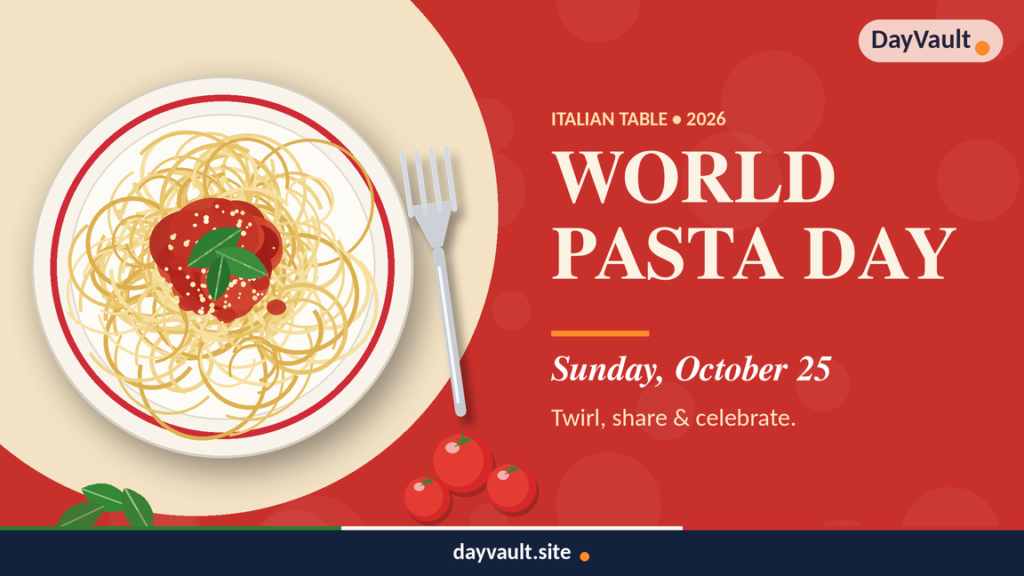
For example, in 2026, World Pasta Day falls on Sunday, October 25. Families can prepare a special lunch, restaurants can introduce pasta-themed menus, and food lovers can use the occasion to explore new recipes.
Although official industry events may take place in different cities and countries, anyone can celebrate at home. There is no special ceremony or expensive preparation required. A favorite pasta dish and a little creativity are enough to get started.
The History of World Pasta Day
The history of World Pasta Day is closely connected to the international effort to recognize pasta as a food with global appeal.
In 1995, representatives from the pasta industry gathered in Rome for the World Pasta Congress. Discussions emphasized the importance of promoting pasta, sharing knowledge about its production, and increasing public awareness of its qualities.
Following these efforts, the first World Pasta Day was celebrated in Naples in 1998.
The event helped establish October 25 as a day for international pasta promotion and appreciation. Since then, celebrations have taken place in various cities around the world, bringing together people involved in food production, nutrition, cooking, and culinary culture.
The International Pasta Organisation has played an important role in coordinating international communication and promoting awareness of pasta.
Over the years, pasta has continued to evolve. Traditional recipes remain popular, while chefs and home cooks experiment with new ingredients, sauces, shapes, and cooking techniques.
Whole-grain varieties, gluten-free alternatives, and pasta made from different plant ingredients have also expanded the choices available to consumers.
Despite these changes, the basic appeal of pasta remains the same: it is adaptable, convenient, and suitable for a wide range of meals.
World Pasta Day celebrates both this history and the continuing role of pasta in modern food culture.
Why Is World Pasta Day Important?
World Pasta Day may seem like a simple food celebration, but it highlights several meaningful aspects of everyday life.
1. It Celebrates Food Traditions
Pasta is associated with many culinary traditions, especially Italian cuisine. Recipes such as spaghetti with tomato sauce, lasagna, and pasta carbonara have become familiar far beyond their places of origin.
Celebrating pasta gives people an opportunity to explore these traditions and understand how ingredients and cooking methods vary between regions.
2. It Brings People Together
Food often creates opportunities for conversation and connection. Preparing pasta for family members, inviting friends for dinner, or sharing a homemade dish with neighbors can turn an ordinary day into a memorable occasion.
World Pasta Day encourages people to enjoy these simple experiences.
3. It Encourages Culinary Creativity
Pasta can be combined with vegetables, herbs, sauces, cheese, seafood, meat, beans, and many other ingredients.
This flexibility makes it a useful ingredient for experimenting in the kitchen. A familiar recipe can be changed with a new sauce, a different pasta shape, or seasonal produce.
4. It Highlights Accessibility and Convenience
Many pasta dishes can be prepared with affordable ingredients and basic kitchen equipment. Dried pasta also has a long shelf life when stored properly.
For busy households, students, and people learning to cook, pasta can be a practical starting point for preparing satisfying meals.
5. It Encourages Appreciation of Global Cuisine
Pasta is not limited to one style of cooking. Different countries and communities have adapted it to local ingredients and tastes.
World Pasta Day is a good opportunity to discover these variations and appreciate how a familiar ingredient can be used in different culinary traditions.
Popular Pasta Dishes to Enjoy on World Pasta Day
One of the easiest ways to celebrate World Pasta Day is to prepare a dish you love or try something new.
Here are several popular choices to consider.
Spaghetti with Tomato Sauce
Spaghetti with tomato sauce is a classic option that combines simplicity with flavor. Tomatoes, garlic, olive oil, and herbs create a sauce that works well with long strands of pasta.
Fresh basil and grated cheese can add extra flavor, but the dish can also be enjoyed with a few basic ingredients.
Pasta Carbonara
Carbonara is a traditional Italian pasta dish commonly associated with Rome. Its classic preparation uses ingredients such as eggs, hard cheese, cured pork, and black pepper.
The sauce is created through careful mixing rather than simply adding cream. Regional and international adaptations exist, but trying the traditional approach can be a rewarding cooking experience.
Lasagna
Lasagna consists of layers of pasta, sauce, and other fillings baked together. Depending on the recipe, it may include meat, vegetables, cheese, or a creamy white sauce.
It is especially suitable for family meals because a large dish can be prepared in advance and served to several people.
Macaroni and Cheese
Macaroni and cheese is a comfort-food favorite in many households. Pasta is combined with a cheese sauce to create a creamy, satisfying meal.
You can customize it with vegetables, herbs, breadcrumbs, or spices to suit your preferences.
Pesto Pasta
Pesto pasta offers a fresh alternative to tomato-based sauces. Traditional basil pesto is made with basil, olive oil, garlic, nuts, and cheese.
It pairs well with several pasta shapes and can be combined with cherry tomatoes, peas, or roasted vegetables.
Baked Pasta
Baked pasta is a useful option when cooking for a group. Cooked pasta is combined with sauce and other ingredients, topped with cheese if desired, and baked until heated through.
It is also a convenient way to use leftover vegetables or sauce.
Creative Ways to Celebrate World Pasta Day
You do not need to visit a restaurant or organize a large event to enjoy World Pasta Day. A few thoughtful activities can make the occasion fun and memorable.
1. Cook a Homemade Pasta Meal
Choose a recipe that matches your cooking experience and available ingredients.
If you are a beginner, start with spaghetti and tomato sauce or a simple vegetable pasta. More experienced cooks might try making fresh pasta from scratch or preparing a traditional regional recipe.
Cooking at home also allows you to adjust the ingredients and seasonings to your taste.
2. Host a Pasta Night
Invite family members or friends for a casual pasta dinner.
Instead of preparing one large dish, offer a small selection of pasta shapes, sauces, vegetables, and toppings. Guests can build their own plates and experiment with different combinations.
You can also ask everyone to bring a favorite pasta dish, creating a relaxed potluck-style gathering.
3. Try Pasta from Another Country
Explore pasta dishes beyond your usual favorites.
You could prepare an Italian-inspired recipe one evening and experiment with a Japanese-style pasta dish or another regional variation on a different occasion.
Researching the origins of a recipe can make the experience more interesting and help you appreciate the cultural influences behind the food.
4. Arrange a Pasta Cooking Competition
A friendly cooking challenge can be entertaining for families, students, or groups of friends.
Give participants the same basic ingredients and let them create their own sauces or toppings. Set simple rules, such as a time limit or a requirement to include a vegetable.
Judging can focus on flavor, creativity, presentation, and teamwork rather than professional cooking skills.
5. Share Your Dish on Social Media
Take a photograph of your finished pasta meal and share the recipe or cooking process with others.
You can use relevant hashtags such as #WorldPastaDay and #PastaLovers to connect with other food enthusiasts.
Consider including a useful cooking tip, a family recipe, or a short explanation of why the dish is special to you.
6. Visit a Local Restaurant
Support a local restaurant by ordering a pasta dish you have never tried before.
Some restaurants may offer special menus or promotions around food observances, although availability varies. Checking the menu or contacting the restaurant beforehand can help you plan your visit.
7. Teach Children About Cooking
World Pasta Day can also become an educational activity for children.
Depending on their age, they can help measure ingredients, wash vegetables, stir a sauce with supervision, or choose toppings.
Cooking together teaches basic kitchen skills and encourages curiosity about ingredients and food traditions.
Easy Pasta Recipe Ideas for Beginners
If you want to celebrate at home without spending hours in the kitchen, try one of these simple meal ideas.
Quick Garlic and Olive Oil Pasta
This dish uses a few ingredients and can be prepared with minimal effort.
Ingredients:
- 200 grams of spaghetti
- 2 to 3 tablespoons of olive oil
- 2 garlic cloves, thinly sliced
- Red pepper flakes, optional
- Salt and black pepper
- Fresh parsley, optional
Method:
- Cook the spaghetti in salted water according to the package instructions.
- While the pasta cooks, gently warm the olive oil in a pan.
- Add the sliced garlic and cook over low heat until fragrant, taking care not to burn it.
- Add a little red pepper if desired.
- Transfer the drained pasta to the pan, adding a small amount of pasta water to help coat the strands.
- Season to taste and finish with parsley if available.
This recipe shows how a few simple ingredients can produce a flavorful meal.
Easy Vegetable Pasta
Vegetable pasta is another practical option, particularly when you want to use ingredients already available in your kitchen.
Ingredients:
- 200 grams of pasta
- 1 cup of chopped vegetables
- 1 tablespoon of olive oil
- 1 garlic clove
- 1 cup of tomato sauce
- Salt, pepper, and dried herbs
Method:
- Cook the pasta according to the package instructions.
- Heat the oil in a pan and gently cook the garlic.
- Add the vegetables and cook until they begin to soften.
- Stir in the tomato sauce and season with herbs, salt, and pepper.
- Add the cooked pasta and mix until everything is evenly coated.
- Serve warm, adding cheese or fresh herbs if desired.
You can use bell peppers, mushrooms, spinach, carrots, zucchini, or other vegetables according to availability.
Is Pasta a Healthy Food Choice?
Pasta can be part of a balanced diet. Its nutritional value depends on the type of pasta, the serving size, the sauce, and the ingredients served alongside it.
Wheat pasta provides carbohydrates, which the body uses for energy. Some varieties also supply protein and other nutrients. Whole-grain pasta generally contains more fiber than refined pasta, while pasta made from legumes may offer different amounts of protein and fiber.
The sauce and toppings also matter. A meal containing pasta, vegetables, beans, and a suitable source of protein can offer a broader range of nutrients than a meal consisting only of pasta and a heavy sauce.
For a more balanced pasta meal, consider these tips:
- Include vegetables: Add spinach, broccoli, tomatoes, mushrooms, or other vegetables.
- Choose a protein source: Beans, lentils, eggs, fish, chicken, or tofu can make a meal more substantial.
- Pay attention to portions: Serve an amount that suits your appetite and individual nutritional needs.
- Experiment with whole grains: Whole-wheat pasta can be a useful choice if you enjoy its flavor and texture.
- Consider the sauce: Tomato-based sauces, olive oil, herbs, and vegetable-based sauces can provide alternatives to richer cream sauces.
- Accommodate dietary needs: Gluten-free pasta is available for people who need or prefer it.
No single ingredient determines whether an entire diet is healthy. Variety, overall eating patterns, and individual needs are important considerations.
For reliable nutrition guidance, consult resources such as the Harvard T.H. Chan School of Public Health’s Nutrition Source.
Pasta Traditions Around the World
Although pasta is strongly associated with Italy, its global popularity has inspired countless variations.
In Italy, pasta shapes and sauces often reflect regional traditions. Some recipes emphasize seafood, while others feature tomatoes, cheese, vegetables, or carefully prepared meat sauces.
In the United States, macaroni and cheese has become a familiar comfort food, while baked pasta dishes are popular choices for family gatherings.
In Japan, pasta has been adapted to local ingredients and tastes. Wafū-style pasta, for example, may include flavors such as soy sauce, mushrooms, or seafood.
Other cuisines feature noodle and vermicelli dishes that share some similarities with pasta while retaining their own distinct histories and preparation methods.
These examples demonstrate how food traditions develop through cultural exchange, local ingredients, and individual creativity.
World Pasta Day provides an opportunity to explore these differences without assuming that every dish has the same origin or preparation.
Trying an unfamiliar recipe can be an enjoyable way to learn about another food culture while discovering new flavors for your own kitchen.
How Restaurants and Communities Can Celebrate
World Pasta Day is also suitable for activities organized by restaurants, schools, community groups, and food businesses.
Restaurants can highlight a signature pasta dish, introduce a limited-time menu, or share the story behind a traditional recipe.
Cooking schools can arrange demonstrations that teach participants how to prepare sauces, select pasta shapes, or cook pasta correctly.
Schools and community organizations can use the occasion to discuss food traditions, ingredient sourcing, nutrition, and the importance of sharing meals.
Food bloggers and creators can publish recipes, compare pasta varieties, or demonstrate simple cooking techniques.
Community groups may also consider organizing a shared meal or a food donation activity. When planning charitable events, organizers should follow local food safety guidance and coordinate with appropriate community organizations.
These activities can make the celebration more meaningful by combining enjoyment with education, cultural appreciation, and community participation.
Tips for Cooking Better Pasta at Home
A delicious pasta dish does not always require expensive ingredients or complicated techniques. A few basic habits can improve the result.
Use enough water. Give dried pasta enough room to cook evenly, following the package directions.
Season the cooking water. Adding salt helps flavor the pasta itself.
Avoid overcooking. Begin checking the pasta near the lower end of the recommended cooking time. Many Italian recipes aim for an al dente texture, meaning the pasta remains slightly firm when bitten.
Reserve some pasta water. The starchy water can help a sauce cling to the pasta and improve its consistency.
Finish cooking in the sauce. When appropriate for the recipe, transfer the pasta to the sauce for the final minute or two of cooking. Add a little reserved water if needed.
Match the shape to the sauce. Long strands work well with many smooth sauces, while shapes with ridges or openings can hold thicker sauces and small ingredients.
Serve promptly. Many pasta dishes taste best soon after preparation, when the texture and sauce are at their best.
These small adjustments can make a noticeable difference, whether you are preparing a quick weekday meal or a special dinner for World Pasta Day.
Frequently Asked Questions About World Pasta Day
1. When is World Pasta Day celebrated?
World Pasta Day is celebrated every year on October 25. The observance began in 1998 in Naples, Italy, and recognizes pasta’s cultural importance, versatility, and international popularity.
2. Why do people celebrate World Pasta Day?
People celebrate World Pasta Day to appreciate pasta as a widely enjoyed food, explore different recipes, learn about culinary traditions, and share meals with family and friends. The occasion also highlights pasta’s convenience and adaptability.
3. Who started World Pasta Day?
World Pasta Day developed through international pasta industry initiatives following the World Pasta Congress held in Rome in 1995. The first official celebration took place in Naples in 1998, with the International Pasta Organisation and industry partners later playing important roles in promoting the observance.
4. How can I celebrate World Pasta Day at home?
You can celebrate by cooking your favorite pasta recipe, trying a dish from another country, hosting a pasta night, or preparing a meal with family members. Sharing your creation on social media is another simple way to participate.
5. Is World Pasta Day the same as National Pasta Day?
No. World Pasta Day is observed internationally on October 25. National Pasta Day is a separate observance commonly celebrated in the United States on October 17. Both occasions recognize pasta, but they have different dates and scopes.
Conclusion
World Pasta Day is a celebration of one of the world’s most adaptable and recognizable foods. Observed every year on October 25, it offers a chance to appreciate pasta’s history, discover international food traditions, and enjoy new cooking experiences.
From traditional spaghetti and tomato sauce to vegetable pasta, lasagna, and creative international variations, there are countless ways to take part. You can celebrate with a homemade meal, invite friends for dinner, explore an unfamiliar recipe, or simply learn something new about the food you enjoy.
The best part of World Pasta Day is that it does not require an elaborate plan. A few ingredients, a favorite recipe, and time spent sharing a meal can make the occasion special.
This October 25, celebrate World Pasta Day by trying something delicious, appreciating the traditions behind your food, and sharing the experience with the people who matter to you.
1. When is World Pasta Day celebrated?
World Pasta Day is celebrated every year on October 25 to recognize pasta’s popularity, cultural importance, and versatility around the world.
2. Why is World Pasta Day celebrated?
World Pasta Day celebrates pasta as a beloved food and encourages people to explore different recipes, appreciate culinary traditions, and enjoy meals with family and friends.
3. Who started World Pasta Day?
The first World Pasta Day was celebrated in Naples, Italy, in 1998 following international efforts to promote pasta and its importance in food culture.
4. How can you celebrate World Pasta Day at home?
You can celebrate by preparing your favorite pasta dish, trying a new recipe, hosting a pasta dinner, or sharing your homemade creation with friends and family.
5. Is World Pasta Day the same as National Pasta Day?
No. World Pasta Day is celebrated on October 25, while National Pasta Day in the United States is observed on October 17.
6. What are the most popular dishes for World Pasta Day?
Popular choices include spaghetti with tomato sauce, lasagna, macaroni and cheese, pasta carbonara, pesto pasta, and baked pasta.
7. Is pasta healthy to eat?
Pasta can be part of a balanced diet. Pairing it with vegetables, protein sources, and suitable sauces can help create a nutritious and satisfying meal.
8. Why is pasta popular around the world?
Pasta is popular because it is versatile, convenient, available in many shapes, and easy to combine with different sauces, vegetables, meats, and seasonings.
9. What is the theme of World Pasta Day?
World Pasta Day does not necessarily have one universal theme every year. Celebrations often focus on pasta’s cultural value, versatility, nutrition, and role in bringing people together.
10. How can restaurants celebrate World Pasta Day?
Restaurants can celebrate by offering special pasta menus, introducing new dishes, organizing cooking demonstrations, or sharing pasta recipes and traditions with customers.
