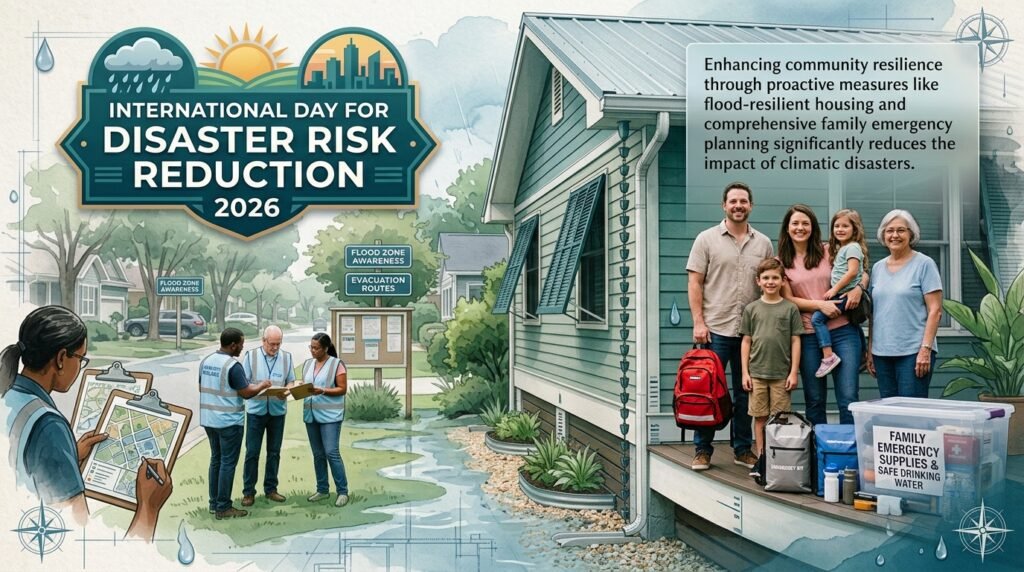
Every year, disasters affect millions of people around the world, damaging homes, disrupting livelihoods, and putting lives at risk. Floods, earthquakes, storms, wildfires, and other hazards can cause enormous destruction, especially when communities are not adequately prepared. However, many disaster-related losses can be reduced through awareness, planning, early warnings, and safer living environments.
The International Day for Disaster Risk Reduction is observed every year on October 13 to raise awareness about reducing disaster risks and building safer, more resilient communities. The day encourages governments, organizations, families, and individuals to understand the dangers they face and take practical steps to protect themselves.
In 2026, the observance carries the theme “Resilience Starts at Home.” This theme highlights the importance of safe housing, household preparedness, and community support in reducing disaster risks.
Understanding this international observance is an opportunity to learn how small actions, from preparing an emergency kit to improving home safety, can make a meaningful difference when emergencies occur.
What Is the International Day for Disaster Risk Reduction?
The International Day for Disaster Risk Reduction is a United Nations observance dedicated to promoting disaster prevention, preparedness, and resilience. It highlights the importance of understanding potential hazards before they become emergencies and taking action to reduce their harmful effects.
The day was established in 1989 following a call by the United Nations General Assembly to promote a global culture of risk awareness and disaster reduction. It is celebrated annually on October 13.
The observance recognizes that disasters are not simply unavoidable events. Although hazards such as earthquakes and cyclones cannot always be prevented, their consequences can often be reduced through better planning, safer infrastructure, effective warning systems, and public education.
For example, constructing buildings according to appropriate safety standards can reduce earthquake-related damage. Maintaining drainage systems can help communities manage heavy rainfall, while reliable early-warning systems can give people more time to move to safer locations.
The main purpose of this day is to encourage a shift from responding to disasters after they happen toward reducing risks before they occur.
When Is International Day for Disaster Risk Reduction 2026?
The International Day for Disaster Risk Reduction 2026 will be observed on Tuesday, October 13, 2026.
The date remains the same every year, making October 13 an important occasion for disaster awareness campaigns, educational activities, public discussions, and community preparedness initiatives.
The observance provides an opportunity for schools, government agencies, emergency services, nonprofit organizations, and local communities to share knowledge about disaster prevention.
People can participate by learning about local hazards, reviewing household emergency plans, checking smoke alarms where applicable, preparing emergency supplies, and sharing reliable safety information with others.
For official information about the observance, readers can visit the United Nations International Day for Disaster Risk Reduction page.
What Is the Theme of International Day for Disaster Risk Reduction 2026?
The official theme for 2026 is “Resilience Starts at Home.”
Announced by the United Nations Office for Disaster Risk Reduction (UNDRR), the theme focuses on the role that homes and households play in preventing disaster-related harm.
A home should provide safety and security. However, its location, construction, maintenance, and access to essential services can influence how well it withstands hazards such as floods, storms, extreme heat, and earthquakes.
The 2026 theme emphasizes that disaster resilience begins with the places where people live, sleep, care for family members, and carry out their daily activities.
Why Does the 2026 Theme Matter?
A poorly maintained building, unsafe electrical system, blocked drainage channel, or home located in a high-risk area can increase people’s exposure to danger.
In contrast, safer construction, proper maintenance, accessible emergency information, and household preparedness can reduce vulnerability.
The theme also recognizes that not everyone has equal opportunities to make their homes safer. Low-income families may struggle to afford repairs, while people with disabilities, older adults, and families living in vulnerable locations may face additional challenges during emergencies.
Building resilience therefore requires action at several levels:
- Households: Prepare emergency plans, maintain essential supplies, and understand local warnings.
- Communities: Improve public awareness, support vulnerable residents, and identify safe evacuation routes.
- Governments: Enforce suitable building standards, improve infrastructure, and invest in disaster preparedness.
- Businesses and organizations: Consider disaster risks when constructing buildings, providing services, and planning investments.
The central message is simple: safer homes and informed households are important foundations for more resilient communities.
Official campaign information is available through the International Day for Disaster Risk Reduction website.
Why Is Disaster Risk Reduction Important?
Disaster risk reduction involves identifying potential hazards and reducing the conditions that make people and communities vulnerable to them.
Its importance extends beyond protecting buildings. It also helps safeguard human lives, livelihoods, education, healthcare, food supplies, and essential public services.
1. Protecting Human Lives
Early warnings, evacuation plans, safe buildings, and public education can help people make informed decisions before and during emergencies.
When people understand what to do during a flood, earthquake, or severe storm, they may be better prepared to reach safety.
2. Protecting Homes and Property
Disasters can destroy houses, schools, businesses, roads, and other important infrastructure.
Risk reduction measures, such as strengthening buildings, maintaining drainage systems, and avoiding unsafe construction locations, can help reduce potential damage.
3. Supporting Economic Stability
When a disaster damages businesses, farms, transport networks, or workplaces, families may lose income and communities may face lengthy recovery periods.
Investing in prevention and preparedness can reduce disruption and help communities recover more effectively.
4. Protecting Vulnerable Communities
Children, older adults, people with disabilities, low-income households, and people living in high-risk areas may face greater difficulties during emergencies.
Disaster planning should consider their needs, including accessible warnings, suitable transportation, essential medicines, and safe evacuation arrangements.
5. Supporting Sustainable Development
Development becomes more sustainable when disaster risks are considered during planning and construction.
Schools, hospitals, roads, homes, and public facilities designed with appropriate safety measures are better positioned to serve communities during difficult circumstances.
Common Types of Disasters and Their Risks
Understanding different hazards is an important part of disaster preparedness. Each hazard presents different challenges, so communities need safety measures suited to their local conditions.
Floods
Flooding can result from heavy rainfall, overflowing rivers, storm surges, or inadequate drainage.
Floodwater may damage homes, contaminate drinking water, disrupt transport, and create dangerous conditions for pedestrians and drivers.
Communities can reduce risks by maintaining drainage channels, monitoring official flood warnings, protecting water supplies, and identifying evacuation routes.
Earthquakes
Earthquakes can occur suddenly and may damage buildings, roads, bridges, and utility networks.
Preparing for an earthquake includes securing heavy furniture, identifying safer places indoors, practising emergency procedures, and understanding how to respond during shaking.
In areas where earthquakes are a known risk, appropriate building design and construction standards are especially important.
Cyclones and Severe Storms
Cyclones and severe storms may bring strong winds, heavy rainfall, flooding, and damage to infrastructure.
People should monitor official weather alerts, secure loose outdoor objects when it is safe to do so, and follow evacuation instructions issued by local authorities.
Droughts and Extreme Heat
Droughts can reduce water availability, affect agriculture, and threaten livelihoods. Extreme heat can create serious health risks, particularly for older adults, outdoor workers, young children, and people without reliable cooling.
Water conservation, heat-awareness campaigns, access to drinking water, and effective local planning can help communities manage these risks.
Wildfires and Other Hazards
Wildfires can threaten homes, forests, wildlife, and air quality. Industrial accidents and other human-caused emergencies may also put communities at risk.
Preparedness should reflect the hazards most likely to affect a particular location rather than relying on one general plan for every situation.
How Can Individuals Prepare for Disasters?
Disaster preparedness does not always require expensive equipment or complicated arrangements. Many useful steps can be completed at home with careful planning.
1. Learn About Local Hazards
Find out which hazards are most likely to affect your area. Depending on your location, these may include floods, earthquakes, storms, heatwaves, or fires.
Pay attention to official warnings and learn which public agencies provide emergency information.
2. Create a Family Emergency Plan
Every household should have a simple plan explaining what to do during an emergency.
Your plan should include:
- Emergency contact numbers.
- A meeting point if family members become separated.
- Safe evacuation routes.
- Important medical information and essential medication.
- Arrangements for children
FAQs – International Day for Disaster Risk Reduction
Q1. What is the International Day for Disaster Risk Reduction?
The International Day for Disaster Risk Reduction is observed every year on October 13 to raise awareness about reducing disaster risks and building safer, more resilient communities.
Q2. When is International Day for Disaster Risk Reduction celebrated?
It is celebrated annually on October 13 around the world.
Q3. Why is International Day for Disaster Risk Reduction important?
This day highlights the importance of preventing disasters, preparing for emergencies, protecting lives, and reducing damage to homes, businesses, and communities.
Q4. What is the main purpose of disaster risk reduction?
The main purpose is to identify potential hazards, reduce vulnerabilities, improve preparedness, and help communities respond to disasters more effectively.
Q5. What types of disasters does this day focus on?
It raises awareness about natural and human-influenced hazards, including floods, earthquakes, storms, droughts, wildfires, and other emergencies.
Q6. How can people participate in this day?
People can participate by attending awareness events, learning emergency procedures, preparing emergency kits, sharing safety information, and joining community preparedness activities.
Q7. How can families prepare for disasters?
Families can prepare by creating an emergency plan, keeping essential supplies ready, identifying safe places, saving emergency contact numbers, and practicing evacuation procedures.
Q8. What is disaster risk reduction?
Disaster risk reduction involves taking steps before disasters occur to prevent new risks, reduce existing risks, and make communities better prepared for emergencies.
Q9. How can schools promote disaster risk awareness?
Schools can organize safety drills, teach students about different hazards, prepare evacuation plans, and educate children about emergency communication and first aid.
Q10. What role do governments play in disaster risk reduction?
Governments help reduce disaster risks by improving early-warning systems, enforcing safer building standards, investing in resilient infrastructure, and educating the public.
Q11. How can communities become more resilient to disasters?
Communities can become more resilient by improving drainage systems, protecting natural environments, preparing emergency resources, strengthening infrastructure, and working together on safety plans.
Q12. What is the difference between disaster preparedness and disaster risk reduction?
Disaster preparedness focuses on being ready to respond when a disaster occurs. Disaster risk reduction is broader and includes preventing or reducing risks before disasters happen, as well as improving preparedness.
Q13. Why is early warning important in disaster management?
Early-warning systems give people time to prepare, move to safer locations, protect essential belongings, and follow emergency instructions, potentially reducing injuries and loss of life.
Q14. How can children learn about disaster safety?
Children can learn through school activities, age-appropriate safety lessons, family emergency plans, evacuation drills, and simple instructions about what to do during an emergency.
Q15. What message does International Day for Disaster Risk Reduction share?
The day reminds everyone that disasters do not have to become catastrophic. Planning ahead, sharing knowledge, investing in prevention, and working together can help protect lives and build safer communities.
