Introduction
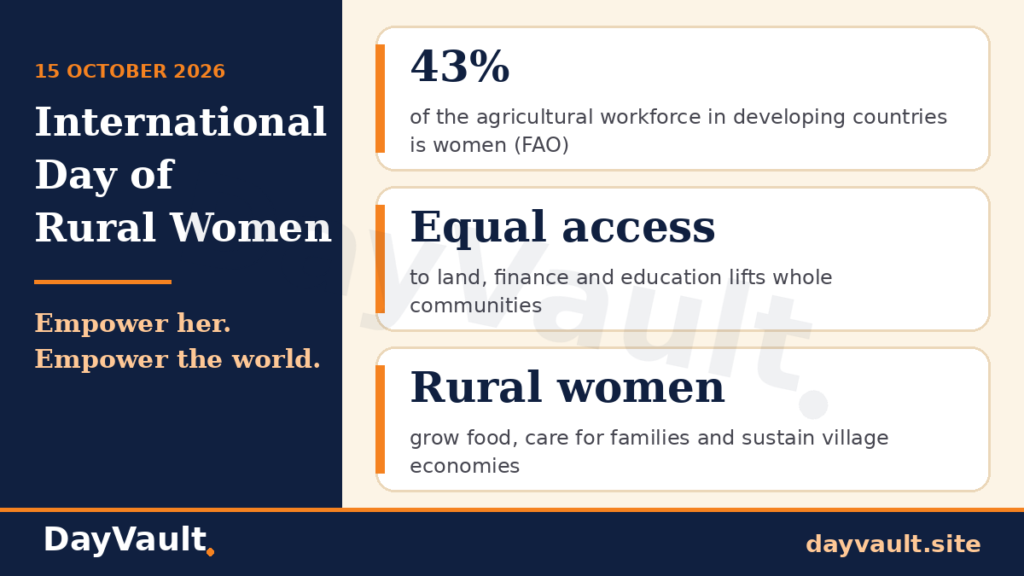
The International Day of Rural Woman 2026 will be observed on October 15, 2026, to recognize the essential contributions of rural women to agriculture, food security, family welfare, and community development. Women living in rural areas play a vital role in sustaining livelihoods, managing natural resources, supporting families, and preserving local traditions. Despite their important contributions, many continue to face challenges such as limited access to education, healthcare, financial services, land ownership, and equal employment opportunities.
This international observance provides an opportunity to appreciate rural women’s achievements while drawing attention to the barriers that prevent them from reaching their full potential. It also encourages governments, communities, organizations, and individuals to support their rights and improve their living conditions.
From farmers and agricultural workers to entrepreneurs, educators, and community leaders, rural women help build stronger and more sustainable societies. International Day of Rural Women reminds the world that empowering these women is essential for achieving gender equality, reducing poverty, and creating a better future for everyone.
When Is International Day of Rural Woman 2026?
International Day of Rural Women is observed every year on October 15. In 2026, the observance falls on Thursday, October 15.
The day recognizes the achievements of rural women and highlights their important role in agricultural development, food production, and rural economies.
Here are the key details:
- Event: International Day of Rural Women
- Date: October 15, 2026
- Day: Thursday
- Frequency: Annual
- Main purpose: To recognize rural women’s contributions and promote their rights, opportunities, and empowerment.
The observance is particularly important in communities where women contribute significantly to farming, livestock care, household food production, and local businesses but may have limited access to resources and decision-making opportunities.
Although the day is recognized internationally, its celebration can differ from one country to another. Communities may organize educational activities, public discussions, awareness campaigns, workshops, and local events to highlight the experiences and achievements of rural women.
What Is International Day of Rural Women?
International Day of Rural Women is a United Nations observance dedicated to recognizing the contributions of women living and working in rural communities.
Rural women are involved in many activities that sustain everyday life. They grow crops, raise livestock, process food, collect and manage natural resources, operate small businesses, care for family members, and participate in community development.
Their work supports not only individual households but also local economies and national food systems.
However, the value of their contributions is not always reflected in the opportunities and resources available to them. In some communities, women perform extensive agricultural and domestic work without receiving fair compensation or having equal access to land, technology, credit, and training.
International Day of Rural Women draws attention to these inequalities and encourages action to address them.
The observance also recognizes that rural women are not simply recipients of assistance. They are skilled workers, entrepreneurs, innovators, decision-makers, and leaders whose knowledge and experience can help solve social, economic, and environmental challenges.
Supporting rural women means giving them the resources, rights, and opportunities they need to make decisions about their own lives and contribute fully to their communities.
History of International Day of Rural Women
The history of International Day of Rural Women is connected to global efforts to recognize women’s rights and improve the conditions of people living in rural areas.
The importance of rural women’s work gained greater international attention through discussions about food security, agricultural development, poverty reduction, and gender equality.
In 2007, the United Nations General Assembly adopted Resolution 62/136, establishing October 15 as the International Day of Rural Women. The first observance took place in 2008.
The initiative recognized the critical role rural women play in improving agricultural and rural development, enhancing food security, and eradicating rural poverty.
Since then, the observance has provided an annual opportunity to highlight the challenges rural women experience and promote policies that support their economic and social advancement.
Over the years, international discussions about rural women’s empowerment have increasingly addressed issues such as access to education, healthcare, technology, financial resources, land rights, climate resilience, and leadership opportunities.
The observance continues to remind the international community that rural development cannot be fully achieved when women are excluded from resources and decisions that affect their lives.
Why Is International Day of Rural Woman Important?
International Day of Rural Women is important because rural women contribute to many areas of society, yet their work and needs can remain overlooked.
Recognizing their achievements is a meaningful first step, but the day also encourages practical improvements in their lives.
1. Recognizing Women’s Contributions to Agriculture
Agriculture is an important source of livelihood in many rural communities. Women participate in planting, harvesting, weeding, processing, storing, and selling agricultural products.
They also contribute knowledge about crops, soil, livestock, and local growing conditions.
Recognizing their agricultural work helps highlight the importance of providing women with fair wages, appropriate equipment, training, and access to agricultural resources.
2. Promoting Gender Equality
Women in rural areas may face discrimination in employment, education, property ownership, and participation in community decisions.
International Day of Rural Women encourages societies to challenge these inequalities and promote equal rights.
Gender equality means that women should have fair opportunities to earn income, pursue education, own property, access public services, and participate in leadership.
3. Reducing Rural Poverty
Rural poverty affects families and communities in different ways. Limited employment opportunities, inadequate infrastructure, and restricted access to financial services can make it difficult for households to improve their economic circumstances.
When rural women can access training, credit, markets, and productive resources, they can strengthen their livelihoods and contribute to household income.
Supporting women-owned businesses and agricultural enterprises can also help create employment and improve local economic activity.
4. Improving Food Security
Rural women play an important role in producing, preparing, processing, and managing food.
Their knowledge and labor can help families maintain reliable food supplies and reduce waste.
Investing in women farmers and supporting their access to land, improved farming methods, storage facilities, and markets can strengthen food systems and rural resilience.
5. Encouraging Women’s Leadership
Rural women understand the needs and challenges of their communities through their daily experiences.
When women participate in local councils, agricultural cooperatives, community organizations, and public decision-making, they can help shape policies and programs that better reflect those needs.
Their leadership can contribute to more inclusive and effective community development.
The Role of Rural Women in Society
Rural women make important contributions across several areas of everyday life. Their roles extend far beyond farming and household responsibilities.
Agriculture and Food Production
Many rural women work in crop production, livestock management, dairy farming, poultry raising, and food processing.
They help supply food to local markets and support the livelihoods of farming households.
Their agricultural knowledge is also valuable in maintaining local crop varieties, adapting farming practices, and managing natural resources.
However, women farmers may have fewer opportunities than men to access agricultural machinery, improved seeds, extension services, and formal credit.
Providing equal access to these resources can improve productivity and help women build more secure livelihoods.
Family Care and Education
Rural women often play a central role in caring for children, supporting older relatives, preparing meals, and managing household needs.
They also help children develop essential skills and understand local traditions and values.
When women have access to education, healthcare, clean water, and adequate nutrition, the benefits can extend throughout the household.
Supporting rural women therefore contributes to stronger families and healthier communities.
Small Businesses and Entrepreneurship
Many rural women earn income through activities such as tailoring, handicrafts, food preparation, dairy production, poultry farming, and small retail businesses.
These enterprises can provide financial independence and create opportunities for other community members.
However, women entrepreneurs may struggle to obtain loans, access markets, develop business skills, or use digital payment systems.
Training programs, affordable financing, business networks, and access to online marketplaces can help rural women expand their businesses.
Environmental Protection
Rural women frequently depend on land, water, forests, and other natural resources for their livelihoods.
Their everyday activities and local knowledge can help communities understand changes in weather, soil conditions, water availability, and agricultural productivity.
When women participate in environmental planning and climate adaptation, communities can benefit from a broader range of knowledge and experience.
Their involvement is particularly valuable in areas affected by droughts, floods, soil degradation, and other environmental pressures.
Challenges Faced by Rural Women
Despite their significant contributions, rural women face various challenges that can limit their opportunities and economic independence.
Limited Access to Education
In some rural communities, schools may be far from home, educational facilities may be inadequate, or families may struggle to afford school-related expenses.
Girls may also face pressure to leave school early because of household responsibilities, early marriage, or traditional expectations.
Limited education can affect women’s access to better employment, financial information, technology, and leadership opportunities.
Expanding affordable education, adult literacy programs, vocational training, and digital learning can help address these barriers.
Unequal Access to Land and Financial Resources
Land is an important productive resource for many rural households. However, legal, financial, and cultural barriers can make it difficult for women to own or control land.
Without land titles or recognized assets, women may find it harder to obtain agricultural loans or invest in their farms.
Financial institutions, governments, and community organizations can help by improving access to affordable credit, financial education, savings programs, and secure property rights.
Healthcare and Nutrition
Access to healthcare remains a challenge in some remote communities, where hospitals, clinics, transportation, and trained healthcare professionals may be limited.
Rural women may also face difficulties obtaining maternal healthcare, reproductive health services, mental health support, and reliable information about nutrition.
Improving rural healthcare facilities, providing community-based services, and expanding access to qualified healthcare professionals can help women and their families live healthier lives.
Unpaid Work and Unequal Responsibilities
Many rural women combine agricultural work with cooking, cleaning, childcare, and other household responsibilities.
Because some of this work is unpaid or not formally recorded, its economic value may be overlooked.
Sharing household responsibilities more fairly and improving access to childcare, clean water, electricity, and labor-saving technologies can reduce the burden on women.
Climate Change and Natural Disasters
Climate change can affect agricultural productivity, water availability, livestock, and rural livelihoods.
Women who depend on farming and natural resources may experience serious difficulties when crops fail or extreme weather damages their homes and businesses.
Climate-resilient farming methods, early warning systems, insurance options, emergency support, and access to reliable climate information can help communities prepare for these risks.
How to Celebrate International Day of Rural Woman 2026
International Day of Rural Women can be celebrated through simple activities that raise awareness, recognize achievements, and encourage meaningful support.
Here are several ways individuals, schools, organizations, and communities can participate.
1. Organize Awareness Campaigns
Schools, colleges, community groups, and local organizations can arrange awareness sessions about the importance of rural women.
These activities may discuss women’s rights, education, agricultural contributions, financial independence, and equal opportunities.
Posters, presentations, discussions, and educational articles can help spread the message.
2. Recognize Local Rural Women
Communities can acknowledge women farmers, entrepreneurs, teachers, healthcare workers, and community volunteers who make valuable contributions.
Sharing their stories with permission can help others understand the challenges they overcome and the difference they make.
Recognition should focus on their skills, achievements, and leadership rather than portraying rural women only through hardship.
3. Support Women-Owned Businesses
Buying products from rural women entrepreneurs is one practical way to support their livelihoods.
People can purchase locally made handicrafts, agricultural products, clothing, food items, and other goods from women-owned businesses.
Organizations can also help women entrepreneurs connect with customers, improve product quality, and access wider markets.
4. Promote Education for Girls
Education creates opportunities for girls and young women to develop skills, pursue careers, and participate in decisions affecting their futures.
Schools and community organizations can use this day to discuss barriers to education and encourage families to support girls’ learning.
Providing books, scholarships, mentoring, digital learning resources, and vocational training can make a meaningful difference.
5. Use Social Media to Spread Awareness
Social media provides a simple way to share information about the observance.
Individuals can publish educational posts, share stories about rural women’s achievements, and encourage people to support equal opportunities.
Useful topics include women’s contributions to agriculture, the importance of rural education, and ways to support women-owned businesses.
Posts should use accurate information and respectful language.
6. Arrange Community Workshops
Workshops can provide practical information about farming methods, financial literacy, entrepreneurship, digital skills, and health awareness.
Local experts, teachers, agricultural professionals, and community leaders can contribute to these activities.
Whenever possible, rural women should help plan the workshops so the content addresses their actual needs and priorities.
7. Encourage Equal Participation
Families, organizations, and community leaders can promote women’s participation in meetings, local planning, agricultural cooperatives, and leadership roles.
Listening to rural women’s experiences and involving them in decisions can help ensure that development projects respond to real community needs.
International Day of Rural Woman 2026 in Pakistan
International Day of Rural Women is especially relevant in Pakistan, where agriculture and rural livelihoods play an important role in the economy and many women contribute to farming, livestock care, food production, and household income.
Rural women participate in activities such as cotton picking, crop cultivation, dairy farming, poultry raising, vegetable production, and agricultural processing. Many also manage domestic responsibilities alongside their income-generating work.
Their contributions support rural households and agricultural supply chains, but women in rural Pakistan can face challenges related to education, healthcare, property rights, financial inclusion, safe transportation, and access to technology.
In some areas, social expectations and limited infrastructure can further restrict women’s opportunities to participate in formal employment or community decision-making.
Ways to Support Rural Women in Pakistan
International Day of Rural Women can encourage practical action across Pakistani communities.
Possible initiatives include:
- Expanding access to quality education and vocational training for rural girls and women.
- Supporting women farmers through agricultural training and access to suitable equipment.
- Improving access to affordable healthcare and maternal health services.
- Promoting financial literacy, savings opportunities, and women-friendly banking services.
- Helping rural women sell agricultural products and handicrafts through local markets and digital platforms.
- Encouraging women’s participation in community organizations and local decision-making.
- Improving access to clean water, sanitation, electricity, and reliable internet services.
Schools, universities, local governments, nonprofit organizations, businesses, and community groups can all contribute to these efforts.
The most effective programs involve rural women directly in planning and implementation rather than assuming that outside organizations already know what they need.
The Future of Rural Women Empowerment
The future of rural development depends partly on whether women can access the resources and opportunities necessary to improve their lives.
Technology, education, financial inclusion, and sustainable agricultural practices can create new possibilities for rural women.
Digital Skills and Technology
Mobile phones and internet access can help women obtain agricultural information, learn new skills, communicate with customers, and manage financial transactions.
Digital platforms can also make it easier for rural entrepreneurs to market their products beyond their immediate communities.
However, these benefits depend on affordable connectivity, digital literacy, suitable devices, and safe access to technology.
Sustainable Agriculture
Climate-smart agricultural practices can help rural communities manage environmental risks and use resources more efficiently.
Women farmers should have equal access to training, improved agricultural tools, reliable weather information, and programs that support sustainable production.
Their experience can contribute to farming methods that respond to local conditions.
Economic Independence
Access to fair employment, business training, financial services, and markets can help women increase their income and strengthen their decision-making power.
Cooperatives and community networks can also help women share knowledge, negotiate better prices, and develop stronger businesses.
Equal Rights and Opportunities
Long-term empowerment requires more than a single awareness campaign. It requires policies and social practices that protect women’s rights and allow them to participate fully in economic, social, and political life.
Governments, businesses, educational institutions, and communities must work together to address discrimination and improve access to essential services.
When rural women have meaningful opportunities to succeed, their communities can benefit from stronger livelihoods, broader participation, and more sustainable development.
Frequently Asked Questions
1. When is International Day of Rural Woman 2026?
International Day of Rural Women 2026 will be observed on Thursday, October 15, 2026. The observance takes place annually on October 15 to recognize rural women’s contributions and promote their rights and empowerment.
2. Why do we celebrate International Day of Rural Women?
The day recognizes rural women’s contributions to agriculture, food security, family welfare, and economic development. It also raises awareness of challenges such as unequal access to education, healthcare, land, financial services, and employment opportunities.
3. Who established International Day of Rural Women?
The United Nations General Assembly established the observance through Resolution 62/136 in 2007. The first International Day of Rural Women was observed in 2008.
4. What is the main purpose of International Day of Rural Women?
Its main purpose is to recognize rural women’s achievements, highlight their importance in rural development, and encourage action to improve their rights, living conditions, and access to opportunities.
5. How can we celebrate International Day of Rural Woman 2026?
You can celebrate by organizing awareness campaigns, supporting women-owned businesses, sharing stories of rural women’s achievements, promoting education, arranging community workshops, and advocating equal opportunities for rural women.
Conclusion
International Day of Rural Woman 2026, observed on October 15, is an opportunity to recognize the women who help sustain rural communities through agriculture, entrepreneurship, family care, and community leadership.
Their contributions are essential to food security, economic development, and the well-being of families around the world. Yet many rural women continue to experience barriers that limit their access to education, healthcare, land, financial resources, and leadership opportunities.
This observance encourages individuals, governments, organizations, and communities to move beyond recognition and take meaningful action. Supporting rural women’s education, economic independence, equal rights, and participation in decision-making can help build stronger and more resilient communities.
Every effort matters, whether it involves supporting a woman-owned business, promoting girls’ education, sharing accurate information, or helping improve access to essential services.
On October 15, 2026, let us recognize rural women’s achievements, listen to their experiences, and work toward a future in which every rural woman has the freedom and opportunity to reach her full potential.
6. What is the theme of International Day of Rural Women 2026?
The official theme for International Day of Rural Women 2026 should be confirmed through the United Nations’ official announcements. The observance focuses on recognizing rural women’s contributions and promoting their rights and empowerment.
7. What are the main challenges faced by rural women?
Rural women may face limited access to education, healthcare, land ownership, financial services, technology, and employment opportunities. Unequal responsibilities and climate-related challenges can also affect their livelihoods.
8. What role do rural women play in agriculture?
Rural women contribute to planting, harvesting, livestock care, food processing, and agricultural marketing. Their work supports food production, household income, and rural economies.
9. Why is women’s empowerment important in rural areas?
Women’s empowerment helps rural women access education, earn income, make independent decisions, and participate in community development. It can also strengthen families and support poverty reduction.
10. How can rural women contribute to economic development?
Rural women contribute through farming, small businesses, handicrafts, livestock management, food production, and entrepreneurship. With access to training, finance, and markets, they can expand their economic opportunities.
11. How can schools celebrate International Day of Rural Women?
Schools can organize presentations, poster competitions, classroom discussions, awareness campaigns, and activities that highlight rural women’s achievements and the importance of equal opportunities.
12. Why are rural women important for food security?
Rural women participate in growing, processing, preparing, and distributing food. Their agricultural knowledge and work help support household nutrition and local food systems.
13. How can technology help rural women?
Technology can provide access to online education, agricultural information, digital banking, healthcare resources, and wider markets for women-owned businesses. Affordable internet and digital skills training are important for making these benefits accessible.
14. What is the role of rural women in sustainable development?
Rural women contribute to sustainable development through agriculture, natural resource management, entrepreneurship, education, and community leadership. Their participation helps communities respond to economic and environmental challenges.
15. What is the message of International Day of Rural Women 2026?
The message is to recognize rural women’s contributions, protect their rights, promote gender equality, and ensure they have fair access to education, healthcare, financial resources, technology, and leadership opportunities.
