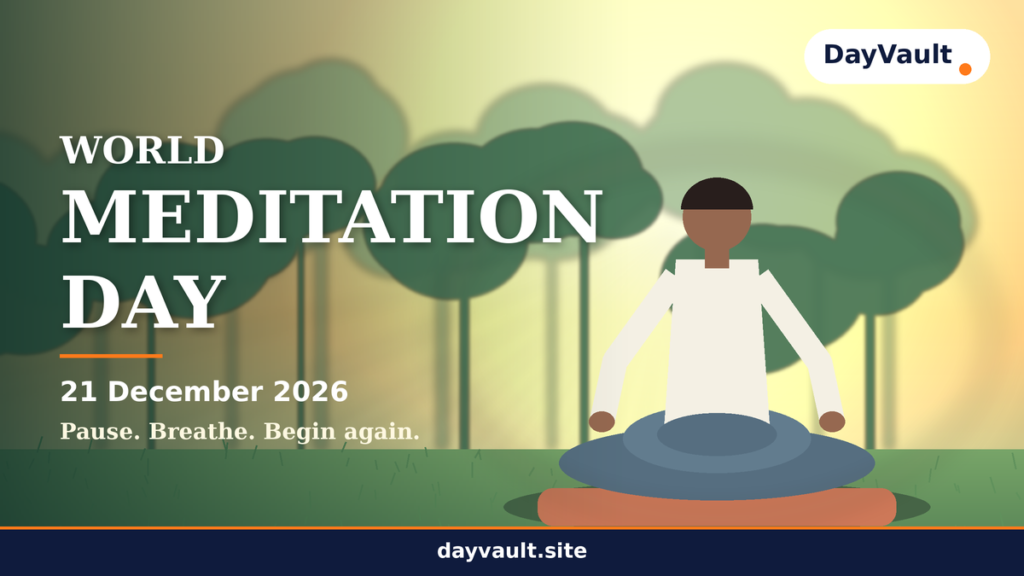
In a world filled with constant notifications, busy schedules, and everyday responsibilities, finding a moment of peace can feel difficult. Many people move from one task to another without taking time to pause, breathe, and reconnect with themselves. World Meditation Day offers a meaningful opportunity to slow down, explore mindfulness, and understand how meditation can support a healthier relationship with our thoughts, emotions, and daily lives.
Observed annually on December 21, World Meditation Day is a United Nations observance that highlights meditation and its potential contribution to physical and mental well-being. The United Nations General Assembly officially proclaimed the day on December 6, 2024, through Resolution A/RES/79/137.
Whether you have meditated for years or have never tried it before, this special day encourages you to discover a simple practice that can fit into almost any lifestyle. You do not need expensive equipment, a special location, or hours of free time. Sometimes, a few quiet minutes are enough to begin.
In this article, we explore the date, history, significance, benefits, and practical ways to celebrate World Meditation Day while making mindfulness part of everyday life.
What Is World Meditation Day?
World Meditation Day is an annual international observance dedicated to raising awareness of meditation and its potential benefits for health and well-being. It encourages individuals, communities, and organizations to recognize the value of taking time for reflection, mindfulness, and inner calm.
Meditation is a practice that involves training attention and awareness. Depending on the technique, people may focus on their breathing, observe their thoughts without judgment, repeat a calming phrase, or pay attention to sensations in the present moment.
Although meditation has roots in various cultural and spiritual traditions, it is also practiced today as a secular wellness activity. People from different backgrounds can explore meditation according to their personal beliefs and preferences.
The central message of World Meditation Day is straightforward: taking care of your inner well-being matters.
The observance also creates an opportunity to discuss mental health, encourage peaceful interactions, and make meditation more accessible to people who may not know how to begin.
When Is World Meditation Day Celebrated?
World Meditation Day is celebrated every year on December 21. The United Nations General Assembly established this date in 2024, recognizing meditation as a practice used in different regions of the world and acknowledging its potential contribution to health and well-being.

United Nations
+1
Here are the essential details:
- Date: December 21 every year
- Frequency: Annual
- Recognized by: United Nations General Assembly
- Official resolution: A/RES/79/137
- Main purpose: To raise awareness of meditation and its potential benefits for health and well-being
The date provides a shared occasion for people worldwide to participate in individual meditation, attend community sessions, or learn about mindfulness.
Because December 21 falls near the end of the calendar year, it can also be a useful opportunity to reflect on personal experiences, acknowledge challenges, and approach the coming year with greater awareness.
However, meditation is not limited to one day. The observance is an invitation to explore a practice that can continue throughout the year.
History and Origin of World Meditation Day
World Meditation Day became an official United Nations observance in December 2024.
On December 6, 2024, the United Nations General Assembly adopted Resolution A/RES/79/137, proclaiming December 21 as World Meditation Day. The resolution recognized the widespread practice of meditation and its potential contribution to health and well-being. It also connected the observance with broader international efforts to promote physical and mental health.
The establishment of the day reflects growing international interest in practices that encourage self-awareness, emotional balance, and personal well-being.
Meditation itself is much older than the observance. Different cultures and spiritual traditions have developed their own approaches to contemplation, focused attention, breathing, and mindfulness over many centuries.
Today, meditation is practiced in religious settings, wellness centers, schools, workplaces, and homes. Some people approach it through spiritual traditions, while others use it to manage everyday stress or improve concentration.
World Meditation Day brings attention to this broad range of practices and encourages people to learn about meditation in an accessible and respectful way.
Why Is World Meditation Day Important?
World Meditation Day matters because mental and emotional well-being are important parts of a healthy life.
People regularly face pressures related to work, education, family responsibilities, finances, relationships, and uncertainty about the future. Although these experiences cannot always be avoided, individuals can explore healthy ways to respond to them.
Meditation offers one possible approach.
1. It Encourages Mental Well-Being
Meditation can help people become more aware of their thoughts and emotional responses. Instead of immediately reacting to every worry or distraction, practitioners can learn to notice what is happening and respond more thoughtfully.
This awareness may help some people develop healthier ways of dealing with everyday challenges.
2. It Promotes Mindfulness
Mindfulness involves paying attention to the present moment with openness and without unnecessary judgment.
Many people spend considerable time thinking about past mistakes or worrying about future responsibilities. Mindfulness practices encourage them to notice what is happening now, including their breathing, surroundings, and current activities.
3. It Makes Time for Self-Reflection
A few quiet minutes can create space to consider personal priorities, habits, emotions, and goals.
This does not mean that every meditation session must produce an important realization. Sometimes, the value lies simply in pausing during a busy day.
4. It Encourages Compassion and Understanding
Some meditation practices focus on kindness, empathy, and compassion toward oneself and others.
By reflecting on these qualities, people may become more intentional about how they communicate, manage disagreements, and treat those around them.
5. It Supports Awareness of Healthy Habits
World Meditation Day also reminds people that well-being involves regular attention to everyday choices.
Meditation can complement other healthy habits, including sufficient sleep, physical activity, balanced nutrition, supportive relationships, and seeking professional help when needed.
What Are the Benefits of Meditation?
The benefits of meditation can vary depending on the individual, the technique used, and how regularly the practice is performed. Research suggests that some forms of meditation and mindfulness may help with stress, anxiety symptoms, and certain aspects of emotional well-being, although results are not the same for everyone.
Here are several potential benefits worth understanding.
Reduced Stress
Stress can affect concentration, mood, sleep, and daily decision-making.
Meditation encourages people to pause and pay attention to their breathing or other chosen points of focus. This can provide a structured way to step back from immediate pressures.
Regular practice may help some individuals manage stress more effectively, although meditation cannot remove every source of stress from life.
Improved Attention and Concentration
Many meditation techniques involve returning attention to one thing whenever the mind wanders.
For example, a person may focus on breathing and gently bring their attention back whenever they notice a distraction. Repeating this process provides an opportunity to practice attentional awareness.
Some people find this approach useful when developing more deliberate study or work habits.
Greater Emotional Awareness
Meditation can help individuals notice emotions as they arise.
Recognizing feelings such as frustration, sadness, or anxiety may make it easier to understand personal reactions and choose an appropriate response.
The goal is not to suppress difficult emotions. Instead, it is to observe them with greater awareness.
Support for Sleep Routines
A quiet meditation practice may help some people unwind before bedtime by providing a consistent transition from daily activities to rest.
However, meditation is not a guaranteed treatment for insomnia or other sleep disorders. Persistent sleep difficulties may require advice from a qualified healthcare professional.
A Stronger Sense of Self-Awareness
Regular reflection can help people recognize recurring thought patterns, habits, and personal priorities.
Over time, this awareness may support more intentional decisions about relationships, work, personal goals, and everyday routines.
It is important to remember that meditation is not a replacement for medical care or mental health treatment. Anyone experiencing persistent or severe symptoms should seek appropriate professional support. Some people also find meditation uncomfortable or distressing, so adjusting the technique or stopping the practice is reasonable when necessary.
Different Types of Meditation to Explore
There is no single method that works best for everyone. World Meditation Day is an opportunity to explore different approaches and discover which one feels comfortable and practical.
Mindfulness meditation involves paying attention to the present moment.
You might notice your breathing, physical sensations, sounds, or thoughts as they appear. When your attention wanders, you gently return to your chosen focus.
This technique is popular among beginners because it can be practiced almost anywhere.
2. Breathing Meditation
Breathing meditation uses the natural rhythm of breathing as an anchor for attention.
Sit comfortably, breathe naturally, and notice the movement of air as you inhale and exhale. There is no need to force deep breaths or follow a complicated pattern.
If focusing on breathing feels uncomfortable, you can instead pay attention to sounds in the room or the sensation of your feet resting on the floor.
3. Guided Meditation
Guided meditation involves listening to a teacher or recording that provides instructions throughout the practice.
Guidance may include breathing awareness, body relaxation, visualization, or reflections on kindness.
This option can be helpful for beginners who feel unsure about what to do during a quiet session.
4. Loving-Kindness Meditation
Loving-kindness meditation focuses on developing feelings of goodwill and compassion.
A practitioner may silently repeat phrases wishing safety, happiness, or peace for themselves and others.
The practice can be adapted to personal beliefs and does not require adopting a particular religious tradition.
5. Walking Meditation
Meditation does not always require sitting still.
Walking meditation involves paying attention to the sensations of movement, the contact between your feet and the ground, and the environment around you.
Choose a safe, quiet place and walk at a comfortable pace. This approach may appeal to people who find sitting meditation difficult.
How to Celebrate World Meditation Day
You do not need to attend a formal event to participate in World Meditation Day. Simple activities can make the observance meaningful, whether you spend the day alone, with friends, or in a community.
Here are practical ways to celebrate.
Start With Five Minutes of Meditation
Choose a comfortable place where you can sit without unnecessary interruptions.
Close your eyes if that feels comfortable, or keep them softly open. Notice your natural breathing and gently return your attention whenever it wanders.
Five minutes is a reasonable starting point. You can gradually increase the duration if you find the practice helpful.
Join a Meditation Session
Look for a local meditation group, wellness center, yoga studio, community organization, or online guided session.
A group setting can introduce you to different techniques and provide an opportunity to learn from experienced practitioners.
Choose a session that respects your comfort, personal beliefs, and physical needs.
Practice Mindfulness With Family or Friends
Invite people close to you to spend a few quiet minutes practicing meditation together.
Afterward, you can discuss what the experience was like, share useful techniques, or simply enjoy a peaceful moment without needing to analyze it.
Participation should remain voluntary. Everyone has different preferences when it comes to relaxation and reflection.
Create a Peaceful Space at Home
Choose a small area where you can sit comfortably without distractions.
You might add a cushion, a comfortable chair, soft lighting, or a plant. However, these additions are optional. A quiet corner is enough to begin.
The purpose is to make meditation accessible rather than create an expensive or complicated setup.
Learn About Mindfulness
Read reliable information about meditation techniques, listen to a beginner-friendly guided session, or explore research on mindfulness and mental well-being.
Learning about the different approaches can help you understand their purposes, limitations, and suitability for your needs.
Share a Positive Message
Use social media to explain what meditation means to you or encourage others to take a short break for their well-being.
You can share a simple breathing exercise, a personal reflection, or an invitation to join a meditation session.
Keep your message inclusive and avoid suggesting that meditation is the only solution to stress or mental health challenges.
A Simple 10-Minute Meditation Routine for Beginners
If you are new to meditation, World Meditation Day is an ideal time to try a short, manageable routine.
Follow these steps:
Minute 1: Find a comfortable position.
Sit on a chair, cushion, or yoga mat. Keep your posture comfortable and allow your shoulders to relax.
Minutes 2–3: Notice your breathing.
Pay attention to the natural movement of your breath. You do not need to change its pace or depth.
Minutes 4–6: Observe your thoughts.
Thoughts will probably appear. You might think about work, conversations, or plans for later. Notice these thoughts without criticizing yourself, then return your attention to your chosen focus.
Minutes 7–8: Notice your surroundings.
Pay attention to sounds, physical sensations, and the feeling of sitting in your current environment.
Minute 9: Reflect on your present needs.
Ask yourself what might help you approach the rest of your day with greater care and awareness.
Minute 10: Finish gently.
Open your eyes if they were closed, stretch if needed, and return to your activities without rushing.
Remember, meditation is not a test of concentration. If your mind wanders repeatedly, that is a normal part of the experience. Returning your attention is part of the practice.
If focusing inward causes distress, stop and try a more grounding activity, such as noticing objects around you or taking a gentle walk.
How to Make Meditation a Daily Habit
Celebrating World Meditation Day can be the beginning of a regular practice rather than a one-day activity.
Consistency is often more practical than setting ambitious goals that are difficult to maintain.
Consider these suggestions:
- Choose a regular time: Try meditating after waking up, during a lunch break, or before your evening routine.
- Start small: Begin with three to five minutes instead of expecting yourself to meditate for half an hour.
- Use a simple reminder: Connect meditation with an existing habit, such as making your morning tea.
- Experiment with techniques: Try breathing meditation, mindfulness, or walking meditation to discover what feels comfortable.
- Avoid judging progress: Some sessions may feel peaceful, while others may be filled with distractions.
- Keep your routine flexible: If you miss a day, simply return to the practice when you can.
You do not have to meditate perfectly or follow a strict schedule. A sustainable routine should fit your circumstances and support your well-being.
World Meditation Day and Global Peace
Meditation is a personal practice, but its significance can extend beyond the individual.
When people reflect on their thoughts, emotions, and reactions, they may become more aware of how their behavior affects others. Practices that emphasize compassion and patience can also encourage thoughtful communication.
At the community level, meditation sessions can bring together people from different backgrounds who share an interest in well-being and peaceful interaction.
However, meditation alone cannot resolve social conflict, injustice, or the causes of violence. Peace also requires practical action, mutual respect, cooperation, and efforts to address the conditions that harm individuals and communities.
World Meditation Day offers a reminder that personal well-being and collective responsibility can complement one another.
A moment of quiet reflection may be small, but it can help people approach their relationships and responsibilities more intentionally.
Frequently Asked Questions About World Meditation Day
1. When is World Meditation Day celebrated?
World Meditation Day is observed every year on December 21. The United Nations General Assembly officially proclaimed the observance in December 2024 through Resolution A/RES/79/137.
2. Why is World Meditation Day celebrated?
World Meditation Day raises awareness of meditation and its potential benefits for health and well-being. It encourages people to explore mindfulness, learn about meditation, and make time for personal reflection.
3. Who established World Meditation Day?
The United Nations General Assembly established World Meditation Day on December 6, 2024. The resolution recognized the widespread practice of meditation and its potential contribution to physical and mental well-being.
4. What are the main benefits of meditation?
Meditation may help some people manage stress, develop awareness of their emotions, and improve their ability to focus on the present moment. Benefits vary between individuals, and meditation should not replace appropriate medical or mental health treatment.
5. How can beginners celebrate World Meditation Day?
Beginners can celebrate by trying a short guided meditation, practicing mindful breathing, joining a community session, or learning about different meditation techniques. Even five minutes of quiet reflection can be a useful starting point.
6. Do I need special equipment to meditate?
No. You can meditate using a comfortable chair, cushion, or any safe place where you can sit or stand comfortably. Meditation does not require expensive equipment, special clothing, or a dedicated room.
7. Can I meditate if I have a busy schedule?
Yes. You can begin with a few minutes during a break, before starting work, or at the end of the day. A short routine that fits your schedule may be easier to maintain than a longer session that feels difficult to manage.
Conclusion
World Meditation Day, observed annually on December 21, encourages people around the world to recognize the importance of meditation and its potential role in supporting well-being. Established by the United Nations General Assembly in 2024, the observance provides an opportunity to explore mindfulness, reflect on daily habits, and learn about practical ways to create moments of calm.
Celebrating this day does not require a major event or a complicated routine. You can begin by sitting quietly for five minutes, following a guided meditation, taking a mindful walk, or inviting a friend to join you.
The most important step is finding an approach that feels comfortable and realistic for your life. Meditation is not about eliminating every difficult thought or achieving perfect calm. It is about learning to pay attention with greater awareness and responding to yourself and others with care.
This World Meditation Day, give yourself permission to pause. A few intentional moments today may inspire you to build healthier habits and make space for mindfulness throughout the year.
1. When is World Meditation Day celebrated?
World Meditation Day is celebrated every year on December 21 to promote awareness of meditation and its potential benefits for health and well-being.
2. Why is World Meditation Day celebrated?
World Meditation Day is celebrated to encourage people to practice meditation, develop mindfulness, manage everyday stress, and support mental and emotional well-being.
3. Who established World Meditation Day?
The United Nations General Assembly officially proclaimed World Meditation Day on December 6, 2024, through Resolution A/RES/79/137.
4. What are the benefits of meditation?
Meditation may help reduce stress, improve focus, increase self-awareness, support emotional well-being, and encourage a greater sense of calm.
5. How can I celebrate World Meditation Day?
You can celebrate by practicing meditation, joining a guided session, trying mindful breathing, taking a peaceful walk, or sharing meditation tips with friends and family.
6. Can beginners practice meditation?
Yes, beginners can start with just five minutes of meditation each day. Simple breathing exercises and guided meditation are useful ways to begin.
7. Do I need special equipment for meditation?
No, meditation does not require special equipment. A comfortable, quiet place where you can sit or relax is enough to get started.
8. Is World Meditation Day an official United Nations observance?
Yes, the United Nations General Assembly proclaimed December 21 as World Meditation Day in 2024.
9. How long should I meditate each day?
Beginners can start with five to ten minutes daily and gradually adjust the duration according to their comfort and routine.
10. What is the main message of World Meditation Day?
The main message is to recognize the value of meditation, encourage mindfulness, and make time for personal well-being and inner peace.
