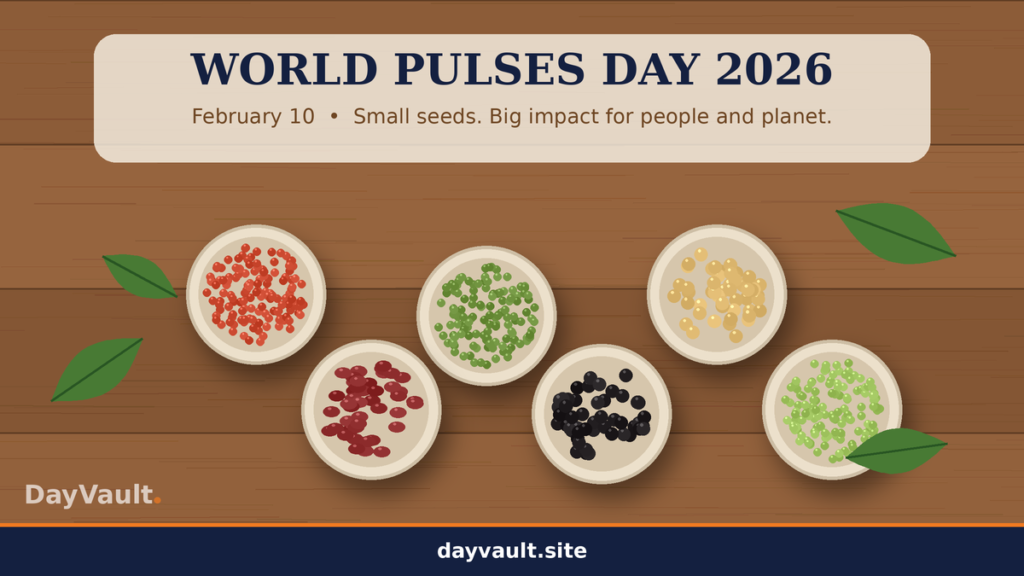
Pulses are among the most affordable, nutritious, and versatile foods in the world. From lentils and chickpeas to beans and dried peas, these small seeds play a major role in feeding families, supporting farmers, and building more sustainable food systems. Despite their importance, pulses are sometimes overlooked when people discuss healthy eating and environmental protection.
World Pulses Day, observed every year on February 10, celebrates the nutritional, agricultural, economic, and environmental value of pulses. The observance encourages people to understand how these everyday foods can contribute to healthier diets, improved food security, and more sustainable farming practices. FAOHome+1
Whether you enjoy a bowl of lentil soup, a chickpea curry, or a simple serving of beans, World Pulses Day is an opportunity to appreciate the important role these foods play in our daily lives.
In this article, we explore the date, history, importance, health benefits, environmental advantages, and practical ways to celebrate World Pulses Day.
What Is World Pulses Day?
World Pulses Day is an international observance established to raise awareness about the importance of pulses in human nutrition and sustainable agriculture.
The day highlights how pulses can help address several global challenges, including hunger, malnutrition, environmental sustainability, and the need for more resilient food systems.
Pulses are the dried edible seeds of leguminous plants harvested for food. Common examples include lentils, chickpeas, dry beans, and dried peas. They are widely used in traditional dishes across Asia, Africa, Europe, the Americas, and other regions.
The Food and Agriculture Organization of the United Nations (FAO) supports the observance and promotes the production and consumption of pulses as part of healthy diets and sustainable food systems. FAOHome+1
World Pulses Day is not simply about celebrating a particular food. It also draws attention to the connection between what we eat, how our food is produced, and the well-being of people and the planet.
When Is World Pulses Day Celebrated?
World Pulses Day is celebrated annually on February 10.
The United Nations General Assembly officially designated the date in 2018, following the success of the International Year of Pulses in 2016. The observance has been held each year since 2019. United Nations+1
Here are the key details:
- Date: February 10 every year
- First annual observance: 2019
- Established by: United Nations General Assembly
- Supported by: Food and Agriculture Organization of the United Nations
- Main purpose: Promoting pulses for nutrition, food security, and sustainable agriculture
World Pulses Day 2027 will fall on Wednesday, February 10.
The date provides an opportunity for governments, agricultural organizations, schools, food businesses, farmers, and individuals to highlight the value of pulses and encourage their greater use in everyday meals.
History of World Pulses Day
The history of World Pulses Day began with growing international recognition of the contribution pulses make to nutrition and sustainable food production.
The International Year of Pulses in 2016
In 2013, the United Nations General Assembly proclaimed 2016 as the International Year of Pulses. The Food and Agriculture Organization led efforts to increase awareness of their nutritional and agricultural benefits.
The campaign helped introduce more people to the importance of pulses as affordable sources of nutrients and as crops that can support sustainable farming systems. United Nations+1
It also encouraged farmers, researchers, policymakers, and consumers to consider how pulses could contribute to global food security.
The establishment of World Pulses Day
Following the International Year of Pulses, Burkina Faso proposed establishing a recurring international day dedicated to these crops.
On December 20, 2018, the United Nations General Assembly adopted Resolution A/RES/73/251, designating February 10 as World Pulses Day.
The first annual observance took place on February 10, 2019. Since then, the day has continued to promote the role of pulses in healthy diets, sustainable agriculture, and more resilient food systems. United Nations+1
Why the observance remains important
The global food system faces challenges such as malnutrition, soil degradation, climate change, and unequal access to nutritious foods.
Pulses cannot solve these problems alone, but they can be part of practical solutions. Their nutritional value, versatility, storage qualities, and agricultural benefits make them an important food group for communities around the world.
World Pulses Day keeps these benefits in public discussion and encourages action from individuals and institutions.
What Are Pulses? Common Types and Examples
Pulses belong to the legume family, but the term has a specific meaning. It generally refers to legumes harvested for their dry edible seeds.
This distinction matters because not every legume is classified as a pulse. For example, fresh green peas and green beans are harvested as vegetables, while soybeans and peanuts are primarily associated with oil-rich seeds rather than the usual pulse category. FAOHome+1
Some common types of pulses include:
1. Lentils
Lentils are small, quick-cooking pulses available in varieties such as red, brown, green, and black. They are commonly used in soups, stews, curries, and salads.
2. Chickpeas
Chickpeas are popular in South Asian, Middle Eastern, Mediterranean, and other cuisines. They can be used in curries, hummus, roasted snacks, and salads.
3. Kidney beans
Kidney beans are known for their distinctive shape and rich texture. They are often included in bean curries, stews, and rice dishes.
4. Mung beans
Mung beans are widely consumed in South Asia and other parts of Asia. They can be prepared in soups, savory dishes, and traditional home-cooked meals.
5. Dried peas
Dried peas are used in soups, stews, and various traditional recipes. Split peas are especially useful for making thick, filling meals.
6. Black beans and other dry beans
Black beans, white beans, and several other varieties provide options for diverse recipes. They can be incorporated into salads, soups, rice dishes, and plant-based meals.
This variety makes pulses suitable for different cooking styles, cultural traditions, and dietary preferences.
Why Is World Pulses Day Important?
World Pulses Day highlights the relationship between nutrition, agriculture, food security, and environmental sustainability.
Promoting healthy eating
Pulses provide plant-based protein, dietary fiber, and important vitamins and minerals. Including them in a balanced diet can help people increase the variety of foods they eat.
Their versatility also makes them useful for people looking to reduce their reliance on meat without giving up filling and satisfying meals.
Supporting food security
Food security means that people have reliable access to sufficient, safe, and nutritious food.
Pulses can support food security because they are widely used in everyday cooking, can often be stored dry for extended periods, and offer a range of nutrients. Their affordability in many markets also makes them an important option for households managing food costs.
However, affordability and availability vary by region, so access to pulses still depends on local production, distribution, prices, and household circumstances.
Encouraging sustainable agriculture
Pulses can contribute to agricultural systems that make better use of natural resources. Many pulse crops form relationships with soil bacteria that help convert atmospheric nitrogen into forms plants can use.
When appropriately managed, pulses can improve soil fertility and support crop rotations. These benefits may help farmers use nitrogen fertilizers more efficiently and diversify their farming systems. FAOHome+1
Recognizing farmers and rural communities
Pulses provide economic opportunities throughout the food supply chain, including farming, processing, transportation, storage, and retail.
Smallholder farmers and rural businesses can benefit from pulse production when suitable markets, infrastructure, and farming support are available.
World Pulses Day recognizes the people who grow, distribute, prepare, and sell these important foods.
Health Benefits of Pulses
Pulses are valuable additions to a balanced diet because they provide several nutrients in one affordable food group.
Their exact nutritional content depends on the type of pulse, portion size, and preparation method.
1. A good source of plant-based protein
Protein helps the body build and repair tissues and supports normal bodily functions.
Lentils, chickpeas, beans, and dried peas provide plant-based protein, making them useful for vegetarians, vegans, and anyone seeking more variety in their protein sources.
Pairing pulses with grains, vegetables, and other nutritious foods can help create balanced meals.
2. Rich in dietary fiber
Many pulses contain substantial amounts of dietary fiber.
Fiber supports digestive health and can help promote regular bowel movements. Fiber-rich foods may also contribute to fullness, which can be useful when planning satisfying meals.
Adding pulses gradually and drinking enough water may help people adjust if they are not accustomed to eating fiber-rich foods.
3. Provide essential vitamins and minerals
Depending on the variety, pulses can supply nutrients such as folate, iron, potassium, magnesium, and other vitamins and minerals.
These nutrients contribute to normal bodily functions, including energy metabolism, blood formation, and muscle and nerve function.
For people relying heavily on plant-based foods, eating a variety of nutrient-rich foods is important. For example, consuming vitamin C-rich foods alongside plant sources of iron can improve iron absorption. BIODIVERSITY+1
4. Support a balanced diet
Pulses can be included in meals alongside vegetables, whole grains, fruit, and other nutritious foods.
Their combination of protein and fiber makes them a useful choice for creating satisfying dishes without relying entirely on animal-based protein.
How pulses contribute to a person’s diet depends on overall eating habits, portion sizes, and individual nutritional needs.
5. Offer flexibility for different dietary preferences
Pulses work well in traditional, vegetarian, vegan, and many other eating patterns.
They can be prepared as curries, soups, salads, spreads, patties, and side dishes. This flexibility makes it easier for people to experiment with plant-based meals while retaining familiar flavors.
Pulses are nutritious foods, but they are not a replacement for a varied diet or individualized medical advice when someone has specific dietary requirements.
How Pulses Help the Environment
One of the central messages of World Pulses Day is that food choices and agricultural practices are connected to environmental sustainability.
Pulses offer several potential environmental benefits, although their actual impact depends on the crop variety, location, climate, farming methods, and wider food system.
Improving soil fertility
Many pulses work with nitrogen-fixing bacteria around their roots. This natural process helps convert atmospheric nitrogen into forms that plants can use.
When pulses are included in crop rotations, they can contribute to soil fertility and may reduce the amount of additional nitrogen fertilizer needed for subsequent crops. The outcome depends on how the crop is grown and how its residues are managed. FAOHome+1
Supporting crop rotation
Growing the same crop repeatedly can create challenges involving pests, diseases, and soil management.
Including pulses in a crop rotation introduces diversity and can help farmers manage their land more effectively.
Well-planned crop rotations may improve agricultural resilience and contribute to more sustainable production.
Making efficient use of water
Some pulse varieties are well adapted to dry environments and can tolerate periods of limited water availability.
This can make them useful in particular farming systems, especially where water resources are under pressure. However, water requirements vary by species, growing conditions, and agricultural practices, so pulses should not be assumed to need little water in every situation.
Supporting biodiversity
Diversified farming systems can provide benefits for agricultural biodiversity.
Pulses can help broaden the range of crops grown on a farm, reducing dependence on a single crop and contributing to more varied agricultural landscapes.
These benefits are particularly relevant as farmers seek ways to adapt to changing weather conditions and other environmental challenges.
World Pulses Day and Global Food Security
Food security remains a major concern for communities worldwide. Access to nutritious food depends not only on production but also on affordability, distribution, storage, and the ability of households to obtain what they need.
Pulses can contribute to food security in several ways.
First, dried pulses can be stored for relatively long periods when kept in suitable conditions. This makes them practical ingredients for households, retailers, and food distribution programs.
Second, they offer a range of nutrients in a single food group. When combined with other available foods, they can contribute to varied and balanced meals.
Third, pulses can be grown in many different agricultural environments. Choosing suitable varieties and using appropriate farming practices can help farmers diversify production.
Finally, pulses are deeply connected to food traditions around the world. Promoting them does not require communities to abandon their established cuisines. Instead, it can build on familiar recipes and locally available ingredients.
World Pulses Day encourages governments, farmers, food organizations, and consumers to recognize these opportunities while continuing to address the wider causes of hunger and malnutrition.
How Is World Pulses Day Celebrated?
People can celebrate World Pulses Day in simple, practical, and educational ways. Participation does not require a large event or expensive resources.
Here are some ideas for individuals, schools, communities, and organizations.
1. Cook a pulse-based meal
Prepare a dish featuring lentils, chickpeas, beans, or dried peas.
You might make lentil soup, chickpea curry, bean salad, or a traditional family recipe. Sharing the meal with others creates an opportunity to discuss the nutritional value of pulses.
2. Organize a school awareness activity
Teachers can introduce students to different types of pulses and explain their role in nutrition and agriculture.
Useful classroom activities include:
- Identifying and sorting different pulses.
- Creating posters about healthy eating.
- Learning how pulses grow.
- Exploring traditional pulse-based dishes from different countries.
- Discussing how agriculture affects the environment.
3. Share educational content online
Individuals, bloggers, schools, and organizations can use social media to share useful information about World Pulses Day.
Content ideas include simple recipes, pulse identification guides, nutrition information, and explanations of sustainable farming.
The aim should be to provide accurate information rather than make exaggerated health or environmental claims.
4. Support local farmers and markets
Where possible, consider purchasing pulses from local farmers, cooperatives, or markets.
Supporting local food producers can help maintain agricultural livelihoods and strengthen connections between consumers and the people who grow their food.
5. Try a new recipe
World Pulses Day is an opportunity to explore a pulse that you do not usually cook.
For example, someone who regularly eats lentils might try chickpeas in a salad, while someone who prefers beans might experiment with split-pea soup.
Small changes can make meals more varied and introduce people to new flavors.
6. Share information with family and friends
A conversation about pulses can be a simple way to spread awareness.
Explain what pulses are, why they are nutritious, and how they can contribute to more diverse food systems. Sharing practical information may encourage others to include them in their meals.
Easy Ways to Include More Pulses in Everyday Meals
You do not need to wait for February 10 to benefit from pulses. Including them in everyday meals can be simple when you use familiar ingredients and preparation methods.
Try these practical ideas:
- Breakfast: Add cooked beans to a savory breakfast or enjoy a pulse-based dish common in your region.
- Lunch: Prepare lentil soup, chickpea salad, or a bean-filled wrap.
- Dinner: Serve dal, chickpea curry, or beans alongside vegetables and whole grains.
- Snacks: Try properly cooked or roasted chickpeas.
- Meal preparation: Cook a batch of beans or lentils in advance and refrigerate or freeze portions for later meals.
If using dried pulses, follow appropriate soaking and cooking instructions. Some beans, particularly dried kidney beans, require thorough boiling because improperly prepared beans can contain harmful natural toxins. Canned pulses can be a convenient alternative; draining and rinsing them may also reduce some of their sodium content.
For people who experience digestive discomfort, increasing portions gradually may make pulses easier to incorporate into their diet.
The most useful approach is to choose recipes that fit your preferences, budget, and daily routine.
World Pulses Day and the Sustainable Development Goals
World Pulses Day also connects with the United Nations Sustainable Development Goals, which address challenges involving poverty, hunger, health, responsible consumption, climate action, and environmental protection.
Pulses are particularly relevant to several of these goals.
- Zero Hunger: Pulses can contribute to access to nutritious food and more diverse diets.
- Good Health and Well-Being: Their nutrients support healthy eating patterns.
- Gender Equality: Supporting inclusive agricultural systems can help expand opportunities for women involved in food production and related businesses.
- Responsible Consumption and Production: Proper storage and thoughtful food preparation can help reduce avoidable food waste.
- Climate Action: Appropriate pulse production can contribute to more resilient agricultural systems.
- Life on Land: Crop diversification and suitable farming practices can support soil health and agricultural biodiversity.
These connections do not mean that pulses alone can achieve the Sustainable Development Goals. Instead, they demonstrate how an everyday food can form part of broader efforts to improve nutrition, agriculture, and sustainability. United Nations+1
Frequently Asked Questions
1. When is World Pulses Day celebrated?
World Pulses Day is celebrated every year on February 10. The United Nations General Assembly designated this date in 2018, and the first annual observance took place in 2019.
2. Why do we celebrate World Pulses Day?
World Pulses Day raises awareness of the importance of pulses for nutrition, food security, sustainable agriculture, and environmental sustainability. It encourages people to understand their benefits and include them in diverse, balanced diets.
3. What are examples of pulses?
Common examples include lentils, chickpeas, kidney beans, black beans, mung beans, dried peas, and other dry edible beans. Pulses are the dry seeds of certain leguminous plants harvested for food.
4. What are the main health benefits of pulses?
Pulses provide plant-based protein, dietary fiber, and various vitamins and minerals. They can support digestive health and contribute to balanced eating patterns when consumed as part of a varied diet.
5. How can I celebrate World Pulses Day at home?
You can celebrate by cooking a pulse-based meal, trying a new lentil or bean recipe, sharing nutritional information with your family, or learning about how pulses are grown. Even a simple home-cooked dish can be a meaningful way to participate.
Conclusion
World Pulses Day is an opportunity to recognize the importance of foods that are often found in everyday kitchens but have a much wider impact on the world.
Observed on February 10, this international day highlights how lentils, chickpeas, beans, and dried peas contribute to nutrition, food security, sustainable agriculture, and rural livelihoods.
Pulses provide valuable nutrients, offer flexibility in cooking, and can support farming systems that make better use of soil and other natural resources. Their benefits depend on responsible production, appropriate preparation, and their place within a balanced diet.
Everyone can take part in World Pulses Day, whether by preparing a traditional meal, learning about sustainable agriculture, supporting local producers, or sharing reliable information with others.
The message is simple: small seeds can make a meaningful contribution to healthier diets and more sustainable food systems. By appreciating pulses and including them in our meals, we can celebrate World Pulses Day in ways that remain useful throughout the year.
Q1. When is World Pulses Day celebrated?
World Pulses Day is celebrated every year on February 10 to raise awareness about the importance of pulses in nutrition and sustainable agriculture.
Q2. Why is World Pulses Day celebrated?
World Pulses Day promotes the nutritional benefits of pulses and highlights their role in food security, sustainable farming, and environmental protection.
Q3. What are pulses?
Pulses are the dried edible seeds of leguminous plants. Common examples include lentils, chickpeas, dried peas, kidney beans, and mung beans.
Q4. What are the health benefits of pulses?
Pulses provide plant-based protein, dietary fiber, vitamins, and minerals. They can support digestive health and contribute to a balanced diet.
Q5. Who established World Pulses Day?
The United Nations General Assembly officially designated World Pulses Day in 2018, following the International Year of Pulses in 2016.
Q6. How can we celebrate World Pulses Day?
You can celebrate by cooking pulse-based meals, sharing nutritional information, organizing educational activities, and supporting local farmers.
Q7. How do pulses help the environment?
Pulses can improve soil fertility through nitrogen fixation, support crop rotation, and contribute to more sustainable agricultural systems.
Q8. What is the difference between pulses and legumes?
Legumes are a broader plant family, while pulses specifically refer to the dried edible seeds of leguminous plants harvested for food.
Q9. Are pulses a good source of protein?
Yes. Lentils, chickpeas, and beans provide plant-based protein and are useful ingredients in vegetarian and vegan diets.
Q10. When is World Pulses Day 2027?
World Pulses Day 2027 will be celebrated on Wednesday, February 10, 2027.
