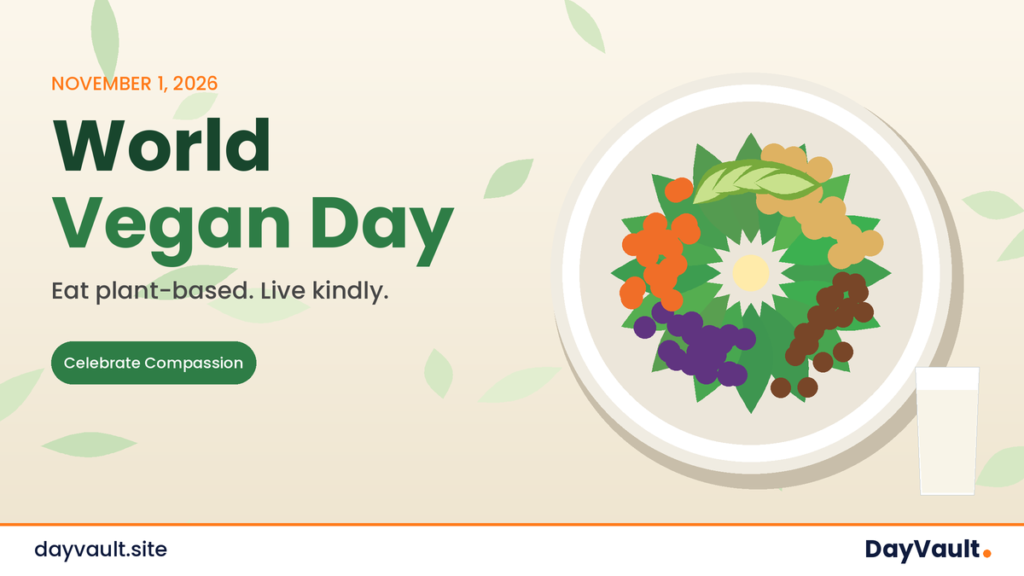
World Vegan Day is an opportunity to explore how everyday food and lifestyle choices can support animal welfare, environmental awareness, and a more thoughtful way of living. Celebrated annually on November 1, this global observance brings attention to veganism and encourages people to discover the possibilities of a plant-based lifestyle.
Whether you already follow a vegan diet, enjoy meat-free meals occasionally, or simply want to learn more about vegan living, this day offers something for everyone. You do not need to make dramatic changes overnight to participate. Trying a new plant-based recipe, learning about vegan nutrition, or sharing a delicious meat-free meal with friends can be a meaningful place to start.
In this guide, we explore the history of World Vegan Day, its significance, the potential benefits of veganism, and practical ways to celebrate in 2026.
What Is World Vegan Day?
World Vegan Day is an annual observance dedicated to raising awareness about veganism and its principles. It highlights the idea that people can make everyday choices that reduce their reliance on animal products while exploring alternatives in food, clothing, personal care, and other areas of life.
The observance is closely associated with animal welfare, environmental responsibility, and the growing availability of plant-based alternatives.
Veganism goes beyond simply avoiding meat. A vegan diet excludes animal-derived foods such as meat, fish, eggs, milk, cheese, and honey. A broader vegan lifestyle also seeks to avoid animal exploitation in other areas, as far as reasonably possible.
People choose veganism for different reasons, including:
- Animal welfare: Reducing participation in practices that exploit animals.
- Environmental concerns: Exploring dietary choices that may reduce environmental impacts.
- Personal health: Building a balanced diet around vegetables, fruits, legumes, whole grains, nuts, and seeds.
- Personal values: Aligning everyday decisions with individual ethical beliefs.
World Vegan Day is not about judging people for what they eat. Instead, it provides an opportunity to learn, share information, and discover practical alternatives.
When Is World Vegan Day 2026?
World Vegan Day is celebrated every year on November 1.
In 2026, it falls on Sunday, November 1. The date remains the same annually, making it easy to plan meals, educational activities, community gatherings, and online awareness campaigns.
The observance also marks the beginning of World Vegan Month, which takes place throughout November. During this month, vegan organizations, restaurants, communities, and individuals often share recipes, organize events, and encourage people to explore plant-based living.
If you want to participate, you can celebrate for one day or use the entire month to learn new recipes, improve your understanding of nutrition, and experiment with small lifestyle changes.
The History of World Vegan Day
World Vegan Day was established in 1994 by Louise Wallis, who was then chair of The Vegan Society in the United Kingdom. It was created to mark the organization’s 50th anniversary.
The Vegan Society was founded in November 1944 by Donald Watson and other pioneers of the modern vegan movement. The word vegan was introduced to describe a way of living that went beyond vegetarianism by excluding dairy products and other animal-derived foods.
The term was formed using the beginning and ending letters of the word vegetarian.
When the organization reached its 50th anniversary, World Vegan Day was introduced as a way to celebrate its history and bring greater attention to veganism.
Over time, November became an important period for vegan awareness, with World Vegan Day on November 1 expanding into broader celebrations throughout the month.
Today, the observance offers an opportunity to discuss animal welfare, food choices, sustainability, and the practical realities of adopting a vegan lifestyle.
You can explore more historical information through The Vegan Society’s history and resources.
Why Is World Vegan Day Important?
World Vegan Day matters because it encourages people to think more carefully about the relationship between everyday choices and their wider consequences.
Food is part of nearly everyone’s daily routine. Learning how different foods are produced, where ingredients come from, and how dietary choices affect the environment can help people make more informed decisions.
1. It Raises Awareness About Animal Welfare
One of the central principles of veganism is reducing animal exploitation.
Many people choose a vegan lifestyle because they want to avoid products associated with using animals for food, clothing, or other purposes.
World Vegan Day encourages conversations about animal welfare and introduces people to alternatives such as plant-based meals, synthetic materials, and products that do not contain animal-derived ingredients.
2. It Encourages Environmental Awareness
Food production can affect land use, water resources, greenhouse gas emissions, and biodiversity.
Plant-based foods generally have lower environmental impacts than many animal-based foods, although the exact impact depends on the ingredient, production methods, transportation, and other factors.
Choosing more legumes, vegetables, fruits, and grains can be one practical way to explore a lower-impact diet.
The goal is not to suggest that every plant-based product is automatically sustainable. Rather, the day encourages people to understand the broader effects of what they consume.
3. It Promotes Nutrition Education
Vegan diets can include a wide variety of nutritious foods, but good planning is important.
A balanced vegan diet may contain beans, lentils, tofu, vegetables, fruits, whole grains, nuts, and seeds. Fortified foods and appropriate supplements can also help meet nutritional needs.
World Vegan Day provides an opportunity to learn about the nutrients required for a healthy diet and how to obtain them from suitable sources.
4. It Makes Plant-Based Food More Accessible
Many people assume vegan food is expensive, complicated, or limited to specialty products.
In reality, everyday ingredients such as lentils, chickpeas, rice, potatoes, seasonal vegetables, and beans can form the basis of affordable vegan meals.
Sharing simple recipes and cooking ideas helps demonstrate that plant-based eating can be practical, flavorful, and adaptable to different budgets and cultures.
Benefits of a Vegan Lifestyle
The potential benefits of veganism depend on how the lifestyle is practiced. A carefully planned vegan diet can offer nutritional and environmental advantages, but simply removing animal products does not automatically make a diet healthy.
Here are some important areas to consider.
Potential Health Benefits
A well-planned vegan diet can provide fiber, vitamins, minerals, and a variety of plant compounds through foods such as fruits, vegetables, whole grains, legumes, nuts, and seeds.
Eating more of these foods can support overall dietary quality.
However, health outcomes depend on the overall diet, portion sizes, lifestyle habits, and individual circumstances. Highly processed vegan foods can also be high in salt, sugar, or saturated fat.
For this reason, focus on a varied diet rather than relying mainly on packaged meat substitutes, vegan desserts, or snack foods.
Greater Awareness of Food Choices
Vegan living often encourages people to read ingredient labels, learn cooking techniques, and explore unfamiliar foods.
This can help develop useful skills, including meal planning, preparing balanced dishes, and understanding nutritional information.
These habits can be valuable whether someone becomes fully vegan or simply wants to include more plant-based meals in their routine.
Potential Environmental Advantages
Replacing some animal-based meals with plant-based alternatives can reduce the environmental footprint of a person’s diet.
For example, meals built around lentils, beans, chickpeas, and seasonal vegetables can offer satisfying alternatives to many meat-based dishes.
Environmental benefits vary by ingredient and production system, so it is useful to consider the whole food system rather than make absolute claims about every vegan product.
A Lifestyle That Reflects Personal Values
For people motivated by animal welfare or sustainability, veganism can provide a way to bring personal values into everyday decisions.
This may include choosing plant-based meals, checking cosmetic ingredients, or looking for alternatives to leather and wool.
People can approach these changes gradually and decide what is realistic for their circumstances.
Delicious Vegan Food Ideas to Try on World Vegan Day
One of the easiest ways to celebrate World Vegan Day is to prepare a meal that shows how enjoyable plant-based food can be.
You do not need expensive ingredients or specialist equipment. Many familiar dishes can be made vegan with simple substitutions.
1. Chickpea Curry With Rice
Chickpea curry is a filling option made with chickpeas, tomatoes, onions, garlic, and spices.
Serve it with rice or flatbread made without animal-derived ingredients. You can adjust the spices to suit your taste and add spinach or other vegetables for variety.
2. Lentil Soup
Lentil soup is an affordable meal that provides plant-based protein and fiber.
Cook lentils with onions, carrots, tomatoes, garlic, and vegetable stock. Add cumin, black pepper, or other seasonings for extra flavor.
It is suitable for lunch or dinner and can be prepared in larger batches for convenient meals throughout the week.
3. Fresh Chickpea Salad
Combine cooked chickpeas with cucumber, tomatoes, leafy greens, onions, and lemon juice.
Add olive oil, herbs, or a tahini dressing to create a simple, refreshing meal.
This is a useful option when you want something quick without spending much time in the kitchen.
4. Vegetable Stir-Fry
Cook your favorite vegetables in a pan with garlic, ginger, and a little oil. Add tofu if desired, and serve with rice or noodles.
Check sauces and seasonings for ingredients such as fish sauce or other animal-derived additives.
5. Vegan Dessert
Fruit salad, dairy-free chocolate desserts, and plant-based puddings can make a meal feel special.
When buying packaged desserts, check the ingredients because some contain milk, butter, eggs, or other animal-derived products.
The best World Vegan Day meal is one that tastes good, suits your budget, and encourages you to explore new ingredients.
How to Celebrate World Vegan Day in 2026
You can participate in World Vegan Day in many ways, regardless of whether you are already vegan.
Here are eight practical ideas to try on November 1.
1. Prepare a Vegan Meal at Home
Choose one new recipe and prepare it using ingredients you already enjoy.
A chickpea curry, vegetable pulao made with vegetable stock, lentil soup, or bean salad can be a good starting point.
Cooking at home also allows you to control ingredients and adjust the recipe to your preferences.
2. Try a Plant-Based Alternative
Experiment with alternatives such as soy milk, oat milk, tofu, or plant-based yogurt.
Read product labels carefully, particularly when checking for added sugar, fortification, allergens, and ingredients derived from animals.
You do not have to replace everything at once. Exploring one alternative can help you discover what works for you.
3. Share Vegan Food With Friends and Family
Invite friends or relatives to share a vegan meal.
Food can be a welcoming way to introduce people to new ideas without making the conversation feel like a lecture.
You could prepare several small dishes so everyone can sample different flavors and textures.
4. Learn About Vegan Nutrition
Spend some time learning how to build a balanced vegan diet.
The NHS guide to the vegan diet explains useful food choices and nutrients to consider.
This is particularly important if you plan to follow a vegan diet long-term.
5. Support a Vegan Business
Consider visiting a vegan-friendly restaurant, ordering a plant-based meal, or purchasing a product from a business that offers suitable vegan options.
You can also support local businesses that make plant-based foods more accessible in your community.
6. Share Awareness on Social Media
Post a favorite vegan recipe, a useful nutrition resource, or a photo of your plant-based meal.
You can use hashtags such as #WorldVeganDay, #VeganFood, and #PlantBasedLiving to connect with others who are participating.
Keep your message informative and welcoming so that people who are curious about veganism feel comfortable learning more.
7. Explore Animal-Friendly Products
Look at the ingredients and materials in everyday products such as cosmetics, clothing, and personal care items.
Some products contain animal-derived ingredients, while others are designed without them.
If this aspect of vegan living interests you, learn how to identify suitable alternatives and check product claims carefully.
8. Make One Sustainable Change
Choose one small habit that you can maintain beyond the observance.
You might prepare plant-based lunches more often, reduce food waste, plan meals before shopping, or try a new seasonal vegetable each week.
Small, consistent changes can be more practical than attempting to transform every aspect of your lifestyle in a single day.
How to Follow a Balanced Vegan Diet
A nutritious vegan diet requires variety and attention to certain nutrients. Removing animal products without replacing their nutritional contributions can lead to gaps in the diet.
The following food groups can help you plan balanced meals.
- Legumes: Lentils, beans, peas, and chickpeas provide protein, fiber, and minerals.
- Whole grains: Oats, brown rice, whole-wheat bread, and other whole grains provide energy and additional nutrients.
- Vegetables and fruits: Include a range of colors and types throughout the day.
- Nuts and seeds: Almonds, walnuts, chia seeds, and flaxseeds contribute healthy fats and other nutrients.
- Calcium-fortified foods: Suitable fortified plant drinks and calcium-set tofu can help provide calcium.
- Vitamin B12 sources: Reliable fortified foods or an appropriate supplement are important because unfortified plant foods are not dependable natural sources of vitamin B12.
Other nutrients that may need particular attention include iron, iodine, vitamin D, calcium, selenium, and omega-3 fatty acids.
For example, pairing iron-rich foods such as lentils with vitamin C-rich foods such as tomatoes or citrus fruits can help the body absorb iron.
People who are pregnant, breastfeeding, managing a health condition, or planning a vegan diet for a child should seek appropriate professional advice to ensure nutritional needs are met.
The key principle is simple: a healthy vegan diet should be planned around nutritional needs, not just the absence of animal products.
Common Myths About Veganism
Despite growing interest in plant-based eating, several misconceptions remain.
Myth 1: Vegan Food Is Always Expensive
Some specialty vegan products can be expensive, but many basic plant-based ingredients are affordable.
Beans, lentils, chickpeas, potatoes, rice, and seasonal produce can form the foundation of inexpensive meals.
Buying ingredients in suitable quantities and cooking at home can also help control costs.
Myth 2: Vegan Meals Are Boring
Plant-based cooking includes a wide variety of cuisines, ingredients, and cooking methods.
Curries, soups, salads, stir-fries, roasted vegetables, bean dishes, and plant-based desserts can all offer different flavors and textures.
Herbs, spices, sauces, and cooking techniques make a significant difference.
Myth 3: Every Vegan Product Is Healthy
A product can be vegan without being nutritionally balanced.
Some packaged vegan foods contain large amounts of salt, added sugar, or saturated fat. Others provide useful nutrients and can fit into a balanced diet.
Check nutrition labels and consider how each food fits into your overall eating pattern.
Myth 4: You Must Change Everything Immediately
There is no requirement to change every meal or purchase on World Vegan Day.
Some people use the occasion to learn about veganism, while others try one plant-based meal or explore animal-free products.
The most useful approach is to learn at your own pace and make informed decisions that fit your needs and values.
Frequently Asked Questions
1. When Is World Vegan Day Celebrated?
World Vegan Day is celebrated annually on November 1. In 2026, it falls on Sunday, November 1. The observance marks the beginning of World Vegan Month, which continues throughout November.
2. Why Do We Celebrate World Vegan Day?
World Vegan Day raises awareness about veganism, animal welfare, plant-based food, and related environmental considerations. It also encourages people to learn about vegan living and explore alternatives to animal-derived products.
3. Who Started World Vegan Day?
Louise Wallis, then chair of The Vegan Society in the United Kingdom, established World Vegan Day in 1994 to mark the organization’s 50th anniversary.
4. What Is the Difference Between Vegan and Vegetarian?
Vegetarians generally avoid meat and fish but may eat eggs or dairy products. Vegans avoid animal-derived foods, including meat, fish, eggs, and dairy. Veganism can also extend to clothing, cosmetics, and other products associated with animal exploitation.
5. How Can Beginners Celebrate World Vegan Day?
Beginners can celebrate by trying a plant-based recipe, learning about vegan nutrition, visiting a vegan-friendly restaurant, sharing a meat-free meal, or exploring suitable alternatives to animal-derived products. Even one small activity can be a useful introduction.
Conclusion
World Vegan Day, celebrated on November 1, is a chance to learn about veganism and discover how everyday choices can reflect concerns about animal welfare, nutrition, and the environment.
From its beginnings in 1994 to its place in today’s growing plant-based movement, the observance encourages people to explore new foods, share knowledge, and consider alternatives that suit their circumstances.
Celebrating does not have to mean making a complete lifestyle change. You could prepare a chickpea curry, try a lentil soup recipe, learn about vitamin B12, or share a delicious vegan meal with someone you care about.
As World Vegan Day 2026 approaches, consider choosing one practical step that you can enjoy and maintain. A thoughtful meal or a little time spent learning can be a meaningful way to participate in the day and continue exploring more informed, compassionate choices throughout the year.
Is this conversation helpful so far?
1. When Is World Vegan Day Celebrated?
World Vegan Day is celebrated every year on November 1. In 2026, it falls on Sunday, November 1, marking the beginning of World Vegan Month.
2. Why Do We Celebrate World Vegan Day?
World Vegan Day raises awareness about veganism, animal welfare, plant-based foods, and environmental sustainability. It encourages people to explore vegan living and consider alternatives to animal-derived products.
3. Who Started World Vegan Day?
Louise Wallis, then chair of The Vegan Society in the United Kingdom, established World Vegan Day in 1994 to celebrate the organization’s 50th anniversary.
4. What Is the Difference Between Vegan and Vegetarian?
Vegetarians generally avoid meat and fish but may consume eggs and dairy products. Vegans avoid all animal-derived foods, including meat, fish, eggs, and dairy, and may also avoid animal-derived materials and products.
5. How Can Beginners Celebrate World Vegan Day?
Beginners can celebrate by trying a plant-based recipe, preparing a vegan meal, learning about vegan nutrition, visiting a vegan-friendly restaurant, or sharing information about vegan living with friends and family.
