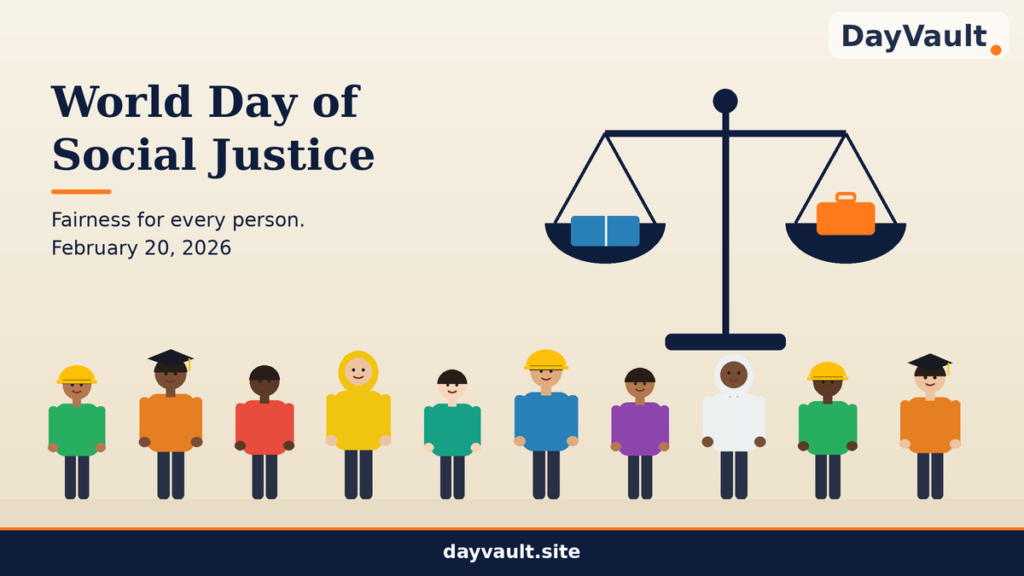
Every person deserves to live with dignity, enjoy equal rights, access opportunities, and receive fair treatment regardless of their background, gender, religion, nationality, or financial situation. However, millions of people around the world continue to experience poverty, discrimination, unemployment, unequal access to education, and other forms of social injustice.
The World Day of Social Justice, observed every year on February 20, highlights the importance of building a fairer and more inclusive world. It encourages governments, organizations, communities, and individuals to address the inequalities that prevent people from enjoying a better quality of life.
Established by the United Nations, this international observance reminds the world that economic development alone is not enough. A truly successful society must also protect human rights, create decent employment opportunities, reduce poverty, and ensure that everyone has a fair chance to succeed.
The day is an opportunity to understand social challenges, recognize the experiences of disadvantaged communities, and encourage meaningful action toward equality and justice.
What Is World Day of Social Justice?
World Day of Social Justice is an international observance dedicated to promoting fairness, equality, human rights, and social inclusion. It focuses on addressing problems that create divisions between people and prevent certain groups from participating fully in society.
Social justice means creating conditions in which individuals have fair access to resources, opportunities, protection, and essential services. It also means treating people with respect and ensuring that discrimination does not determine their future.
The observance highlights several important areas, including:
- Reducing poverty and economic inequality.
- Promoting equal rights for women and men.
- Protecting workers and improving employment conditions.
- Ensuring access to quality education.
- Fighting discrimination and social exclusion.
- Supporting vulnerable and disadvantaged communities.
- Improving access to healthcare and social protection.
- Protecting fundamental human rights.
The main message is simple: everyone should have the opportunity to participate in society and live a safe, healthy, and dignified life. World Day of Social Justice is not simply about discussing problems—it encourages practical efforts to remove barriers and create lasting improvements in people’s lives.
When Is World Day of Social Justice Celebrated?
World Day of Social Justice is celebrated annually on February 20.
The United Nations General Assembly officially established this observance in November 2007 through Resolution A/RES/62/10. The first World Day of Social Justice was observed on February 20, 2009.
Since then, the date has provided an international opportunity to discuss social development, equality, employment, poverty reduction, and human rights.
Unlike public holidays that involve celebrations or traditional activities, this observance mainly focuses on awareness, education, discussion, and action. Governments, educational institutions, international organizations, and civil society groups use the occasion to highlight social challenges and encourage solutions.
The United Nations recognizes that social development and social justice are essential for maintaining peace and security within and among nations. Learn more on the UN World Day of Social Justice official page.
History and Background of World Day of Social Justice
The history of World Day of Social Justice is closely connected to international efforts to reduce poverty, improve employment conditions, and create more equal societies.
The 1995 Copenhagen Summit
One important milestone was the World Summit for Social Development, held in Copenhagen, Denmark, in March 1995. Leaders from around the world gathered to discuss major social challenges and the need to make human well-being a central part of development.
The discussions highlighted important goals such as:
- Eradicating poverty.
- Promoting full employment.
- Building stable and safe societies.
- Encouraging social integration.
- Improving access to essential services.
- Protecting human dignity and fundamental rights.
These commitments helped establish a stronger international understanding of social justice as an important part of sustainable development.
UN Resolution and ILO Declaration
Another significant development occurred on November 26, 2007, when the United Nations General Assembly adopted Resolution A/RES/62/10, declaring February 20 as World Day of Social Justice. The first official observance took place in 2009.
In June 2008, the International Labour Organization also adopted its Declaration on Social Justice for a Fair Globalization. This landmark declaration emphasized the importance of employment opportunities, social protection, social dialogue, and workers’ rights.
Together, these developments strengthened international efforts to promote fairness and improve living conditions for people around the world.
Why Is World Day of Social Justice Important?
Social justice is important because inequality affects almost every aspect of human life. When people cannot access education, healthcare, employment, or legal protection, their opportunities become limited.
These challenges do not affect everyone equally. People living in poverty, individuals with disabilities, women, children, migrants, and marginalized communities may face additional barriers.
World Day of Social Justice brings attention to these challenges and encourages societies to work toward solutions.
1. Promotes Equality and Fair Treatment
Every individual deserves respect and equal protection under the law. However, discrimination based on gender, ethnicity, disability, religion, or economic background continues to affect communities.
Promoting equality means ensuring that people are not denied opportunities because of personal characteristics or circumstances beyond their control. This observance encourages individuals and institutions to recognize unfair treatment and support policies that protect equal rights.
2. Helps Reduce Poverty
Poverty is one of the biggest obstacles to social justice. People struggling financially may have difficulty accessing nutritious food, safe housing, education, healthcare, and stable employment.
Reducing poverty requires more than temporary financial assistance. It also involves creating sustainable employment, improving public services, and ensuring that people have opportunities to develop their skills. Social justice encourages governments and organizations to address the deeper causes of economic inequality.
3. Supports Workers’ Rights
Employment plays an important role in personal independence and economic development. However, many workers experience unfair wages, unsafe workplaces, discrimination, excessive working hours, or a lack of job security.
Social justice promotes decent work, fair income, workplace safety, equal treatment, and protection against exploitation. Workers should be able to earn a living without sacrificing their health, safety, or dignity.
4. Encourages Equal Access to Education
Education gives individuals the knowledge and skills needed to improve their lives. Unfortunately, children and adults in disadvantaged communities may face financial, geographical, cultural, or social barriers that prevent them from receiving quality education.
Equal access to education helps reduce long-term inequality by allowing individuals to develop their abilities and participate more effectively in society.
5. Strengthens Peace and Social Stability
Societies become stronger when people feel respected, protected, and included. On the other hand, discrimination, extreme poverty, unemployment, and unequal opportunities can increase frustration and social divisions.
Promoting fairness and inclusion helps build trust between communities and supports peaceful relationships.
Major Challenges to Social Justice Around the World
Despite progress in human rights and social development, many challenges continue to prevent people from experiencing equal opportunities. Understanding these issues is an important step toward creating meaningful change.
Poverty and Economic Inequality
Economic inequality occurs when wealth, income, and resources are distributed unevenly. Some individuals have access to excellent education, healthcare, housing, and career opportunities, while others struggle to meet basic needs.
Poverty can also continue across generations when children grow up without access to the resources required to improve their circumstances. Addressing this problem requires effective social protection, fair economic policies, employment opportunities, and accessible public services.
Gender Discrimination
Gender inequality remains a serious challenge in many parts of the world. Women and girls may experience unequal pay, limited educational opportunities, workplace discrimination, restricted participation in leadership, and gender-based violence.
Promoting gender equality means ensuring that everyone has the same rights, protections, and opportunities regardless of gender. It also requires creating environments where women and girls can participate fully in education, employment, politics, and community development.
Unemployment and Unfair Working Conditions
Unemployment can create financial difficulties, reduce personal independence, and affect family well-being. Even people who have jobs may experience exploitation, low wages, unsafe working environments, or limited opportunities for career development.
Young people and individuals from disadvantaged communities can face additional barriers when entering the job market. Fair recruitment practices, professional training, workplace protection, and decent employment opportunities are important parts of social justice.
Discrimination and Social Exclusion
Discrimination prevents people from enjoying equal treatment and participating fully in their communities. It can occur in schools, workplaces, public services, healthcare systems, and everyday social interactions.
People with disabilities, ethnic minorities, migrants, and other marginalized groups may face barriers that limit their opportunities. Building inclusive communities requires respect, accessibility, equal protection, and a willingness to challenge harmful stereotypes.
Limited Access to Healthcare
Healthcare is essential for a healthy and productive society. However, people living in remote areas or financially disadvantaged communities may struggle to access medical facilities, qualified professionals, essential medicines, and preventive services.
Improving healthcare access helps protect human dignity and reduces inequalities between different social and economic groups.
The Role of the United Nations in Promoting Social Justice
The United Nations plays an important role in encouraging international cooperation and promoting social justice. Through its agencies, agreements, development programs, and awareness campaigns, the organization supports efforts to reduce poverty, protect human rights, improve working conditions, and promote equality.
The United Nations recognizes that social justice cannot be achieved without respect for human rights and fundamental freedoms. Several international initiatives contribute to these efforts.
Sustainable Development Goals (SDGs)
The United Nations Sustainable Development Goals provide a global framework for addressing major economic, environmental, and social challenges. Several goals are closely connected to social justice, including:
- Goal 1: No Poverty – Ending poverty in all its forms.
- Goal 3: Good Health and Well-Being – Promoting healthy lives for everyone.
- Goal 4: Quality Education – Ensuring inclusive and equitable education.
- Goal 5: Gender Equality – Achieving gender equality and empowering women and girls.
- Goal 8: Decent Work and Economic Growth – Supporting productive employment and decent working conditions.
- Goal 10: Reduced Inequalities – Reducing inequality within and among countries.
- Goal 16: Peace, Justice and Strong Institutions – Promoting peaceful societies and access to justice.
These goals demonstrate that social justice is connected to nearly every area of sustainable development.
International Labour Organization (ILO)
The International Labour Organization is another key institution promoting social justice. Its activities focus on improving working conditions, protecting workers’ rights, supporting decent employment, and encouraging cooperation between governments, employers, and workers.
The ILO’s Declaration on Social Justice for a Fair Globalization emphasizes four important areas:
- Employment opportunities.
- Social protection.
- Social dialogue.
- Fundamental principles and rights at work.
These priorities help create working environments in which individuals can earn a fair living while maintaining their dignity and safety.
How Is World Day of Social Justice Observed?
World Day of Social Justice is observed through educational activities, public discussions, awareness campaigns, community programs, and institutional initiatives. Different countries and organizations organize activities according to their local needs and social challenges.
Common ways to observe the day include:
- Educational Seminars and Discussions: Schools, universities, and community organizations arrange seminars about equality, human rights, poverty, discrimination, and employment to build awareness.
- Social Media Awareness Campaigns: Individuals and organizations share informative posts, educational videos, and resources to promote social inclusion and equal opportunities.
- Community Support Programs: Local communities host donation drives, offer career guidance, organize food distributions, and assist individuals with disabilities or special needs.
- Workplace Equality Initiatives: Businesses review recruitment, pay equity, workplace safety, and professional growth opportunities to build fair working environments.
- Youth Engagement Activities: Students and young people engage in debates, essay competitions, volunteer programs, and educational projects on social equality.
How Can Individuals Promote Social Justice in Everyday Life?
Social justice is not only the responsibility of governments and international organizations. Individuals also have an important role in creating fair and inclusive communities.
Here are practical ways to support social justice every day:
- Treat Everyone with Respect: Value individuals regardless of background, income level, gender, religion, or personal circumstances.
- Speak Against Discrimination: Avoid ignoring unfair treatment. Support individuals facing bias and advocate for respectful environments.
- Support Equal Education: Help students in need by donating books, sharing learning materials, or volunteering for educational causes.
- Promote Fair Employment: Support businesses that respect workers’ rights and foster fair, safe workplaces.
- Volunteer in Your Community: Give time to activities supporting families, children, older adults, and people with disabilities.
- Learn About Human Rights: Understand fundamental rights to better recognize injustice and make informed decisions.
- Use Social Media Responsibly: Share reliable information about social topics rather than spreading misleading claims.
- Support Inclusive Communities: Encourage accessible facilities and inclusive participation for everyone.
The Connection Between Social Justice and Sustainable Development
Social justice and sustainable development are closely connected because long-term progress depends on improving people’s quality of life. A country cannot achieve sustainable development if large sections of its population remain trapped in poverty, experience discrimination, or lack access to basic services.
For example, improving education can help individuals find better employment. Fair employment can increase household income and reduce poverty. Better healthcare can improve productivity and family well-being. Similarly, reducing gender inequality allows more people to contribute their skills and knowledge to economic and social development.
Sustainable development requires progress that benefits everyone rather than only a small section of society. The United Nations Sustainable Development Goals recognize this relationship by connecting economic opportunity, environmental protection, social inclusion, and human well-being.
Why Social Justice Matters for Future Generations
The importance of social justice extends beyond today’s challenges; it determines the opportunities available to future generations. Children who grow up in poverty or experience discrimination may face lifelong hurdles to education, healthcare, and employment.
Creating a fair society means investing in children, supporting families, improving education systems, and ensuring everyone can develop their abilities. Future generations need communities where:
- Children receive quality education.
- Young people have fair job opportunities.
- Women and men enjoy equal rights.
- Workers receive fair treatment.
- People with disabilities participate fully.
- Healthcare is accessible and affordable.
- Human rights are respected and protected.
World Day of Social Justice 2027: Looking Ahead
World Day of Social Justice will be observed on Saturday, February 20, 2027.
As the world experiences economic changes, technological growth, and evolving social dynamics, fair policies remain essential. The coming years demand greater focus on digital equality, social protection, affordable education, and vulnerable community rights.
Technology creates new educational and job avenues, yet gaps in internet access and digital literacy can leave marginalized communities behind. World Day of Social Justice 2027 offers another vital opportunity for governments, institutions, and individuals to reaffirm their commitment to fairness and human dignity.
Frequently Asked Questions (FAQs)
1. What is World Day of Social Justice?
World Day of Social Justice is an international observance dedicated to promoting human rights, economic equality, gender fairness, decent employment, and social inclusion worldwide.
2. When is World Day of Social Justice celebrated?
It is celebrated every year on February 20. The UN General Assembly established the observance in November 2007, and the inaugural observance took place in 2009.
3. Who established World Day of Social Justice?
The United Nations General Assembly officially established World Day of Social Justice on November 26, 2007, through Resolution A/RES/62/10.
4. What is the primary purpose of social justice?
The primary goal of social justice is to ensure fair access to resources, opportunities, rights, and protections for all people while breaking down systemic discrimination and social barriers.
5. How can students observe World Day of Social Justice?
Students can observe the day by participating in educational seminars, writing essays, creating awareness posters, volunteering locally, and promoting inclusive practices in their schools and communities.
6. What date is World Day of Social Justice 2027?
World Day of Social Justice 2027 will be observed on Saturday, February 20, 2027.
Conclusion
World Day of Social Justice is an essential international observance that reminds us of our shared obligation to build a fair, inclusive, and respectful world. Celebrated annually on February 20, it emphasizes poverty reduction, human rights protection, gender equality, and decent working conditions for all.
While governments and global bodies carry significant responsibility, individual actions are equally powerful. Treating others fairly, challenging discrimination, supporting community education, and advocating for workers’ rights create a solid foundation for systemic change. A truly developed society is measured not by the success of a few, but by how fairly it opens doors of opportunity for everyone.
World Day of Social Justice 2027 will be observed on Saturday, February 20, 2027.
