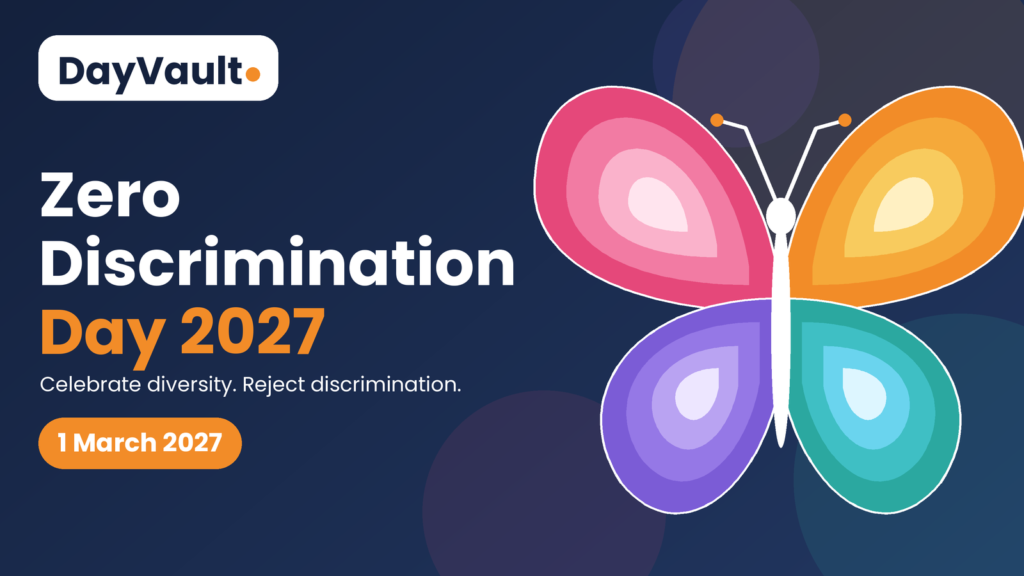
Zero Discrimination Day 2027 will be observed on Monday, 1 March 2027. This global day invites everyone to reject unfair treatment and to celebrate the idea that every person deserves dignity. Its symbol is a butterfly, and its message is simple: nobody should be treated as less than anyone else.
This guide covers the date, the origin, the meaning of the butterfly, and practical ways to take part, whether you are a student, an employee, a teacher or a community leader.
When Is Zero Discrimination Day 2027?
Zero Discrimination Day falls on 1 March every year. The date is fixed and does not move with the lunar calendar or a weekday rule.
| Year | Date | Day of the week |
|---|---|---|
| 2026 | 1 March | Sunday |
| 2027 | 1 March | Monday |
| 2028 | 1 March | Wednesday |
Because 1 March 2027 is a weekday, schools, offices and community groups have a good chance to plan activities during normal hours.
What Is Zero Discrimination Day?
Zero Discrimination Day is marked each year on 1 March by the United Nations and other international organisations. It promotes equality, inclusion and respect, whatever a person’s gender, age, ethnicity, sexuality, disability, religion, nationality or health status.
A note on its status. The day was created by UNAIDS, the Joint United Nations Programme on HIV/AIDS. We found no evidence that it was established by a UN General Assembly resolution. It is best described as a UNAIDS-led global observance, widely supported by UN agencies, governments, charities and communities. It is not a public holiday.
History and Origin
The story begins on World AIDS Day in 2013. UNAIDS and Nobel Peace Prize winner Daw Aung San Suu Kyi, then a UNAIDS Global Advocate for Zero Discrimination, announced the #zerodiscrimination campaign in Melbourne on 1 December 2013. They also announced a new Zero Discrimination Day for 1 March 2014.
The first observance followed soon after:
- UNAIDS Executive Director Michel Sidibé launched the day on 27 February 2014 at a major event in Beijing, China.
- People around the world celebrated it for the first time on 1 March 2014, sharing their stories and butterfly photos.
HIV-related stigma was a central concern from the start. UNAIDS describes its vision as zero new HIV infections, zero discrimination and zero AIDS-related deaths. Over time, the day has grown into a wider call against all forms of discrimination.
Why Is the Butterfly the Symbol?
UNAIDS chose the butterfly because it is widely recognised as a sign of transformation. A butterfly begins life as a caterpillar and changes completely, just as societies can change their attitudes and laws.
People use the butterfly in many ways, including as a profile picture, in artwork, in classroom crafts and in photos shared with the hashtag #ZeroDiscrimination.
Why Zero Discrimination Day Matters
Discrimination is unfair treatment based on who someone is rather than what they do. It can happen at school, at work, in healthcare, in housing, online or in public life. It often affects people through:
- race or ethnicity
- gender or gender identity
- sexual orientation
- religion or belief
- disability
- age
- migration status
- health status, including HIV
The principle behind the day is not new. Article 1 of the Universal Declaration of Human Rights (1948) says all people are born free and equal in dignity and rights. Zero Discrimination Day turns that principle into an annual moment of action.
Discrimination also has practical costs. It can keep people away from healthcare, education and jobs, and it weakens trust in communities. Reducing it benefits everyone, not just the people directly affected.
Past Themes and the 2027 Theme
UNAIDS has used a different message in different years. In 2015, the theme was “Open Up, Reach Out”, which urged people to celebrate diversity and reject discrimination in all its forms. In 2024, the tenth anniversary, UNAIDS linked the day to the idea that protecting everyone’s health protects everyone’s rights.
The official theme for Zero Discrimination Day 2027 had not been confirmed when this article was written. Check the UNAIDS website closer to the date, and DayVault will update this page when a theme is announced.
How Is Zero Discrimination Day Celebrated Around the World?
There is no single tradition. The day is observed through campaigns, events and personal actions in many countries.
- Awareness campaigns. In the first year, partners in South Africa and Malawi ran social media drives and mobile phone messages promoting zero discrimination.
- Seminars and workshops. Early events included discussions on stigma and discrimination in more than 20 countries.
- Community projects. Charities, health groups and civil society organisations often hold talks, film screenings and art exhibitions.
- Online sharing. People post butterfly images and personal stories using the hashtag.
Expect a mix of official and grassroots events around 1 March 2027. Many organisations extend the activities across the whole month.
How to Take Part in Zero Discrimination Day 2027
You do not need a large budget or a big platform. Small actions count.
For individuals
- Learn about a group or experience that is different from your own.
- Speak up politely when you hear a discriminatory joke or comment.
- Share the butterfly image and a short message online.
- Support businesses and creators from underrepresented communities.
For schools and teachers
- Hold a classroom discussion on fairness and respect.
- Run a butterfly art project.
- Invite a guest speaker from a local community group.
- Review how your school welcomes students of all backgrounds.
For workplaces
- Review hiring, promotion and pay practices for fairness.
- Check that your workplace is accessible to people with disabilities.
- Create a safe way for staff to report unfair treatment.
- Offer inclusion training that is practical rather than a one-off event.
For fun and creativity
UNAIDS has suggested creative ideas such as swimming like a butterfly, baking a butterfly cake or singing a butterfly song. A creative activity can start a conversation, especially with younger people.
Interesting Facts About Zero Discrimination Day
- The day has a fixed date, 1 March, which makes it easy to plan for.
- It began as part of an HIV and AIDS campaign but now covers discrimination in every form.
- The butterfly gives the day a visual identity that works well on social media.
- The day reached its tenth anniversary in 2024. Its 2027 observance will be its fourteenth.
Related Days Worth Knowing
Zero Discrimination Day sits among several related observances on the human rights calendar. They include International Women’s Day (8 March), the International Day for the Elimination of Racial Discrimination (21 March), World Autism Awareness Day, World Refugee Day and Human Rights Day (10 December). Each deals with a different aspect of equality, and together they form a useful learning path.
Frequently Asked Questions
What date is Zero Discrimination Day in 2027?
Zero Discrimination Day 2027 is on Monday, 1 March 2027. It is observed on 1 March every year.
Who started Zero Discrimination Day?
UNAIDS started it. The first observance took place on 1 March 2014.
Is Zero Discrimination Day an official UN day?
It was launched by a UN programme, UNAIDS, and is observed by UN and other organisations. We did not find evidence of a UN General Assembly resolution creating it, so it is best called a UNAIDS-led global observance.
What is the symbol of Zero Discrimination Day?
The butterfly. It represents transformation and the hope of positive change.
Is Zero Discrimination Day only about HIV?
No. It began with a strong focus on HIV-related stigma, but it now supports equality for everyone, regardless of gender, age, ethnicity, sexuality, disability or health status.
How can I celebrate Zero Discrimination Day?
Share a butterfly image, hold a discussion, support an inclusion project, or challenge unfair behaviour. Schools and workplaces can run awareness sessions.
Conclusion
Zero Discrimination Day 2027 is a chance to turn a good principle into daily practice. Mark 1 March 2027 in your calendar, choose one action that suits your life, and encourage someone else to join you.
